How to Choose a Hybrid SUV in 2026 Based on Your Annual Mileage: Real-World Efficiency Criteria and Running Costs
 Dani Montesinos
13 July 2026
7 min.
A guide to choosing a hybrid SUV in 2026 by weighing real-world consumption, useful electric range and total four-year cost according to how many kilometres you drive each year.
Choosing a hybrid SUV in 2026 is no longer a matter of fashion. It is an exercise in household accounting cross-checked against real driving habits. The offer has multiplied, WLTP homologation figures are still far too generous on paper, and the four-year running cost can vary by thousands of euros between two models that look like twins on the brochure. Hence this guide: fewer headlines, more real kilometres.
Before getting into the substance, a note on editorial judgement. We have left BYD out of the analysis because, in our view, other Chinese-origin brands sold in Spain are delivering tuning that suits the European driver’s sensibility better and energy performance that is more convincing in real use. This is not an absolute verdict on the brand; it is this newsroom’s view for this particular comparison.
Before getting into the substance, a note on editorial judgement. We have left BYD out of the analysis because, in our view, other Chinese-origin brands sold in Spain are delivering tuning that suits the European driver’s sensibility better and energy performance that is more convincing in real use. This is not an absolute verdict on the brand; it is this newsroom’s view for this particular comparison.
Why annual mileage outweighs every other variable
A hybrid SUV does not pay off the same way when you drive 8,000 km a year in town as it does at 30,000 km on motorways. The same mechanics that shine in a traffic jam on the M-30 can become dead weight at 130 km/h. Before looking at prices, check your odometer from last year.
The three usage profiles: urban, mixed and long-distance
- Pure urban (<10,000 km/year, mostly short trips): the self-charging hybrid performs beyond its apparent capabilities. The electric mode comes into its own at traffic lights and in low-emission zones.
- Mixed (10,000–20,000 km/year, daily driving plus trips): the natural territory of the PHEV… provided you have a plug at home. Without one, it is a petrol engine hauling 300 kg of batteries.
- Long-distance (>20,000 km/year, lots of motorway): here the efficient self-charging hybrid wins by a landslide. The PHEV, running without charge, starts to sweat.
WLTP versus measured consumption: the gap nobody mentions at the dealership
In independent tests, the deviation between WLTP and real consumption is around 15–25% for conventional hybrids and can exceed 40% for PHEVs running without battery. Any decision that ignores that margin is a lame one.
Plug-in or self-charging hybrid: the question no longer has a single answer
The short answer: it depends on the plug. The longer, more honest answer is that a PHEV without a home charging point is a bad deal. And a self-charging hybrid doing 25,000 km of motorway is not the panacea the brochures promise either.
Toyota RAV4 — from €44,250
The benchmark for the self-charging hybrid. On sustained motorway driving at 120 km/h it moves around 6.2–6.8 l/100 km in real conditions depending on terrain, 15% above WLTP but below almost any direct rival. The e-CVT gearbox still fails to fully convince the enthusiastic driver—it drones when you accelerate hard—but for the user who just wants to spend little and not think about it, it is hard to do better. Four-year residual value is among the strongest in the segment.
| Power kW | Power hp | Top speed | Range | Consumption | Label | Fuel |
|---|---|---|---|---|---|---|
| 136 kW | 185 hp | 180 km/h | ~850 km | 5.5 l/100 km | ECO | Hybrid |
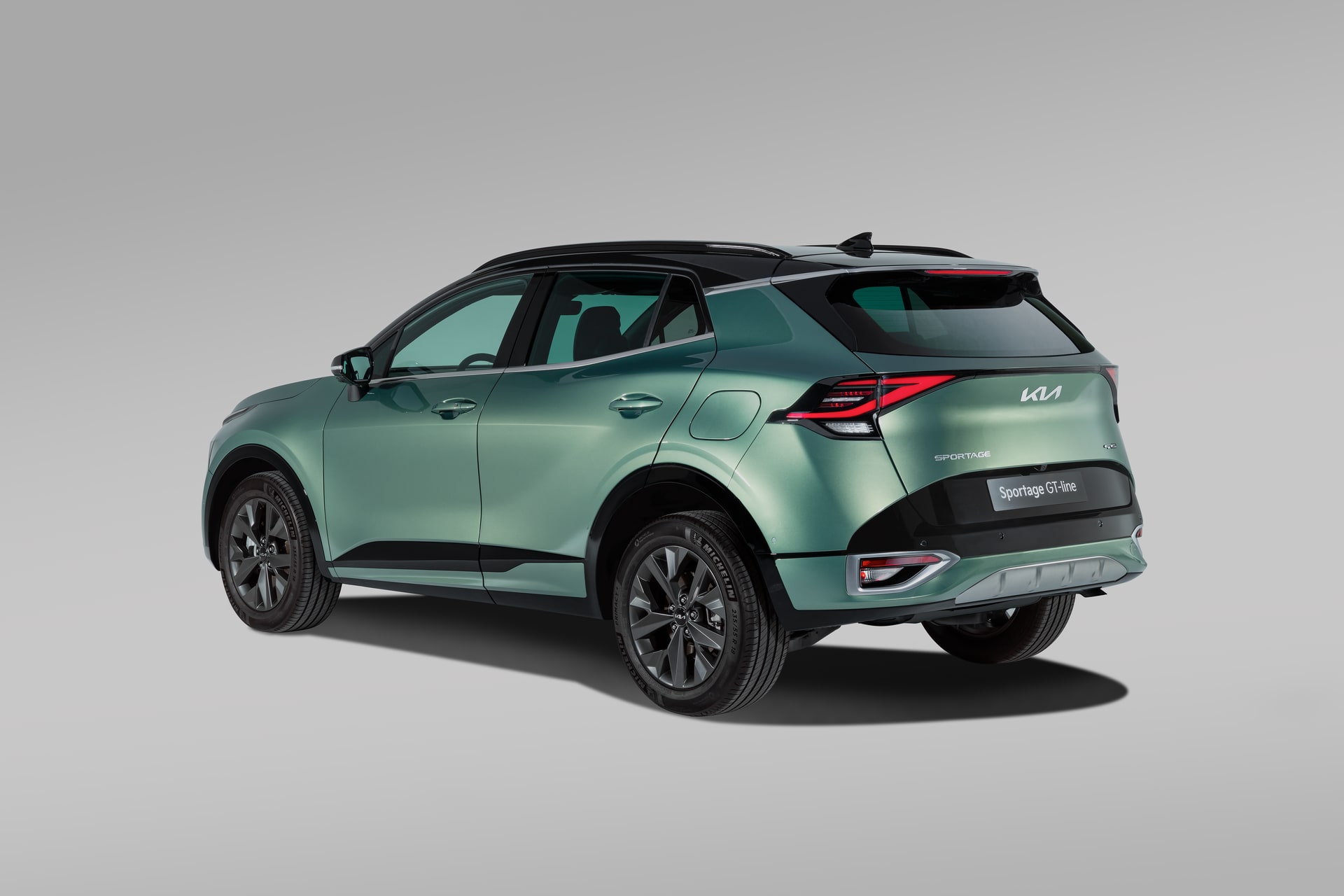
Kia Sportage — from €27,460
In its HEV version it posts real consumption between 6.0 and 7.2 l/100 km depending on use, and the PHEV is homologated at 70 electric km, which in practice drops to 50–55 useful km in cool temperatures. The interior has taken a real step forward—curved screens, materials above the Korean average of three years ago—although high-speed soundproofing still needs one more notch. Seven years of warranty, which weighs heavily in the total-cost calculation.
| Power kW | Power hp | Top speed | Range | Consumption | Label | Fuel |
|---|---|---|---|---|---|---|
| 175 kW | 239 hp | 193 km/h | ~780 km | 5.5 l/100 km | ECO | Hybrid |
Hyundai Tucson — from €31,040
It shares its platform with the Sportage, but the tuning is different: steering slightly more assisted, suspension calibrated a little more comfortably. In a mixed profile, the PHEV variant works if you have a plug; in a long-distance profile, the HEV is the sensible choice. On paper they share figures with the Kia; in practice, the choice between the two is usually decided by the dealer’s discount.
| Power kW | Power hp | Top speed | Range | Consumption | Label | Fuel |
|---|---|---|---|---|---|---|
| 212 kW | 288 hp | 192 km/h | 70 electric km | 1.4 l/100 km WLTP | ZERO | PHEV |
Cupra Formentor VZ — from €49,160
The PHEV with the most dynamic character in the group. In electric mode it reaches around 90 useful km with the renewed battery, and with the combustion engine awake it drives with a precision that none of the rivals mentioned here matches. The catch? It is debatable whether its price premium over a Sportage PHEV pays off for a user who only seeks efficiency. If on top of savings you want smiles on a mountain road, this is the one.
| Power kW | Power hp | Top speed | Range | Consumption | Label | Fuel |
|---|---|---|---|---|---|---|
| 200 kW | 272 hp | 220 km/h | 116 electric km | 1.7 l/100 km WLTP | ZERO | PHEV |
Renault Austral — from €36,909
The Austral’s E-Tech full hybrid has a dog-clutch gearbox architecture that is among the most efficient on the market in town: real consumption of 5.4–5.9 l/100 km in urban driving is achievable without effort. On the motorway it climbs to around 6.7 l/100 km, competitive but not leading. The interior is well resolved, with a dual screen setup that no longer intimidates anyone.
| Power kW | Power hp | Top speed | Range | Consumption | Label | Fuel |
|---|---|---|---|---|---|---|
| 146 kW | 200 hp | 175 km/h | ~900 km | 4.7 l/100 km | ECO | Hybrid |
Peugeot 3008 — from €37,130
The new-generation plug-in hybrid 3008 offers around 85 useful electric km and an interior—the renewed i-Cockpit—that feels a step above the mainstream average. The steering is a touch heavier than I’d like, and the boot is somewhat tight compared with the Austral, but as a mixed-use car with a plug at home it is one of the most well-rounded proposals.
| Power kW | Power hp | Top speed | Range | Consumption | Label | Fuel |
|---|---|---|---|---|---|---|
| 165 kW | 225 hp | 220 km/h | ~85 electric km | 2.4 l/100 km WLTP | ZERO | PHEV |
Four-year total cost of ownership: what really matters
Cross-checking purchase price, real consumption, insurance, scheduled maintenance and estimated residual value, the gap between the cheapest and most expensive of this selection exceeds €6,000 over four years and 60,000 km. That is no minor detail.
Summary table and editorial score
| Model | Ideal profile | Real consumption | Price from | Score /10 |
|---|---|---|---|---|
| Toyota RAV4 | Long-distance | 5.5 l/100 km | €44,250 | 9.0 |
| Kia Sportage HEV | Mixed | 5.5 l/100 km | €27,460 | 8.5 |
| Hyundai Tucson PHEV | Mixed with plug | 1.4 l/100 km (charged) | €31,040 | 8.3 |
| Cupra Formentor PHEV | Mixed enthusiast | 1.7 l/100 km (charged) | €49,160 | 8.4 |
| Renault Austral E-Tech | Urban | 4.7 l/100 km | €36,909 | 8.7 |
| Peugeot 3008 PHEV | Premium mixed | 2.4 l/100 km (charged) | €37,130 | 8.2 |
Recommendations by mileage band
- Under 10,000 km/year: Renault Austral E-Tech if use is urban; Kia Sportage HEV if you want to contain spending.
- Between 10,000 and 20,000 km/year with a home plug: Cupra Formentor PHEV or Peugeot 3008 PHEV depending on priority (dynamism or comfort).
- Over 20,000 km/year, lots of motorway: Toyota RAV4. Hard to dispute its throne.
Frequently asked questions
Does a plug-in hybrid SUV make sense without a home charging point?
No. Without an accessible plug, the PHEV drags a heavy battery around with its combustion mechanics, and real consumption can rise above that of an equivalent HEV. If you cannot recharge, go straight for a self-charging model.
How far does real consumption drift from WLTP in 2026?
For HEVs the gap ranges between 15% and 25% depending on terrain and driving style. For PHEVs it depends enormously on whether you drive with charge: with a full battery you can come in below the homologated figure; without it, the difference from WLTP can exceed 40%.
What useful electric range should I require from a PHEV in 2026?
A minimum of 70–80 real km in mild conditions. Below that, it does not cover most daily trips well and penalises the cost-of-use equation.
What is the best hybrid SUV of 2026 for pure efficiency?
For motorway and long-distance profiles, the Toyota RAV4 remains the reference for sustained consumption and proven reliability. In town, the Renault Austral E-Tech is close behind with urban consumption that is even better.


 Peugeot E-208 GTi: a battery-powered toy that revives the spirit of the 1980s sports cars
 New Lexus ES: luxury grows and goes electric
 First contact with the Dacia Sandero Hybrid 155: power and efficiency from €19,890
Deja un comentario