EBRO Hybrid Cars Buying Guides SUV
How to Choose a PHEV SUV in 2026: Electric Range, Real Consumption and Taxation
 Dani Montesinos
20 May 2026
7 min.
Technical guide to choosing the best plug-in hybrid SUV in 2026 in Spain: WLTP range, real consumption, CERO label and taxation analysed without filters.
The plug-in hybrid SUV reaches its maturity in 2026. What five years ago was a timid hybrid with 40 kilometres of electric range is today a car capable of covering an entire week of urban journeys without starting the combustion engine. But the offer has multiplied, WLTP figures play at confusing, and taxation varies depending on the postcode. This guide brings order to the purchase decision for a 2026 PHEV SUV using three objective criteria: real electric range, combined consumption and tax fit.
Why the PHEV makes sense again in 2026
After a few years in which the official discourse seemed to have buried the plug-in hybrid in favour of the pure electric car, the pendulum has swung back. Batteries have grown to 20-25 usable kWh, homologated ranges comfortably exceed 90 km, and access to Low Emission Zones remains automatic thanks to the CERO label. For those who cover 40-60 km a day and make occasional long trips, it remains the most versatile technical solution.
The three criteria that really matter
WLTP electric range: the 90 km threshold
The reasonable benchmark in 2026 sits between 90 and 100 km WLTP. Below that figure, the real cycle (especially on motorway and in winter) falls short and the car ends up working like a heavy conventional hybrid. Above it, one can aspire to a full working week in electric mode with a single charge.
Real consumption with and without battery
Here lies the usual trap. A PHEV homologates 0.5-0.8 L/100 km because the WLTP cycle assumes a charged battery. With the battery depleted, real consumption ranges between 6 and 8 L/100 km due to the extra weight of the hybrid system. The key question: will I plug it in every day? If the answer is no, a conventional hybrid such as the EBRO s400 HEV is more cost-effective.
Taxation: CERO label, ZBE and subsidies
The CERO label is maintained as long as the model homologates 40 km of electric range or more, a requirement that any modern PHEV meets with margin. This guarantees access to Madrid Central, ZBE Barcelona and the rest of restricted zones, as well as IVTM tax reductions in numerous municipalities. The Plan MOVES III remains active under its extension, with variable aid depending on the autonomous community.
MG HS PHEV, from approximately €37,340
The MG HS PHEV has become one of the segment’s benchmarks for value-for-money. Its 103 km WLTP electric range and 21.4 kWh battery place it at the top of the category, with 339 combined CV that make it one of the most powerful PHEV SUVs at this price.
| Power kW | Power CV | Top speed | Range | Consumption | Label | Fuel |
|---|---|---|---|---|---|---|
| 200 kW | 268 CV | 200 km/h | 90 km WLTP | 0.54 L/100km | CERO | PHEV |
EBRO s700 PHEV, from approximately €28,990
The revived Spanish brand presents with the s700 PHEV a serious proposal: 90 km WLTP, 347 combined CV and a Luxury trim that starts below the Premium thanks to EBRO’s commercial policy. For those seeking a family SUV with a CERO label and production linked to Spain, it is an alternative with its own merits.
| Power kW | Power CV | Top speed | Range | Consumption | Label | Fuel |
|---|---|---|---|---|---|---|
| 205 kW | 279 CV | 180 km/h | 90 km WLTP | 2.4 L/100km | CERO | PHEV |
Hyundai Tucson PHEV, from approximately €33,315
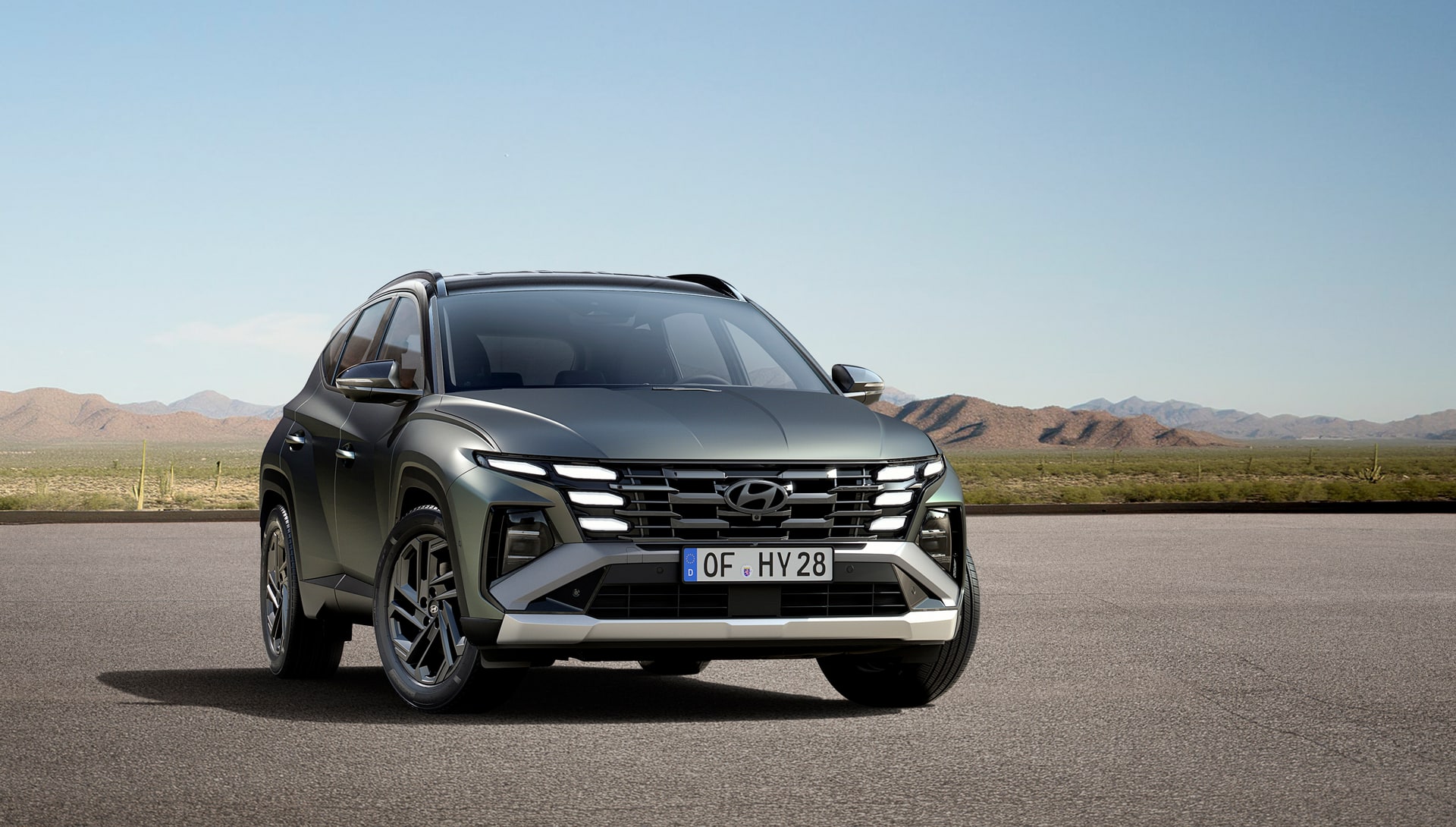
Hyundai maintains one of the most balanced PHEV ranges on the market. The plug-in Tucson, evolved for 2026, offers around 70 km WLTP with a 252 CV powertrain and all-wheel drive. It may not be the electric range champion, but the combination of reliability, service network Hyundai and five-year warranty positions it as the conservative option in the segment. Hyundai remains, together with Kia, the brand that has best understood the balance between electrification and price.
| Power kW | Power CV | Top speed | Range | Consumption | Label | Fuel |
|---|---|---|---|---|---|---|
| 212 kW | 288 CV | 191 km/h | ~70 km WLTP | 5.9 L/100km | CERO | PHEV |
Citroën C5 Aircross Plug-in Hybrid, from approximately €39,590
Citroën brings to the segment what it does best: comfort. The renewed C5 Aircross PHEV keeps its philosophy of Progressive Hydraulic Cushions suspension and Advanced Comfort seats. Electric range is around 85 km WLTP in the latest update, a very competitive figure. For those who cover many kilometres and prioritise posture over lap times, Citroën remains a choice with personality. The French brand has also managed to modernise its range with proposals such as the Citroën ë-C4 in the purely electric segment.
| Power kW | Power CV | Top speed | Range | Consumption | Label | Fuel |
|---|---|---|---|---|---|---|
| 165 kW | 225 CV | 225 km/h | 55 km WLTP | 2.5 L/100km | CERO | PHEV |
Volvo XC60 Recharge T6, from approximately €66,450
Volvo plays in a different price league, but the proposal makes sense for those seeking discreet premium. The XC60 Recharge T6 reaches around 80 km WLTP, adds 350 CV and keeps the active safety hallmark that distinguishes the Swedish brand. Those wanting to take a step further towards pure electric will find in the Volvo EC40 (487-582 km WLTP depending on version) a coherent alternative from the same house.
| Power kW | Power CV | Top speed | Range | Consumption | Label | Fuel |
|---|---|---|---|---|---|---|
| 246 kW | 335 CV | 180 km/h | 79 km WLTP | 2.7 L/100km | CERO | PHEV |
Changan Deepal S07 PHEV, from approximately €38,000
Changan Deepal is one of the most relevant Chinese arrivals in Spain for 2026. The S07 PHEV bets on an extended-range architecture with electric range figures exceeding 100 km WLTP, in line with what the segment leaders offer today. Changan Deepal positions itself as a technological alternative to the European-Korean duopoly, with generous standard equipment. We will see whether Changan Deepal consolidates its sales network at the pace of its product promise.
| Power kW | Power CV | Top speed | Range | Consumption | Label | Fuel |
|---|---|---|---|---|---|---|
| 160 kW | 218 CV | 190 km/h | ~110 km WLTP | 4.9 L/100km | CERO | PHEV |
Geely Starray EM-i, from approximately €26,215
Geely enters the segment with the Starray EM-i, a PHEV SUV that homologates competitive electric range figures and an aggressive price. The Chinese group, which already controls Volvo, brings a more mature technical base than many rivals of the first Asian wave.
| Power kW | Power CV | Top speed | Range | Consumption | Label | Fuel |
|---|---|---|---|---|---|---|
| 192 kW | 262 CV | 180 km/h | 112 km WLTP | ~1.1 L/100km | CERO | PHEV |
Comparison table and score
Score out of 10 weighing electric range, consumption, power, label and indicative price.
| Model | Range | Power CV | Consumption | Label | Price from | Score |
|---|---|---|---|---|---|---|
| MG HS PHEV | 90 km | 268 CV | 0.54 L | CERO | €37,340 | 9.0 |
| EBRO s700 PHEV | 90 km | 279 CV | 2.4 L | CERO | €28,990 | 8.5 |
| Hyundai Tucson PHEV | 70 km | 288 CV | 5.9 L | CERO | €33,315 | 8.0 |
| Citroën C5 Aircross PHEV | 55 km | 225 CV | 2.5 L | CERO | €39,590 | 8.2 |
| Volvo XC60 Recharge | 79 km | 335 CV | 2.7 L | CERO | €66,450 | 8.3 |
| Changan Deepal S07 PHEV | ~110 km | 218 CV | 4.9 L | CERO | ~€38,000 | 8.4 |
| Geely Starray EM-i | 112 km | 262 CV | ~1.1 L | CERO | €26,215 | 8.1 |
Price note: the figures indicated correspond to the manufacturer’s recommended retail price without considering current offers, dealer discounts, one-off campaigns or purchase aid such as Plan MOVES III.
FAQ
How many km of WLTP electric range should a PHEV SUV have in 2026?
The recommended minimum sits between 90 and 100 km WLTP. With that figure, typical daily use (40-60 km) is covered even in winter or on the motorway, where electric performance drops by 20% to 30% compared with the homologation cycle.
Is a PHEV still worthwhile if it is not plugged in every day?
No. A plug-in hybrid without frequent charging consumes between 6 and 8 L/100 km due to the extra weight of the system and battery. If no domestic charging point is available, it is advisable to reconsider the purchase in favour of a conventional hybrid such as the EBRO s400 HEV or a mild hybrid.
Do PHEVs keep the CERO label in 2026?
Yes. As long as the model homologates a minimum electric range of 40 km, the DGT maintains the CERO label, which guarantees access to all ZBEs in Spain and IVTM tax reductions depending on the municipality.
What aid is available to buy a PHEV SUV in Spain?
Plan MOVES III remains in force under its extension, with amounts of up to €2,500 for PHEVs with scrappage and electric range above 30 km. Management and deadlines vary by autonomous community, so it is advisable to confirm the programme’s status on the official IDAE website before finalising the purchase.


 The seven finalists for the 2027 European Car of the Year (COTY) are exclusively electric
 Peugeot E-208 GTi: a battery-powered toy that revives the spirit of the 1980s sports cars
 New Lexus ES: luxury grows and goes electric
Deja un comentario