How to Choose a Plug-in Hybrid SUV with a CERO Label in 2026 for Maximum Urban Tax Advantage
 Dani Montesinos
17 July 2026
7 min.
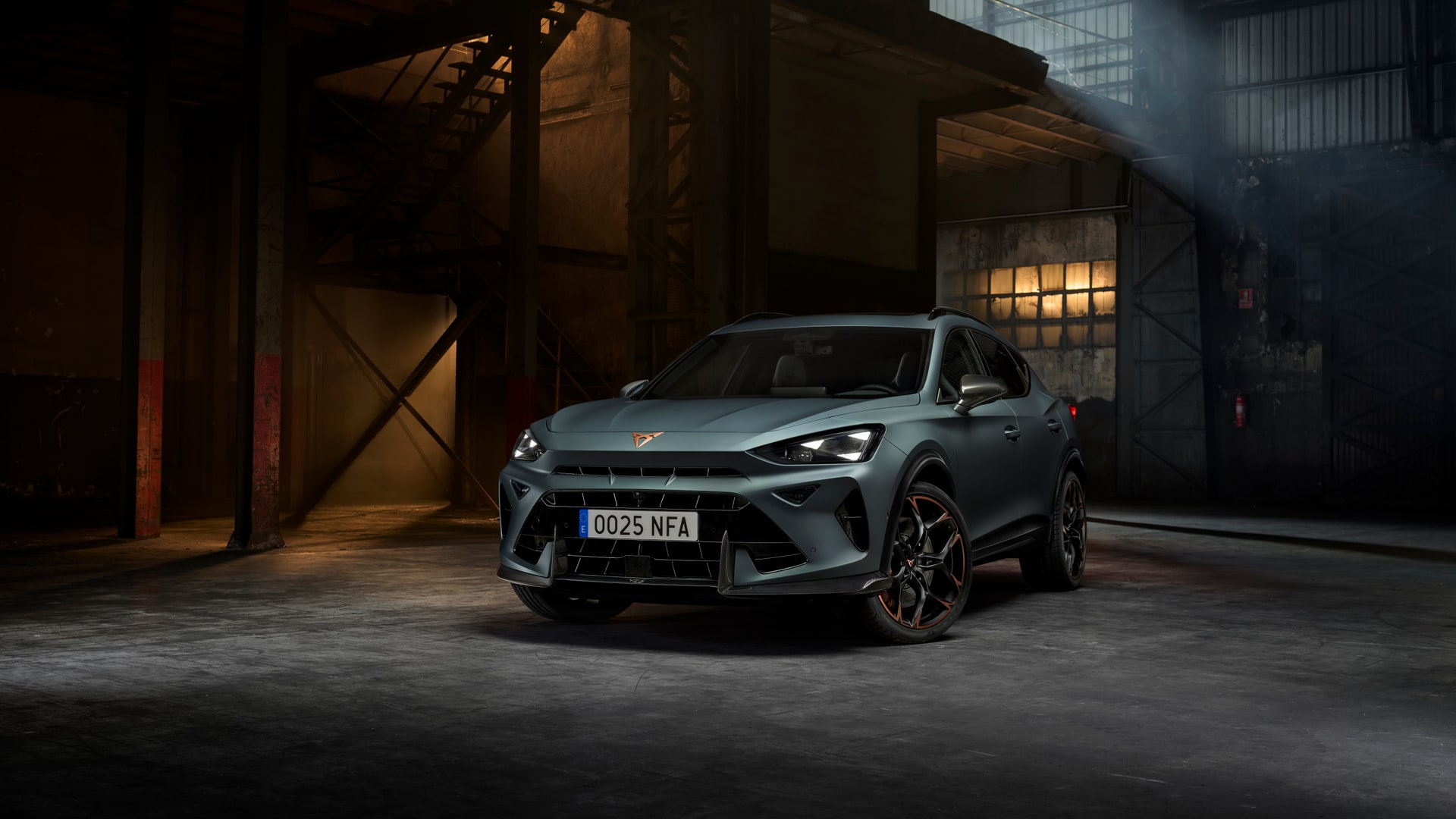
Editorial guide to choosing the most cost-effective CERO-label PHEV SUV: WLTP electric range, urban taxation and real cost of use compared
The CERO-label plug-in hybrid SUV in 2026 remains, for many urban drivers in Spain, the most logical formula when fully electric still imposes logistical compromises. Growing electric range, free access to the ZBE low-emission zones, substantial discounts on the IVTM road tax in several cities, and a registration tax system that still rewards low emissions: a well-chosen PHEV now delivers better economics than ever. Poorly chosen, on the other hand, it becomes an expensive combustion car hauling around a battery that is barely used.
Before getting into the details, it is worth declaring an absence. In our editorial judgement, BYD falls outside this analysis: despite the manufacturer’s commercial push in Spain, we believe other Chinese proposals on the market offer mechanical tuning and energy efficiency better aligned with the expectations of the European driver. This is not a disqualification of the product — its range has objective virtues — but a decision of criteria: in a comparison as tight as this one, we prefer to prioritise powertrains whose balance between thermal response and electric refinement seems more mature to us.
That said, five serious candidates on the table.
Why the CERO label will remain decisive in 2026
The DGT maintains the CERO badge for PHEVs that homologate more than 40 km of WLTP electric range. It seems a low threshold, but it filters ruthlessly: not every plug-in sold in Spain reaches it comfortably, and some barely scrape the figure to the detriment of the real useful life of the battery. The CERO opens doors that the ECO does not — unrestricted entry to the Madrid Central ZBE and its extensions, free SER parking in several districts, a 75% discount on the IVTM in Madrid, Barcelona and Valencia according to local ordinance, and advantages on regionally managed tolls.
A PHEV with barely 40 km is CERO on paper. One with 90–130 km of real range is CERO in practice.
Cupra Formentor VZ e-Hybrid — from €49,160
The Formentor VZ e-Hybrid is the most dynamically characterful proposal in the group. Its combination of 1.5 TSI and electric motor delivers a combined 272 CV and a WLTP electric range that in recent updates is around 120–125 km, thanks to the 19.7 kWh usable battery. For the typical daily commute Madrid–Las Rozas and back, most weeks the combustion engine never even fires up.
AC charging reaches 11 kW and, a key novelty over previous generations, accepts DC fast charging up to 50 kW. That changes usage: a coffee stop on a long journey recovers enough battery to return to electric mode. Dynamics remain the strong argument — steering with just the right weight, a biting front axle — although the feel of the regenerative braking takes some getting used to.
| Power kW | Power CV | Top speed | Electric range | WLTP consumption | Label | Fuel |
|---|---|---|---|---|---|---|
| 200 kW | 272 CV | 220 km/h | 116 km | 1.7 l/100 km | CERO | PHEV |
Mercedes-Benz GLC 300 e — from €68,113
The GLC 300 e is the gold standard of this comparison if refinement is what you are after. Its plug-in combines a 2.0 petrol engine with an electric motor for 313 CV and a 31.2 kWh battery that homologates up to 130 km WLTP. In real mixed use, running on electric in town and combustion only on motorways, it is perfectly feasible to go weeks without refuelling.
It accepts 60 kW DC charging, still an exception in premium PHEVs. That said, it is heavy. Exceeding 2,300 kg has consequences in corners, and the price — easily above €70,000 for a reasonably equipped car — forces you to run the numbers carefully against pure electric alternatives from the same group.
| Power kW | Power CV | Top speed | Electric range | WLTP consumption | Label | Fuel |
|---|---|---|---|---|---|---|
| 230 kW | 313 CV | 218 km/h | 127 km | 2.1 l/100 km | CERO | PHEV |
Volkswagen Tiguan eHybrid — from €47,630
The new-generation Tiguan has finally understood that a plug-in cannot be an afterthought. A 19.7 kWh battery, WLTP range of around 120 km and — this is what matters — 50 kW DC charging. In everyday practice, the division of labour between electric and combustion is very well resolved: clean transitions, almost no trace of the typical jolt when the 1.5 TSI starts.
The approach is more conservative than that of the Cupra, with which it shares its platform. Sober interior, settings calibrated towards comfort, perceived quality a step above the previous generation. In my view, the best rational purchase within the VW group in this segment.
| Power kW | Power CV | Top speed | Electric range | WLTP consumption | Label | Fuel |
|---|---|---|---|---|---|---|
| 150 kW | 204 CV | 210 km/h | 119 km | 1.6 l/100 km | CERO | PHEV |
Lynk & Co 08 — from €52,995
The surprise of the group. The 08 arrives with a homologated electric range of 200 km WLTP — an unusual figure among PHEVs — thanks to a 39.6 kWh battery that redefines what a plug-in can be. 85 kW DC charging, practically unheard of in this segment. On paper, it is an electric car with a thermal safety net.
In practice, the package is heavy and it shows, and the suspension tuning is softer than an average European would expect. Even so, for a user doing 40–60 km a day in town and occasionally making long trips, this car can become a functional electric vehicle that almost never visits a petrol station.
| Power kW | Power CV | Top speed | Electric range | WLTP consumption | Label | Fuel |
|---|---|---|---|---|---|---|
| 256 kW | 345 CV | 230 km/h | 200 km | 1.0 l/100 km | CERO | PHEV |
Peugeot 3008 Hybrid — from €37,130
The plug-in 3008 plays a different card. Less electric range — around 85 km WLTP with the 17.8 kWh usable battery — but a clearly lower entry price and an interior design that remains an aesthetic reference in the segment. The i-Cockpit polarises, it is true; it convinces us.
For an urban user with home charging and contained daily journeys, those 85 km are sufficient. It is not the option for anyone prioritising absolute range, but it is for anyone who wants a CERO label without crossing the psychological barrier of €45,000.
| Power kW | Power CV | Top speed | Electric range | WLTP consumption | Label | Fuel |
|---|---|---|---|---|---|---|
| 145 kW | 225 CV | 220 km/h | 85 km | 2.4 l/100 km | CERO | PHEV |
Summary table and editorial score
Score out of 10 weighing electric range, charging power, real consumption, urban tax fit and value for money.
| Model | Electric range | DC charging | CV | Price from | Score |
|---|---|---|---|---|---|
| Cupra Formentor VZ e-Hybrid | 116 km | 50 kW | 272 | €49,160 | 8.5 |
| Mercedes-Benz GLC 300 e | 127 km | 60 kW | 313 | €68,113 | 8.3 |
| Volkswagen Tiguan eHybrid | 119 km | 50 kW | 204 | €47,630 | 8.4 |
| Lynk & Co 08 | 200 km | 85 kW | 345 | €52,995 | 8.7 |
| Peugeot 3008 Hybrid | 85 km | — | 195 | €37,130 | 7.6 |
Verdict: which one does the 2026 urban driver buy?
If the criterion is purely rational — maximum electric range per euro, best fast charging, greatest likelihood of not refuelling for weeks — the Lynk & Co 08 takes the prize. If brand, a consolidated after-sales network and perceived quality weigh more, the Tiguan eHybrid is the mature choice. And if what you are looking for is character, the Formentor remains the one that best combines the CERO label with genuinely enjoyable driving.
Is the GLC 300 e worth it? On paper it is the most complete. In real life, you have to do the sums.
Frequently asked questions
What minimum electric range does a PHEV need to have the CERO label in 2026?
The DGT requires more than 40 km of WLTP electric range. All the models analysed in this guide comfortably exceed that threshold, with homologated figures between 85 and 200 km.
Can a CERO-label PHEV SUV enter the Madrid and Barcelona ZBEs without restrictions?
Yes. The CERO label guarantees free access to the Low Emission Zones of Madrid, Barcelona and the other Spanish capitals with an active ZBE in 2026, with no time or route limits.
What tax benefits does a CERO plug-in hybrid SUV receive in Spain?
A discount of up to 75% on the IVTM (circulation tax) according to municipal ordinance, a full exemption from the registration tax if homologated emissions are below 120 g/km CO₂, and free or reduced parking in the SER zones of several capitals.
Is a PHEV worth it if I don’t have a charging point at home?
With caveats. Without domestic or workplace charging, the PHEV loses much of its economic and environmental advantage: it becomes a heavy combustion car. It only pays off if you have frequent access to public charging, ideally DC for the models that accept it.


 Kia offers an electric range of 10 models, 50 versions and 400 possible combinations
 The seven finalists for the 2027 European Car of the Year (COTY) are exclusively electric
 Peugeot E-208 GTi: a battery-powered toy that revives the spirit of the 1980s sports cars
Deja un comentario