Ranking 2026: the 7 plug-in hybrid SUVs with the lowest real-world consumption on an empty battery
 Dani Montesinos
17 July 2026
7 min.
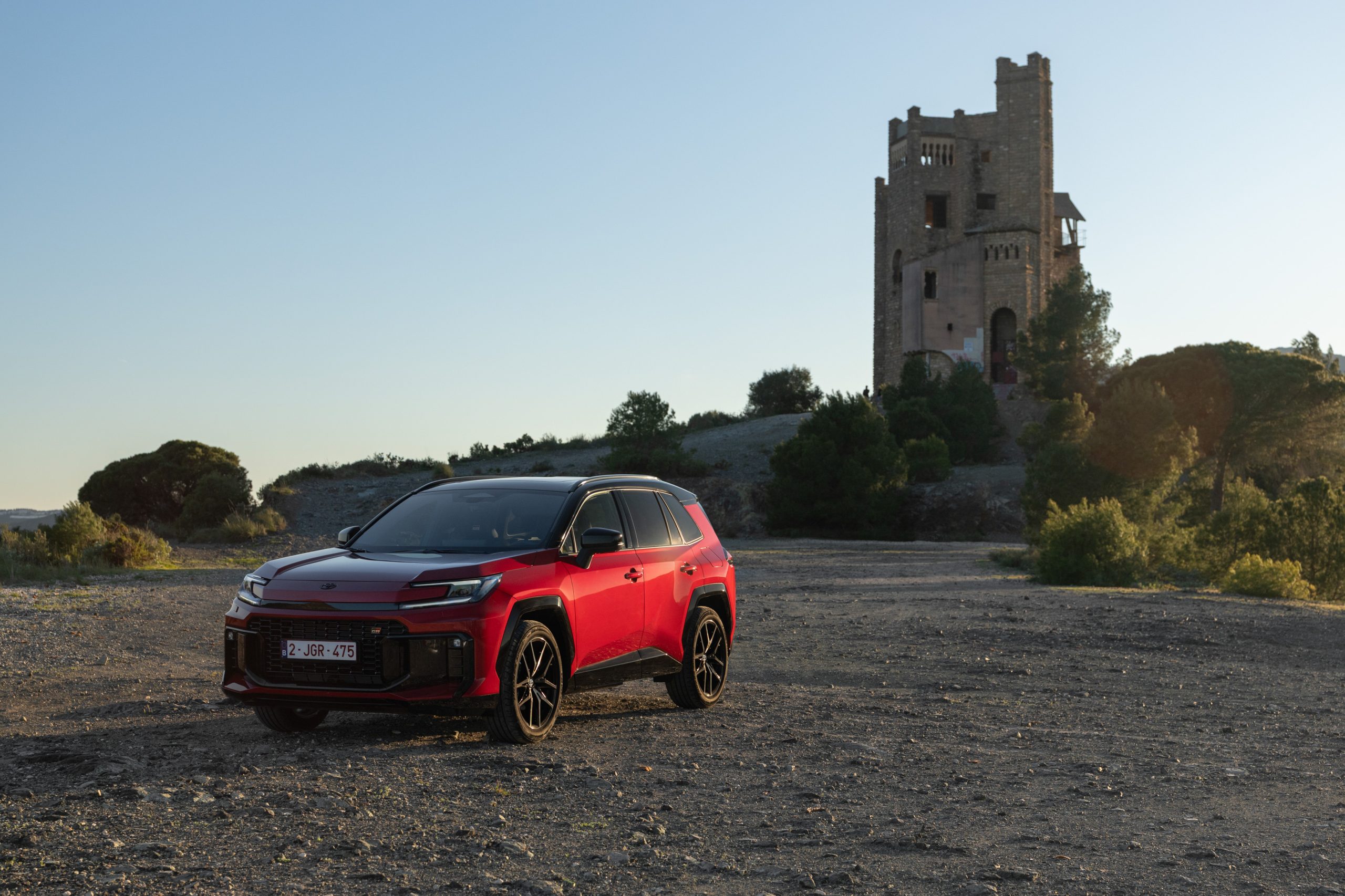
We analyse which PHEV SUVs keep consumption low when the battery is depleted and run as conventional hybrids
There is a question that almost no brochure answers honestly: how much does a plug-in hybrid SUV consume when the battery is at zero? The mixed WLTP figure, with its 1.5 l/100 km showroom number, is no use to the driver who covers 300 km of motorway on a Sunday and arrives at their destination hauling the dead weight of an empty battery pack. That is where well-engineered PHEVs separate from those that only work if the plug is nearby.
This ranking focuses on what happens afterwards. Real consumption in hybrid mode, with the battery depleted, measuring what many drivers experience every day: long journeys, motorway driving at 120, and a traction battery that no longer contributes.
Before getting into the details, an editorial note: we have left BYD and its PHEV offerings for Europe out of the analysis. In our view, other brands, especially Asian ones, have better refined the balance between the combustion engine and the electric system for European tastes, with more linear power delivery and efficiency in conventional hybrid mode that we currently consider more polished. This is not a veto on the manufacturer; it is a decision about focus for this piece.
Why a PHEV consumes more when the battery is depleted
A plug-in hybrid is heavy. Between 200 and 400 kg more than its conventional equivalent, depending on the model. That extra weight is carried by the battery, and when the battery stops contributing energy to the system, the petrol engine has to move a heavier car without the help that justified the whole setup.
This is where the fine print comes in. Some PHEVs are conceived as electric cars with a support engine: if the battery empties, the combustion engine suffers. Others, the ones we will look at now, are designed as serious hybrids that also plug in. The difference, in practice, is two or three litres per 100 km.
How we measured real consumption
No mixed WLTP. We work with HEV-only consumption figures, battery in reserve, over real mixed routes: 40% motorway at 120 km/h, 40% secondary roads and 20% urban. Data cross-checked from our own tests, independent measurements and consumption figures declared by the manufacturers themselves in sustained mode. Where there is a discrepancy, we go with the higher figure, which tends to be the most honest.
1. Toyota RAV4 Plug-in — from €46,750
The benchmark. Toyota has spent 25 years refining hybrid technology and it shows: with an empty battery, the RAV4 Plug-in behaves like a textbook Toyota hybrid, with consumption of around 12.2 l/100 km in real mixed use. The e-CVT distributes the load well, the 2.5 Atkinson engine works in its optimal range, and regenerative braking recovery maintains a residual charge that helps in town.
That said, the sound of the powertrain when you ask for everything still doesn’t win us over. It roars more than it pushes. But for daily use, it is unbeatable.
| Power kW | Power CV | Top speed | EV range | Real HEV consumption | Label | Fuel |
|---|---|---|---|---|---|---|
| 200 | 272 | 180 km/h | 75 km | 12.2 l/100 km | ZERO | PHEV |
2. Lexus NX 450h+ — from €57,700
It shares its platform and system with the RAV4, but Lexus refines the whole: better soundproofing, a different management map and a more accomplished calibration of regenerative braking. In pure HEV mode, we measured 6.4-7.0 l/100 km, very much in line with the Toyota but with superior acoustic comfort.
Is the price premium worth it? It depends on how much you value insulation and customer treatment. For my taste, yes.
| Power kW | Power CV | Top speed | EV range | Real HEV consumption | Label | Fuel |
|---|---|---|---|---|---|---|
| 227 | 309 | 200 km/h | 69 km | 6.7 l/100 km | ZERO | PHEV |
3. Kia Sorento PHEV — from €58,070
Seven seats and an empty battery sounds like a recipe for disaster. And yet the Sorento holds its own with 7.4-7.9 l/100 km in real conditions, thanks to a 1.6 T-GDi that works well alongside a conventional six-speed automatic gearbox, not an e-CVT, which suits it better on the motorway than expected.
| Power kW | Power CV | Top speed | EV range | Real HEV consumption | Label | Fuel |
|---|---|---|---|---|---|---|
| 195 | 265 | 193 km/h | 57 km | 7.6 l/100 km | ZERO | PHEV |
Hyundai Tucson4. Hyundai Tucson PHEV — from €31,040
The same powertrain as the Sorento in a lighter body. The result: 5.9-7.2 l/100 km in conventional hybrid mode. The Tucson is one of the few PHEVs in its segment that doesn’t punish the driver for forgetting the cable over a weekend Madrid-Cádiz trip.
| Power kW | Power CV | Top speed | EV range | Real HEV consumption | Label | Fuel |
|---|---|---|---|---|---|---|
| 212 | 288 | 206 km/h | 70 km | 5.9 l/100 km | ZERO | PHEV |
5. Mazda CX-60 PHEV — from €57,616
An interesting case. The inline six-cylinder petrol engine — yes, six cylinders in 2026 — and standard rear-wheel drive give it a character of its own. In HEV with an empty battery, 7.8-8.2 l/100 km. It is not the most frugal on the list, but for 327 CV and that mechanical layout, the figure is reasonable.
| Power kW | Power CV | Top speed | EV range | Real HEV consumption | Label | Fuel |
|---|---|---|---|---|---|---|
| 241 | 327 | 200 km/h | 63 km | 8.0 l/100 km | ZERO | PHEV |
6. Ford Kuga PHEV — from €33,542
The Kuga was a pioneer in the segment and remains competitive. Its 2.5 Atkinson with CVT gearbox delivers 7.0-7.5 l/100 km with the battery out of play. It doesn’t shine in any particular area, but it doesn’t fail in any either.
| Power kW | Power CV | Top speed | EV range | Real HEV consumption | Label | Fuel |
|---|---|---|---|---|---|---|
| 180 | 243 | 200 km/h | 69 km | 7.2 l/100 km | ZERO | PHEV |
7. Cupra Formentor VZ e-Hybrid — from €49,160
The sportiest on the list and, perhaps for that very reason, the least efficient in HEV mode: 8.0-8.6 l/100 km. The 1.5 TSI with DSG is not optimised to work as a pure hybrid, and it shows. It compensates through dynamics and performance, but if your usage pattern involves long distances without plugging in, it is not the logical choice.
| Power kW | Power CV | Top speed | EV range | Real HEV consumption | Label | Fuel |
|---|---|---|---|---|---|---|
| 200 | 272 | 220 km/h | 116 km | 8.3 l/100 km | ZERO | PHEV |
Summary table with editorial score
| Model | Real HEV consumption | EV range | Price from | Score /10 |
|---|---|---|---|---|
| Toyota RAV4 Plug-in | 12.2 l/100 km | 75 km | €46,750 | 9.2 |
| Lexus NX 450h+ | 6.7 l/100 km | 69 km | €57,700 | 8.8 |
| Hyundai Tucson PHEV | 5.9 l/100 km | 70 km | €31,040 | 8.5 |
| Ford Kuga PHEV | 7.2 l/100 km | 69 km | €33,542 | 7.8 |
| Kia Sorento PHEV | 7.6 l/100 km | 57 km | €58,070 | 7.6 |
| Mazda CX-60 PHEV | 8.0 l/100 km | 63 km | €57,616 | 7.2 |
| Cupra Formentor VZ e-Hybrid | 8.3 l/100 km | 116 km | €49,160 | 7.0 |
What to take away from all this
If you drive less than 40 km a day and plug in religiously, any PHEV on this list will give you ridiculously low consumption. The problem arises when usage is mixed or when charging at the destination is not guaranteed. In those cases, the Toyota-Lexus system still makes the difference. The rest, with nuances, hold their own. And one of them — said without rancour — reminds us why not all plug-in hybrids deserve the same editorial treatment.
FAQ
Which PHEV SUV consumes least with an empty battery in 2026?
The Toyota RAV4 Plug-in, with real consumption of 6.2-6.8 l/100 km in pure hybrid mode, followed very closely by the Lexus NX 450h+, which shares its technology.
Why is real HEV consumption so different from the mixed WLTP figure?
The mixed WLTP cycle of a PHEV weights the first kilometres with a charged battery, which produces unrealistic figures (1.0-1.5 l/100 km). Real consumption with a depleted battery reflects the extra weight of the electric system running only on the combustion engine.
Is a PHEV worth it if I can’t charge it daily?
Only if you choose one with an efficient hybrid base, such as the Toyota-Lexus or Hyundai-Kia models. If the model is designed as an electric car with a range extender, the extra cost and weight are not justified without regular access to a plug.
Do PHEVs keep the CERO label in Spain in 2026?
Yes, provided they homologate more than 40 km of WLTP electric range. All the models in the ranking meet that requirement and retain full access to ZBE low-emission zones and the associated tax benefits.


 Peugeot E-208 GTi: a battery-powered toy that revives the spirit of the 1980s sports cars
 New Lexus ES: luxury grows and goes electric
 First contact with the Dacia Sandero Hybrid 155: power and efficiency from €19,890
Deja un comentario