Hyundai KIA Renault Electric Cars Buying Guides Technology
How to Choose a Tech-Savvy Compact Electric SUV in 2026: Software, Smart Charging and Upgradable ADAS
 Dani Montesinos
30 July 2026
6 min.
Guide to Choosing a Compact Electric SUV in 2026 Based on OTA-Upgradable Software, Real-World Charging Curves and Evolving ADAS
Over the past decade, buying an electric car was an exercise in spreadsheets: kilowatts, kilometres and euros. In 2026 that equation has become insufficient. A 2026 compact electric SUV is today judged by the strength of its software stack, by how it manages charging according to battery state, and by whether its ADAS system can be upgraded within three years without a visit to the workshop. Hardware ages; code, if well designed, improves.
Why software rules in 2026
The paradigm shift is clear. Brands such as Tesla have spent a decade proving that a car can gain features after purchase. The rest of the industry took longer, but it is here now: Hyundai, Kia, Volvo, Renault and Skoda are rolling out over-the-air updates for electric cars that touch everything from the torque curve to the behaviour of the lane assistant. Buying an EV without considering its software roadmap is like buying a smartphone without knowing how many years of patches it will receive.
Smart charging: the metric that replaces range
WLTP range has lost relevance. What matters is smart charging for electric cars: automatic battery preconditioning when a charger is set in the navigation system, a sustained charging curve and dynamic route planning. An SUV that charges from 10 to 80% in 28 minutes with a flat curve is, in real use, faster than another with 50 km more range and a stepped curve.
Upgradable ADAS: from Level 2 to 2+ through software
An electric SUV with upgradable ADAS is one whose camera, radar and computing platform allows new functions to be added over the air. This is not marketing: Tesla added automatic lane changes years after the Model Y launch; Volvo is deploying Pilot Assist improvements on the EX30; Hyundai-Kia are preparing evolving Highway Driving Assist packages on their E-GMP architecture.
The nine contenders in Spain
Tesla Model Y — from €40,760
It remains the benchmark for software-hardware integration. Its route planner, preconditioning and Supercharger V4 set the standard. RWD version with 600 km WLTP and a peak charging rate of 250 kW.
| Power kW | Power hp | Top speed | Range | Consumption | Label | Fuel |
|---|---|---|---|---|---|---|
| 220 | 299 | 201 km/h | 600 km | 14.1 kWh/100 km | ZERO | Electric |
Kia EV3 — from €26,030
The star pupil of 2025-2026. 400 V architecture with acceptable charging, but it shines with its integrated generative AI assistant and an ADAS package with scheduled updates. Up to 605 km in the Long Range version.
| Power kW | Power hp | Top speed | Range | Consumption | Label | Fuel |
|---|---|---|---|---|---|---|
| 150 | 204 | 170 km/h | 605 km | 14.9 kWh/100 km | ZERO | Electric |
Hyundai Kona Electric — from €27,490
Electronic maturity, ccNC infotainment with OTA updates and standard ADAS with Lane Following Assist 2. Up to 514 km WLTP in its 65 kWh version.
| Power kW | Power hp | Top speed | Range | Consumption | Label | Fuel |
|---|---|---|---|---|---|---|
| 150 | 204 | 172 km/h | 510 km | 14.7 kWh/100 km | ZERO | Electric |
Volvo EX30 — from €32,800
A software-centred platform, native Android Automotive architecture and OTA updates on a public calendar. Pilot Assist evolves season after season.
| Power kW | Power hp | Top speed | Range | Consumption | Label | Fuel |
|---|---|---|---|---|---|---|
| 200 | 272 | 180 km/h | 335 km | 16.7 kWh/100 km | ZERO | Electric |
Renault Scenic E-Tech — from €41,160
OpenR Link on Android Automotive, native Google integration and an ADAS package of up to 32 assistance functions. Long Range version with 625 km WLTP.
| Power kW | Power hp | Top speed | Range | Consumption | Label | Fuel |
|---|---|---|---|---|---|---|
| 160 | 220 | 170 km/h | 623 km | 16.8 kWh/100 km | ZERO | Electric |
Peugeot E-3008 — from €42,650
STLA Medium platform, up to 700 km in the Long Range version and a panoramic i-Cockpit that paves the way for interface updates. Level 2 ADAS with semi-autonomous driving.
| Power kW | Power hp | Top speed | Range | Consumption | Label | Fuel |
|---|---|---|---|---|---|---|
| 157 | 210 | 170 km/h | 525 km | 16.8 kWh/100 km | ZERO | Electric |
BYD Atto 3 EVO — from €31,987
Blade LFP battery, a robust charging cycle and an ecosystem that improves with every DiLink update. Its software has gained maturity over the past year.
| Power kW | Power hp | Top speed | Range | Consumption | Label | Fuel |
|---|---|---|---|---|---|---|
| 230 | 313 | 160 km/h | 710 km | 16.0 kWh/100 km | ZERO | Electric |
Skoda Elroq — from €47,080
The most rational entry point into the Volkswagen group on MEB. Up to 580 km in the 85 version and a revised charging curve compared with the original Enyaq. Travel Assist ADAS with assisted lane change.
| Power kW | Power hp | Top speed | Range | Consumption | Label | Fuel |
|---|---|---|---|---|---|---|
| 210 | 286 | 180 km/h | 567 km | 17.0 kWh/100 km | ZERO | Electric |
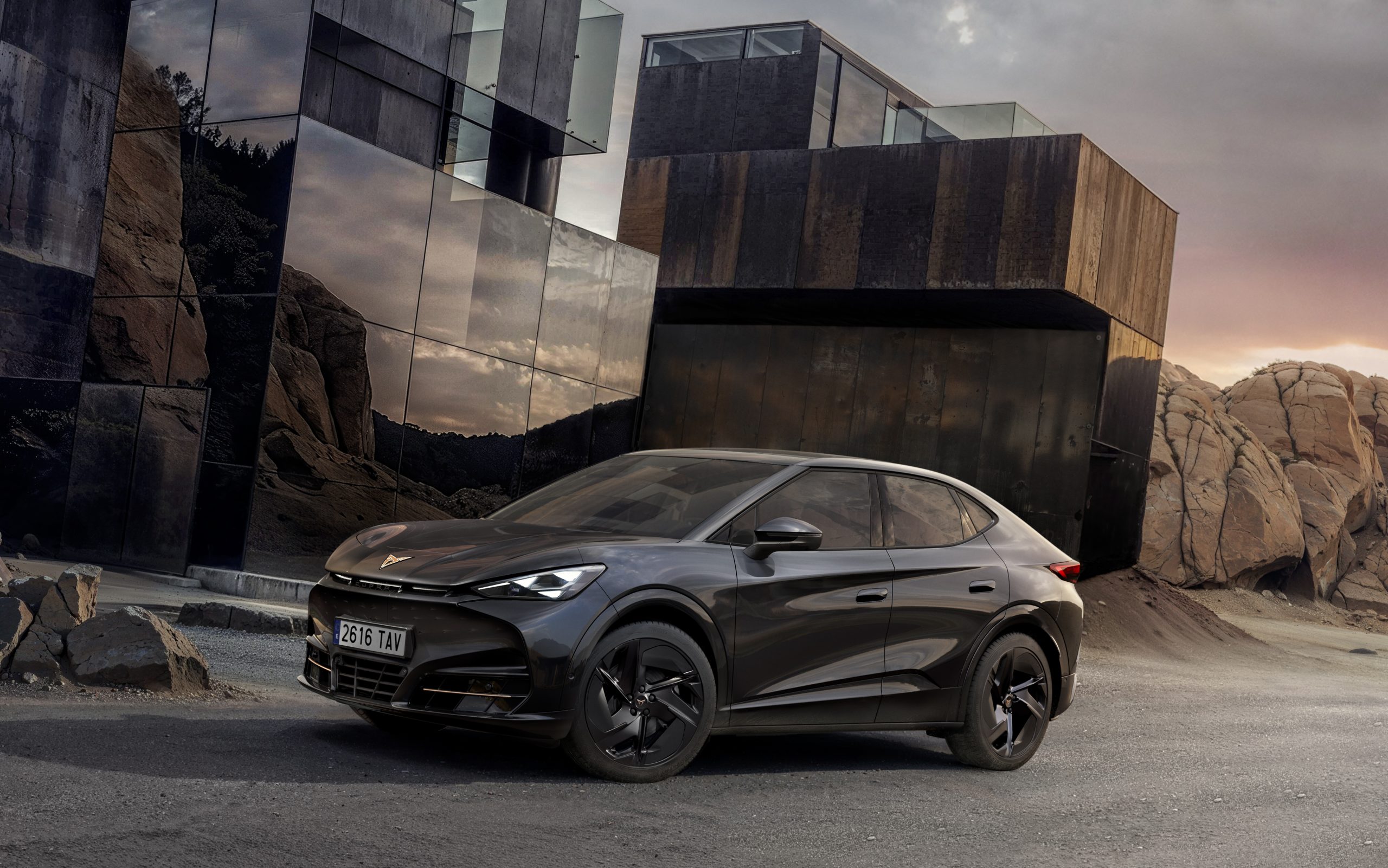
Cupra Tavascan — from €43,500
The VW group’s coupé-style SUV with the most ambitious electronics in the family: evolving E³ architecture, Travel Assist ADAS with fleet data and DC charging up to 135 kW.
| Power kW | Power hp | Top speed | Range | Consumption | Label | Fuel |
|---|---|---|---|---|---|---|
| 210 | 286 | 180 km/h | 557 km | 15.7 kWh/100 km | ZERO | Electric |
Summary table and technology ranking
Score out of 10, weighing software, OTA, charging curve, evolving ADAS and long-term support.
| Model | Range | Peak DC charging | OTA | Evolving ADAS | Price from | Score |
|---|---|---|---|---|---|---|
| Tesla Model Y | 600 km | 250 kW | Full | Yes | €40,760 | 9.5 |
| Kia EV3 | 605 km | 128 kW | Broad | Yes | €26,030 | 8.8 |
| Volvo EX30 | 335 km | 153 kW | Broad | Yes | €32,800 | 8.6 |
| Renault Scenic E-Tech | 623 km | 150 kW | Medium | Yes | €41,160 | 8.4 |
| Hyundai Kona Electric | 510 km | 102 kW | Medium | Partial | €27,490 | 8.0 |
| Skoda Elroq | 567 km | 175 kW | Medium | Partial | €47,080 | 7.9 |
| Cupra Tavascan | 557 km | 135 kW | Medium | Partial | €43,500 | 7.8 |
| Peugeot E-3008 | 525 km | 160 kW | Limited | Partial | €42,650 | 7.5 |
| BYD Atto 3 | 710 km | 88 kW | Limited | No | €31,987 | 6.8 |
Verdict: what the smart buyer should prioritise
If the question is which is the best compact electric SUV 2026 from a technology standpoint, the Tesla Model Y, Kia EV3 and Volvo EX30 lead for different reasons: total integration, a balance of price and software, and native Android architecture. This smart electric SUV buying guide rests on one premise: the car you buy in 2026 will, in 2029, be whatever its software decides it is.
Frequently asked questions
What matters more in 2026, range or software?
Software. Average real-world range already exceeds 450 km, enough for 95% of uses. The difference between a good and a bad electric car today lies in how it manages charging, routing and ADAS via OTA.
Do all electric SUVs receive OTA updates?
No. Tesla, Volvo, Renault and the recent Hyundai-Kia models do update critical functions over the air. Others limit updates to infotainment. It is worth asking the dealer about the exact scope before buying.
What charging curve should I look for?
A curve that maintains at least 70% of peak power between 20 and 60% battery. A car with a sustained 150 kW is better than one with 200 kW peaks that fall away within five minutes.
How many years of software support do brands offer?
Tesla and Volvo set no formal limit; Hyundai-Kia guarantee at least 5 years of updates; the VW group is approaching that figure. It is the new resale criterion in the used-car market.


 Peugeot E-208 GTi: a battery-powered toy that revives the spirit of the 1980s sports cars
 New Lexus ES: luxury grows and goes electric
 First contact with the Dacia Sandero Hybrid 155: power and efficiency from €19,890
Deja un comentario