Electric Cars Compact Comparisons
How to Choose an Electric Compact for Long Journeys in 2026: Charging Curve, Consumption at 120 km/h and Route Planning
 Iván Navarro
7 August 2026
5 min.
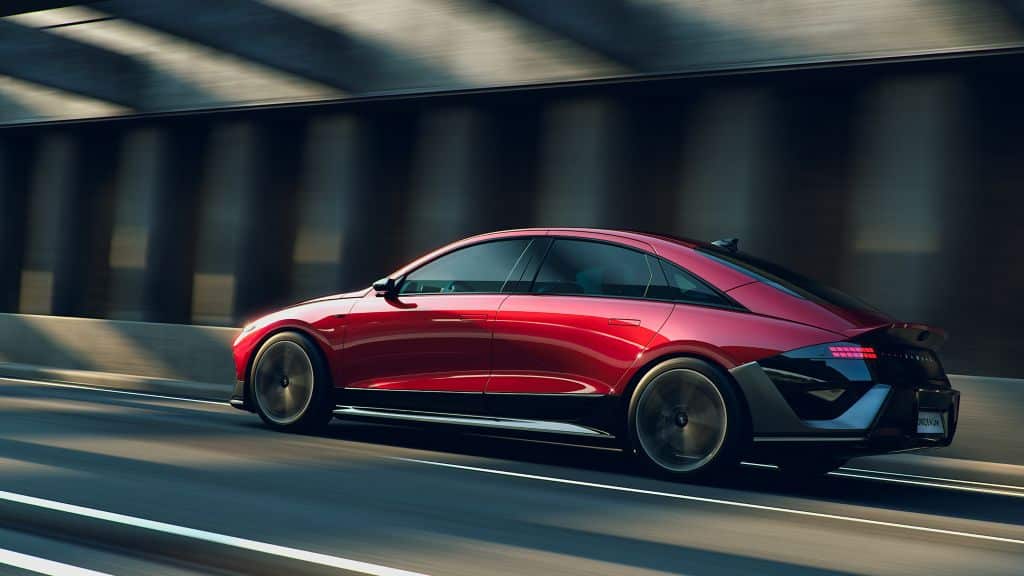
Technical guide to choosing the best electric compact for long journeys in 2026: we analyse the charging curve, consumption at 120 km/h and route planning with models available in Spain.
Buying an electric compact for long journeys in 2026 is no longer a risky bet, but it does require looking beyond the WLTP range figure. What separates a car that can do Madrid–Bilbao without frustration from one that forces you to stop three times is not the battery, but three variables that rarely appear in the brochure: how the charging curve behaves between 10 and 80%, what consumption at 120 km/h it sustains on the motorway, and how it integrates with route planners.
Why does WLTP range lie on the motorway?
The WLTP cycle combines city, road and motorway driving at low average speeds. On a real 120 km/h journey with air conditioning, rain and a loaded boot, consumption rises by between 30% and 45% above the homologated figure. A compact rated at 500 km WLTP will, in practice, deliver between 320 and 360 real km before needing a plug.
The three variables that do matter
Sustained charging curve, not peak power
The electric car charging curve is the most poorly communicated figure in the sector. A car that charges at a 250 kW peak for 90 seconds means nothing if it then collapses to 80 kW at 40% battery. What matters is the average power between 10% and 80%: that is where real time is gained or lost.
Consumption at 120 km/h
The consumption at 120 km/h defines how many real kilometres there are between stops. Below 18 kWh/100 km we are talking about aerodynamic excellence; between 18 and 21 kWh is the segment average; above 22 kWh it starts to hurt on long journeys.
Intelligent route planning
Route planning for electric cars is no longer optional. Tesla has long set the standard, but ABRP, Chargemap and the native navigation systems of Hyundai, Kia or BMW have closed the gap considerably. The key: the car should precondition the battery before reaching the charger.
The seven compacts to consider in Spain in 2026
Tesla Model 3 — from €36,990
It remains the benchmark. A flat charging curve up to 60%, integrated Supercharger network and consumption at 120 km/h of just 17.5 kWh/100 km in the Long Range version. For many, the best electric car for long journeys in 2026.
| Power kW | Power CV | Top speed | Range | Consumption | Label | Fuel |
|---|---|---|---|---|---|---|
| 358 kW | 487 CV | 201 km/h | 629 km | 14.2 kWh/100km | ZERO | Electric |
Hyundai Ioniq 6 — from €44,700
800 V architecture, Cx of 0.21 and charging from 10 to 80% in 18 minutes. It is the most efficient in the group at motorway speed, with 16.9 kWh/100 km real-world.
| Power kW | Power CV | Top speed | Range | Consumption | Label | Fuel |
|---|---|---|---|---|---|---|
| 168 kW | 229 CV | 185 km/h | 680 km | 13.9 kWh/100km | ZERO | Electric |
Kia EV6 — from €48,900
It shares the E-GMP platform with the Ioniq 6 but opts for a taller body. An exemplary charging curve and a native planner that has improved greatly in the latest update.
| Power kW | Power CV | Top speed | Range | Consumption | Label | Fuel |
|---|---|---|---|---|---|---|
| 168 kW | 229 CV | 185 km/h | 582 km | 16.5 kWh/100km | ZERO | Electric |
BMW i4 — from €57,700
Premium, dynamic and with surprisingly modest consumption for its weight. Charges at a 205 kW peak, although the curve drops off sooner than the Ioniq 6’s.
| Power kW | Power CV | Top speed | Range | Consumption | Label | Fuel |
|---|---|---|---|---|---|---|
| 250 kW | 340 CV | 190 km/h | 590 km | 16.1 kWh/100km | ZERO | Electric |
Volkswagen ID.7 — from €56,990
The electric saloon VW should have made sooner. 86 kWh usable battery, charging at 200 kW and a planner that finally preconditions without asking permission.
| Power kW | Power CV | Top speed | Range | Consumption | Label | Fuel |
|---|---|---|---|---|---|---|
| 210 kW | 286 CV | 180 km/h | 621 km | 14.5 kWh/100km | ZERO | Electric |
Peugeot e-3008 — from €47,500
The French option with the STLA Medium platform. Stable charging at 160 kW and a real motorway range of close to 380 km in its Long Range version.
| Power CV | Top speed | Range | Consumption | Label | Fuel | |
|---|---|---|---|---|---|---|
| 213 CV | 170 km/h | 525 km | 17.1 kWh/100km | ZERO | Electric |
Renault Mégane E-Tech — from €37,500
The most affordable on the list. It is not the king on the motorway (peak charging 165 kW), but its price-to-equipment ratio keeps it in the conversation for trips of up to 400 km.
| Power CV | Top speed | Range | Consumption | Label | Fuel | |
|---|---|---|---|---|---|---|
| 218 CV | 160 km/h | 500 km | 16.1 kWh/100km | ZERO | Electric |
| Real motorway range | Charging 10-80% | Consumption 120 km/h | Price from | Score | |
|---|---|---|---|---|---|
| 410 km | 18 min | 16.9 kWh | €44,700 | 9.4 | |
| 420 km | 22 min | 17.5 kWh | €44,990 | 9.3 | |
| 380 km | 18 min | 18.8 kWh | €48,900 | 8.8 | |
| 390 km | 26 min | 18.3 kWh | €57,700 | 8.5 | |
| 400 km | 26 min | 17.9 kWh | €56,990 | 8.6 | |
| 360 km | 27 min | 19.2 kWh | €47,500 | 8.1 | |
| 290 km | 32 min | 19.8 kWh | €37,500 | 7.4 |
If the long journey is the main use case,
the podium is Ioniq 6, Model 3 and EV6
, in that order. The Ioniq 6 wins on pure efficiency; the Model 3 on charging network; the EV6 on balance. BMW i4 and ID.7 are very solid premium alternatives. The e-3008 convinces if the SUV driving position is valued, and the Mégane remains the reasonable entry point for anyone making no more than one trip a month.
FAQ
What real range do I need for long motorway journeys?
Between 350 and 400 real km at 120 km/h allows stops every 3 hours, which coincides with the recommended break. Below 300 km the experience becomes uncomfortable.
Is peak charging power more important than the sustained curve?
The sustained curve. A car that maintains 150 kW on average between 10 and 80% recovers more kilometres than one with a 250 kW peak that collapses quickly.
Is 800 V worth it over 400 V?
Yes, if you travel often. 800 V (Ioniq 6, EV6) saves roughly 8–10 minutes per stop compared with an equivalent 400 V system.
Which route planner is most reliable?
A Better Routeplanner (ABRP) remains the independent standard. Among the native ones, Tesla and the Hyundai-Kia system with automatic preconditioning offer the best integrated experience.

 Peugeot E-208 GTi: a battery-powered toy that revives the spirit of the 1980s sports cars
 New Lexus ES: luxury grows and goes electric
 First contact with the Dacia Sandero Hybrid 155: power and efficiency from €19,890
Deja un comentario