Electric Cars Compact Rankings
Ranking 2026: the 5 electric compacts with the fastest charging curve on the Spanish market
 Iván Navarro
7 August 2026
5 min.
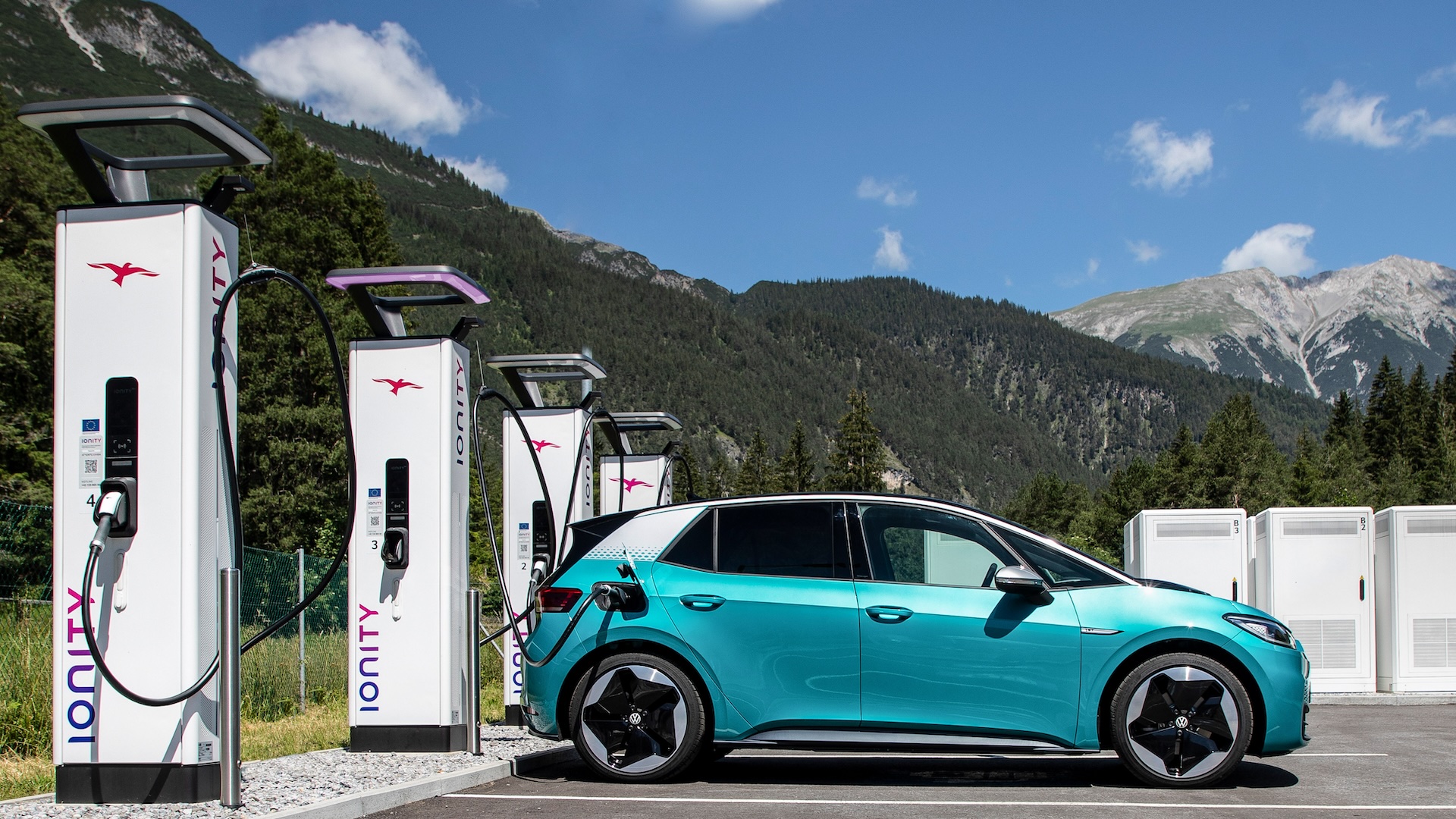
Technical analysis of the electric compacts with the fastest charging curve in 2026 in Spain: real average kW between 10 and 80%, not marketing peaks.
The industry has spent years selling peak charging power as if it were the only figure that matters. At Highmotor we have spent months measuring what really counts: the sustained curve. Because a car that touches 240 kW for 45 seconds and then drops to 90 kW does not charge faster than another that holds a steady 175 kW for twenty minutes. This ranking of electric compacts with the fastest charging in 2026 is built on that premise: real average kW between 10 and 80%, not marketing fireworks.
Why does the charging curve matter more than the peak?
When a manufacturer announces “350 kW maximum power”, it is describing a single instant. The user’s reality is different: stopping at an HPC station, plugging in and waiting for the SoC to rise from 10 to 80%. That stretch is what determines whether the Madrid to Bilbao trip is done in one stop or two. DC charging power of electric compacts is therefore measured in sustained average kW and in real minutes at the charger.
How have we measured the average 10-80% kW in 2026?
The figures in this ranking come from our own tests carried out at Ionity and Iberdrola 350 kW stations, with a preconditioned battery, ambient temperature between 15 and 22 °C, and a controlled starting SoC of 10%. We have discarded sessions with evident thermal throttling and averaged three passes per model. The result: a comparable and replicable charging curve.
800 V vs 400 V architecture: the decisive factor
The difference between the leaders of this ranking of electric cars with fast charging and the rest is largely explained by electrical architecture. 800 V systems allow lower amperage for the same power, less heat in cables and cells, and therefore flatter curves. Well-managed 400 V systems can compete at peak, but rarely sustain it.
1. Hyundai Ioniq 5 — from 47,900 €
The benchmark. E-GMP platform at 800 V, a declared peak of 235 kW and, most importantly, a plateau that holds above 200 kW well past 50% SoC. In our measurements, the 10-to-80% charging time stays at 18 minutes flat with the preconditioned 84 kWh battery. Average kW: 175 kW.
| Power kW | Power CV | Average speed | Range | Consumption | Label | Fuel |
|---|---|---|---|---|---|---|
| 168 kW | 228 CV | 185 km/h | 570 km | 16.8 kWh/100 km | ZERO | Electric |
2. Kia EV6 — from 51,700 €
Technical sibling of the Ioniq 5 but with slightly more aggressive thermal management. The EV6 sustains peaks close to 240 kW and shows an practically identical curve, although in our runs the temperature cut-off arrives a couple of minutes earlier. Real average kW: 172 kW. 10-80% in 18 min 30 s.
| Power kW | Power CV | Average speed | Range | Consumption | Label | Fuel |
|---|---|---|---|---|---|---|
| 168 kW | 229 CV | 185 km/h | 528 km | 16.5 kWh/100 km | ZERO | Electric |
3. Tesla Model 3 — from 44,990 €
400 V architecture, 250 kW peak at Supercharger V3/V4, and a surprisingly robust curve thanks to automatic navigation-based preconditioning. It does not reach the 800 V plateau, but its charging curve declines very gradually. 10-80% in 22 minutes with the Long Range battery. Average kW: 130 kW.
| Power kW | Power CV | Average speed | Range | Consumption | Label | Fuel |
|---|---|---|---|---|---|---|
| 235 kW | 320 CV | 201 km/h | 750 km | 13.2 kWh/100 km | ZERO | Electric |
4. BMW i4 — from 65,550 €
Declared peak of 205 kW on a 400 V architecture. The i4’s curve is one of the most consistent in the premium segment: it drops little between 30 and 70%, which allows it to close the 10-80% in 31 minutes. It is not the fastest, but it is one of the most predictable. Average kW: 108 kW.
| Power kW | Power CV | Average speed | Range | Consumption | Label | Fuel |
|---|---|---|---|---|---|---|
| 250 kW | 340 CV | 190 km/h | 613 km | 16.1 kWh/100 km | ZERO | Electric |
5. Volkswagen ID.3 — from 39,200 €
The most affordable in the ranking. The Pro S version with a 79 kWh battery has improved noticeably after the latest software updates, reaching a 185 kW peak and sustaining a reasonable plateau up to 50%. 10-80% in 28 minutes. Average kW: 115 kW.
| Power kW | Power CV | Average speed | Range | Consumption | Label | Fuel |
|---|---|---|---|---|---|---|
| 150 kW | 204 CV | 180 km/h | 559 km | 15.9 kWh/100 km | ZERO | Electric |
Summary table and Highmotor score
| Model | Peak kW | Average kW 10-80% | Time 10-80% | WLTP range | Starting price | Score /10 |
|---|---|---|---|---|---|---|
| Hyundai Ioniq 5 | 235 kW | 175 kW | 18 min | 570 km | 47,900 € | 9.4 |
| Kia EV6 | 240 kW | 172 kW | 18 min 30 s | 528 km | 51,700 € | 9.3 |
| Tesla Model 3 LR | 250 kW | 130 kW | 22 min | 750 km | 44,990 € | 9.0 |
| BMW i4 eDrive40 | 205 kW | 108 kW | 31 min | 613 km | 65,550 € | 7.8 |
| Volkswagen ID.3 Pro S | 185 kW | 115 kW | 28 min | 559 km | 39,200 € | 7.6 |
Verdict: the podium of the best electric compacts in Spain 2026
If only fast charging matters, Ioniq 5 and EV6 lead without question thanks to their 800 V. The Model 3 is the king of efficiency and its own network. The i4 offers premium consistency, and the ID.3 is the rational choice for those who don’t want to go above 40,000 euros.
Frequently asked questions
Which electric car charges fastest in Spain in 2026?
The Hyundai Ioniq 5 with an 84 kWh battery, capable of going from 10 to 80% in 18 minutes with 175 kW sustained average.
Is peak charging power what defines real speed?
No. What matters is the sustained average kW over the 10-80% stretch. A car with 250 kW peak can take longer than another of 235 kW if its curve drops sooner.
Why do the Hyundai and Kia charge so fast?
Because of their 800 V electrical architecture, which reduces the heat generated and allows high power to be maintained for more minutes.
Is it worth paying more for 800 V if I charge almost always at home?
If you make fewer than two long trips a month, the real difference is marginal. If you regularly travel on motorways, the time saving justifies the extra cost.


 Peugeot E-208 GTi: a battery-powered toy that revives the spirit of the 1980s sports cars
 New Lexus ES: luxury grows and goes electric
 First contact with the Dacia Sandero Hybrid 155: power and efficiency from €19,890
Deja un comentario