How to Choose an Electric SUV for Everyday Urban Use in 2026: Real Consumption, AC Charging and Hidden Costs
 Carlos Romero
22 June 2026
5 min.
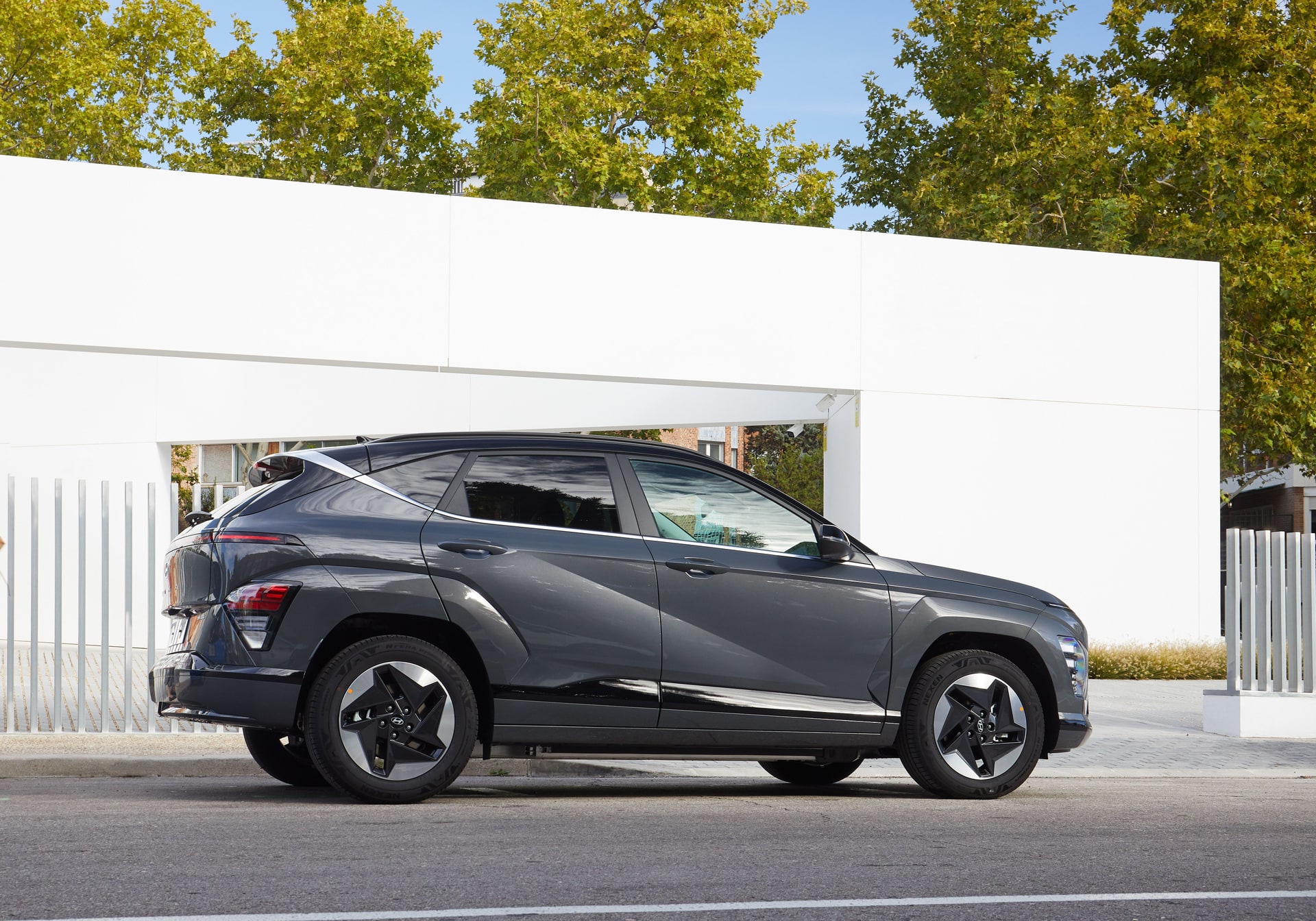
A technical guide to buying an urban electric SUV in 2026, with real consumption data, AC wallbox charging and the hidden costs nobody tells you about.
Buying an urban electric SUV in 2026 is no longer an act of faith. The range of models has multiplied, prices have found a reasonable floor and, above all, we now have real consumption and charging data that let you choose with a cool head. Yet the average buyer keeps tripping over the same stone: comparing WLTP ranges and list prices while ignoring what really makes the difference in the five-year running cost. This guide focuses on what matters.
Why 2026 is the year of the urban electric SUV
The combination of Low Emission Zones now established in every provincial capital, a mature home wallbox network and models priced below 35,000 euros has unlocked the segment. The urban electric SUV 2026 is no longer sold on its theoretical range, but on how well it fits a daily routine of 40 km, overnight charging and unrestricted access to Madrid Central or Barcelona’s ZBE.
Real urban consumption: the figure that matters
Forget the 16-18 kWh/100 km of the mixed WLTP cycle. In real urban driving, with well-used regeneration and low average speeds, compact electric SUVs run between 12 and 16 kWh/100 km. It is one of the few categories where an electric car beats its homologated figures, thanks to regenerative braking at every traffic light.
How to read WLTP against daily use
Apply a simple correction factor: for pure city driving, subtract 10-15% from the WLTP consumption; for mixed use with fast roads, add 20%. A model homologated at 15.5 kWh/100 km will come in around 13 kWh real in the city and 18-19 on the motorway at 120 km/h.
AC charging with a 7.4 kW wallbox: the realistic scenario
90% of urban users will charge at home or at work on alternating current. A single-phase 7.4 kW wallbox charges a 50-60 kWh battery in 7-9 hours, fitting neatly into an overnight off-peak tariff window. DC fast charging is for occasional trips, not for daily routine.
Hidden costs: what the dealer does not detail
Here is the line between a sound purchase and an accounting headache:
- Electrical certificate and power upgrade: 150-400 € if your current contract cannot support the extra 7.4 kW.
- Wallbox installation in a community of owners: notification to the community president, cabling from the main panel and civil works. Between 800 and 2,500 € depending on distance.
- EV-specific tyres: reinforced sidewalls to handle the extra weight, 15-20% more expensive than an equivalent combustion-engine tyre.
- Accelerated depreciation: urban electric cars from earlier generations lose value faster due to advances in battery technology.
Recommended models by brand
Renault 4 E-Tech — from 29,500 €
The rebirth of the French icon as an urban SUV. Built on the AmpR Small platform shared with the R5, with a neo-retro look and a good balance between interior space and manoeuvrability in town.
| Power kW | Power CV | Top speed | Range | Consumption | Label | Fuel |
|---|---|---|---|---|---|---|
| 110 kW | 150 CV | 150 km/h | 410 km | 14.4 kWh/100 km | Zero | Electric |
Peugeot E-2008 — from 36,900 €
Premium refinement within the B-SUV segment. Its i-Cockpit and urban agility make it a logical choice for anyone coming from a well-equipped combustion car.
| Power kW | Power CV | Top speed | Range | Consumption | Label | Fuel |
|---|---|---|---|---|---|---|
| 115 kW | 156 CV | 150 km/h | 406 km | 15.3 kWh/100 km | Zero | Electric |
Hyundai Kona Electric — from 38,250 €
A benchmark for efficiency and reliability. Its 65 kWh battery leaves room for weekend getaways without compromising urban use.
| Power kW | Power CV | Top speed | Range | Consumption | Label | Fuel |
|---|---|---|---|---|---|---|
| 160 kW | 218 CV | 172 km/h | 514 km | 14.7 kWh/100 km | Zero | Electric |
Kia Niro EV — from 39,700 €
The technical sibling of the Kona with a more family-oriented approach. Generous boot and DC charging up to 80 kW.
| Power kW | Power CV | Top speed | Range | Consumption | Label | Fuel |
|---|---|---|---|---|---|---|
| 150 kW | 204 CV | 167 km/h | 463 km | 16.2 kWh/100 km | Zero | Electric |
Volvo EX30 — from 37,500 €
The small electric SUV of 2026 with a premium aspiration. Outstanding perceived quality and one of the best power-to-size ratios in the segment.
| Power kW | Power CV | Top speed | Range | Consumption | Label | Fuel |
|---|---|---|---|---|---|---|
| 200 kW | 272 CV | 180 km/h | 476 km | 15.7 kWh/100 km | Zero | Electric |
BYD Atto 3 — from 35,990 €
The mature Chinese proposition. Blade LFP battery, full equipment as standard and an aggressive warranty.
| Power kW | Power CV | Top speed | Range | Consumption | Label | Fuel |
|---|---|---|---|---|---|---|
| 150 kW | 204 CV | 160 km/h | 420 km | 15.9 kWh/100 km | Zero | Electric |
Jeep Avenger Electric — from 34,500 €
Adventurous character in an urban format. Generous ground clearance and a design that stands out in an increasingly uniform segment.
| Power kW | Power CV | Top speed | Range | Consumption | Label | Fuel |
|---|---|---|---|---|---|---|
| 115 kW | 156 CV | 150 km/h | 400 km | 15.4 kWh/100 km | Zero | Electric |
Comparative summary table with score
| Model | Price from | Range | Consumption | AC charging 7.4 kW | Urban suitability (1-10) |
|---|---|---|---|---|---|
| Renault 4 E-Tech | 29,500 € | 410 km | 14.4 kWh | ~7 h | 9.1 |
| Peugeot E-2008 | 36,900 € | 406 km | 15.3 kWh | ~7.5 h | 8.2 |
| Hyundai Kona Electric | 38,250 € | 514 km | 14.7 kWh | ~9.5 h | 8.8 |
| Kia Niro EV | 39,700 € | 463 km | 16.2 kWh | ~9 h | 8.3 |
| Volvo EX30 | 37,500 € | 476 km | 15.7 kWh | ~8.5 h | 8.9 |
| BYD Atto 3 | 35,990 € | 420 km | 15.9 kWh | ~8 h | 8.0 |
| Jeep Avenger Electric | 34,500 € | 400 km | 15.4 kWh | ~7.5 h | 8.4 |
Recommendations by user profile
- Minimalist driver (<30 km/day): Renault 4 E-Tech or Jeep Avenger.
- Urban family with getaways: Hyundai Kona Electric or Kia Niro EV.
- Premium buyer: Volvo EX30.
- Equipment maximiser per euro: BYD Atto 3.
Frequently asked questions
What is the real consumption of an electric SUV in the city?
Between 12 and 16 kWh/100 km in pure urban use, thanks to regeneration. On the motorway at 120 km/h it rises to 18-21 kWh.
How long does it take to charge an electric SUV with a 7.4 kW wallbox?
A 50-60 kWh battery charges from 10% to 100% in 7-9 hours, fitting into an overnight off-peak tariff window.
What hidden costs should I plan for when buying an electric car?
Electrical power upgrade (150-400 €), community wallbox installation (800-2,500 €), EV-specific tyres and faster depreciation than an equivalent combustion car.
Which small electric SUV of 2026 is best for ZBE?
All electric models carry the Zero label and have unrestricted access. The choice will depend on budget and secondary use outside the city.


 Kia offers an electric range of 10 models, 50 versions and 400 possible combinations
 The seven finalists for the 2027 European Car of the Year (COTY) are exclusively electric
 Peugeot E-208 GTi: a battery-powered toy that revives the spirit of the 1980s sports cars
Deja un comentario