Elroq EV5 EX30 Hyundai KIA Kona Renault Scénic Skoda Volvo Electric Cars Buying Guides SUV
How to Choose an Electric SUV in 2026 with the Most Intuitive Interface: Screen, Physical Shortcuts and Voice Assistant
 Dani Montesinos
18 November 2026
8 min.
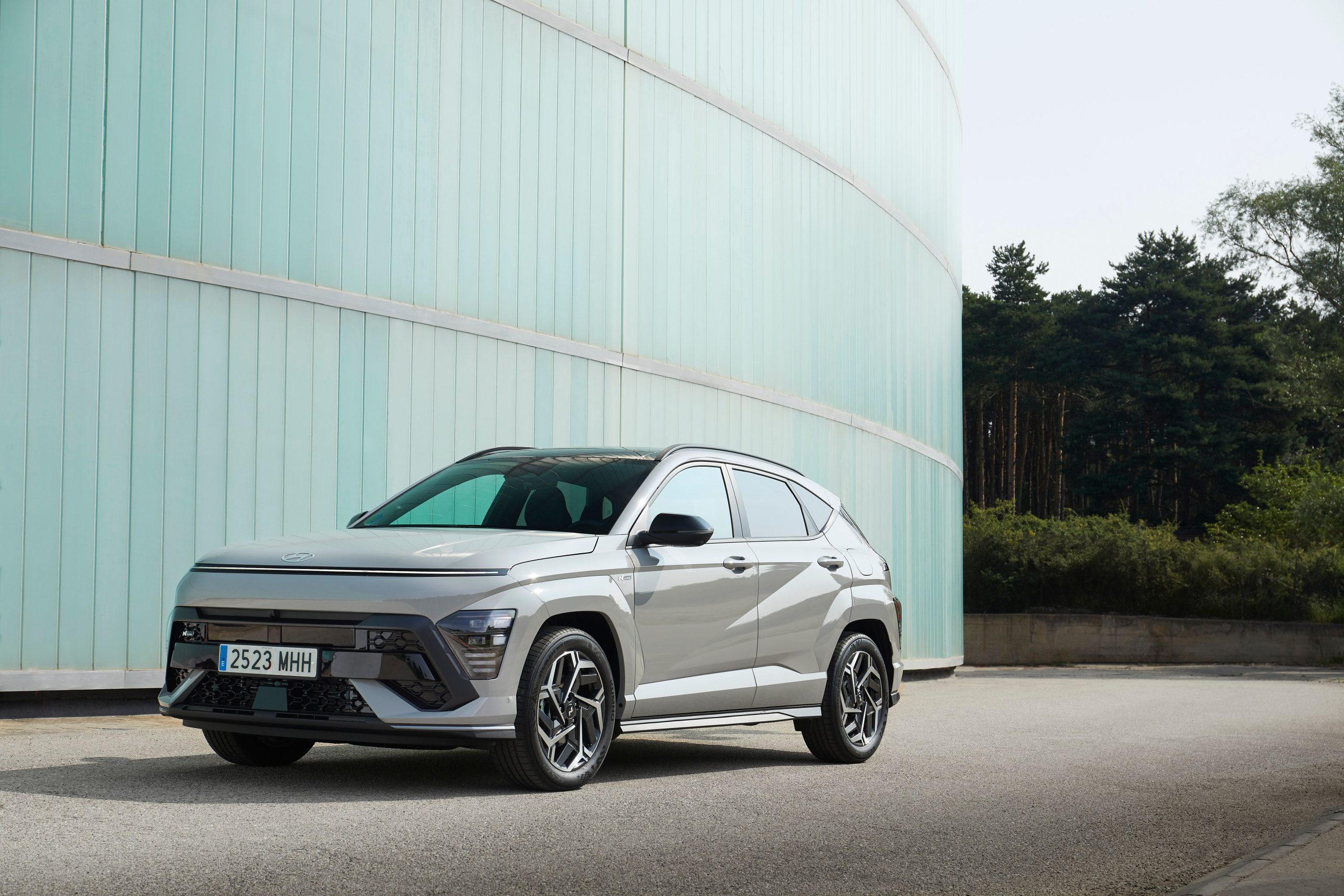
We analyse which electric SUVs on sale in Spain in 2026 best combine screen, real physical buttons and natural voice control so you can choose without frustration
There is a moment, usually at the third traffic light, when you find out whether you picked the right car. It is not the acceleration. It is whether you can lower the cabin temperature without taking your eyes off the road for four seconds. In 2026, with most electric SUVs approaching 500 kilometres of homologated range, the real difference between models no longer lies so much in the battery as in how you talk to the car. And there, surprisingly, there are still wide gaps.
Why the interface matters as much as range in 2026
For years the sales pitch was the large range figure in the brochure. That is no longer enough. With electric drivetrains practically solved in almost every segment, manufacturers now compete on the digital front: bigger screens, deeper menus and, to top it off, voice assistants that promise to understand everything and sometimes can’t even understand “turn up the heating”. The paradox is that the bigger the screen, the worse the experience tends to be if the software behind it is not up to the task. An electric SUV with an intuitive interface is not the one with the most pixels; it is the one that makes you think less.
The return of physical buttons: what Euro NCAP demands
Since Euro NCAP toughened its rating criteria, penalising cars that hide essential functions (hazard lights, headlights, horn) inside touch menus, several manufacturers have backtracked. This was not generosity: it was necessity, to avoid losing stars. The result is that in 2026 we again find physical volume wheels, dedicated seat-heating buttons and climate controls that do not require three taps on a cold screen. It is a return to something that should never have disappeared entirely.
What makes a screen truly intuitive
It is not the size in inches, although that helps. Hierarchy matters more: how many taps it takes to reach a function you use daily, whether the main menu is customisable, and whether touch response is immediate or hesitates for half a second (that half second, on the move, feels endless). Integration with CarPlay and Android Auto also matters a great deal: an electric SUV that lets you project your phone without friction frees you from learning its entire operating system.
Voice assistants: from gadget to real tool
The leap in electric car voice assistants has been one of the most notable of the last two years. It is no longer about recognising rigid commands such as “call mum”, but understanding natural phrases like “my feet are cold” and knowing which climate zone to activate. Some systems even answer questions about the car itself on the spot, such as “how much range do I have left to Valencia?”, without you touching anything. It works well on some brands. On others it still falls somewhere between what was promised and what is real.
The electric SUVs with the best interface on the Spanish market
Hyundai Kona Electric
The Kona Electric keeps something that is becoming scarce: a row of physical buttons below the central screen for climate control, a design it was already using Hyundai before Euro NCAP made it almost obligatory. Its dual 12.3-inch display is clear, with shallowly nested menus, and the voice assistant responds fluently to navigation and climate commands.
| Power | Range | Consumption | Label | Fuel |
|---|---|---|---|---|
| 150 kW / 204 CV | up to 490 km | 14.8 kWh/100 km | ZERO | Electric |
Skoda Elroq
The Elroq inherits from Skoda that philosophy of “useful simplicity”: a well-organised 13-inch screen, physical shortcuts for volume and defrosting, and a voice assistant that accepts chained commands in a single sentence. We have already compared it in detail with the Kia EV5 on fast charging, but in day-to-day usability it also holds its own with confidence.
| Power | Range | Consumption | Label | Fuel |
|---|---|---|---|---|
| up to 250 kW / 340 CV | up to 560 km | 15 kWh/100 km | ZERO | Electric |
Kia EV5
The EV5 opts for a curved panoramic screen that integrates instrument cluster, infotainment and climate control on a single panel, but keeps a strip of touch buttons with haptic feedback that imitates the click of a real button. The voice assistant, powered by ChatGPT in its most recent versions, handles conversational requests with ease.
| Power | Range | Consumption | Label | Fuel |
|---|---|---|---|---|
| 160 kW / 218 CV | up to 570 km | ~16 kWh/100 km | ZERO | Electric |
Volvo EX30
The EX30 is the most debated case. Its 12.3-inch central screen concentrates practically everything, including the mirrors and the glovebox, with hardly any physical buttons. It is elegant, yes, but it demands a learning curve not everyone wants to take on in a daily-use car. The voice assistant makes up for part of that shortcoming, although it does not fully replace the physical button when a quick reaction is needed.
| Power | Range | Consumption | Label | Fuel |
|---|---|---|---|---|
| 200 kW / 272 CV | up to 480 km | 13.0 kWh/100 km | ZERO | Electric |
Renault Scenic E-Tech
The Scenic E-Tech combines a 12-inch vertical screen with an integrated Google system, which means its voice assistant is literally Google Assistant, with everything that implies in natural response. It keeps physical climate and volume controls, a detail its own engineers acknowledge as a conscious decision after listening to criticism of the group’s first electric models.
| Power | Range | Consumption | Label | Fuel |
|---|---|---|---|---|
| 160 kW / 220 CV | up to 642 km | 17.0 kWh/100 km | ZERO | Electric |
Volkswagen ID.4
The ID.4 was, at its launch, the favourite example of everything that could go wrong with unlit touch sliders. Volkswagen has corrected course: the current revision recovers some of the lost physical controls and notably improves the voice recognition of the “Hello, Volkswagen” assistant, which now understands full sentences without repeating the wake word every time.
| Power | Range | Consumption | Label | Fuel |
|---|---|---|---|---|
| up to 250 kW / 340 CV | up to 563 km | 16.3 kWh/100 km | ZERO | Electric |
Summary table: which model to choose according to your priority
| Model | Physical buttons | Voice quality | CarPlay/Android Auto | Overall score (1-10) |
|---|---|---|---|---|
| Hyundai Kona Electric | High | Good | Yes, wireless | 8.3 |
| Skoda Elroq | High | Good | Yes, wireless | 8.5 |
| Kia EV5 | Medium-high | Very good | Yes, wireless | 8.7 |
| Volvo EX30 | Low | Good | Yes, wired | 7.2 |
| Renault Scenic E-Tech | Medium | Very good | Yes, wireless | 8.6 |
| Volkswagen ID.4 | Medium | Good | Yes, wireless | 7.9 |
How to test it yourself at the dealership
Before signing anything, ask to get into the car with the engine off and spend five minutes touching menus without the salesperson’s help. Ask to activate the hazard lights blindfolded, so to speak. Ask the voice assistant for something unusual, not a manual command: “I’m only hot on my back.” If the car handles that, it will probably handle your day-to-day too. Anyone who has already been through the process of choosing a premium electric SUV focused on 800V architecture and real-world range knows that the road test says little about this: you have to sit down and tinker, quite literally, before deciding.
It is also worth remembering that, if the chosen model falls within the current criteria, the Plan Auto+ may reduce the upfront outlay; always check the updated conditions on the official website before closing the purchase.
Frequently asked questions
Which electric SUV has the most intuitive interface in 2026?
Among the models analysed, the Kia EV5 and the Renault Scenic E-Tech stand out for combining a well-structured screen, enough physical shortcuts and a voice assistant capable of understanding natural phrases without rigid commands.
Why have some electric SUVs gone back to physical buttons?
Because Euro NCAP penalises, in its safety rating, cars that hide basic functions inside touch menus, which has prompted several manufacturers to restore dedicated controls for climate, volume and emergency lights.
Is an electric SUV with a very large screen worth it if it has few buttons?
It depends on the user. Models such as the Volvo EX30 offer a visually refined experience, but they demand a learning curve and can be less convenient for anyone who prioritises immediate reaction over minimalist aesthetics.
What is the difference between an electric SUV’s voice assistant and the one on your phone?
Assistants built into the car usually have direct access to vehicle functions (climate, navigation, remaining range) that a generic phone assistant cannot control, although the quality of language understanding varies greatly depending on the manufacturer.
Technical specifications of the cars in this article

 Kia offers an electric range of 10 models, 50 versions and 400 possible combinations
 The seven finalists for the 2027 European Car of the Year (COTY) are exclusively electric
 Peugeot E-208 GTi: a battery-powered toy that revives the spirit of the 1980s sports cars
Deja un comentario