Hyundai Inster in the City: Combining Range and Design for a Unique Experience
 Iván Navarro
9 April 2026
7 min.
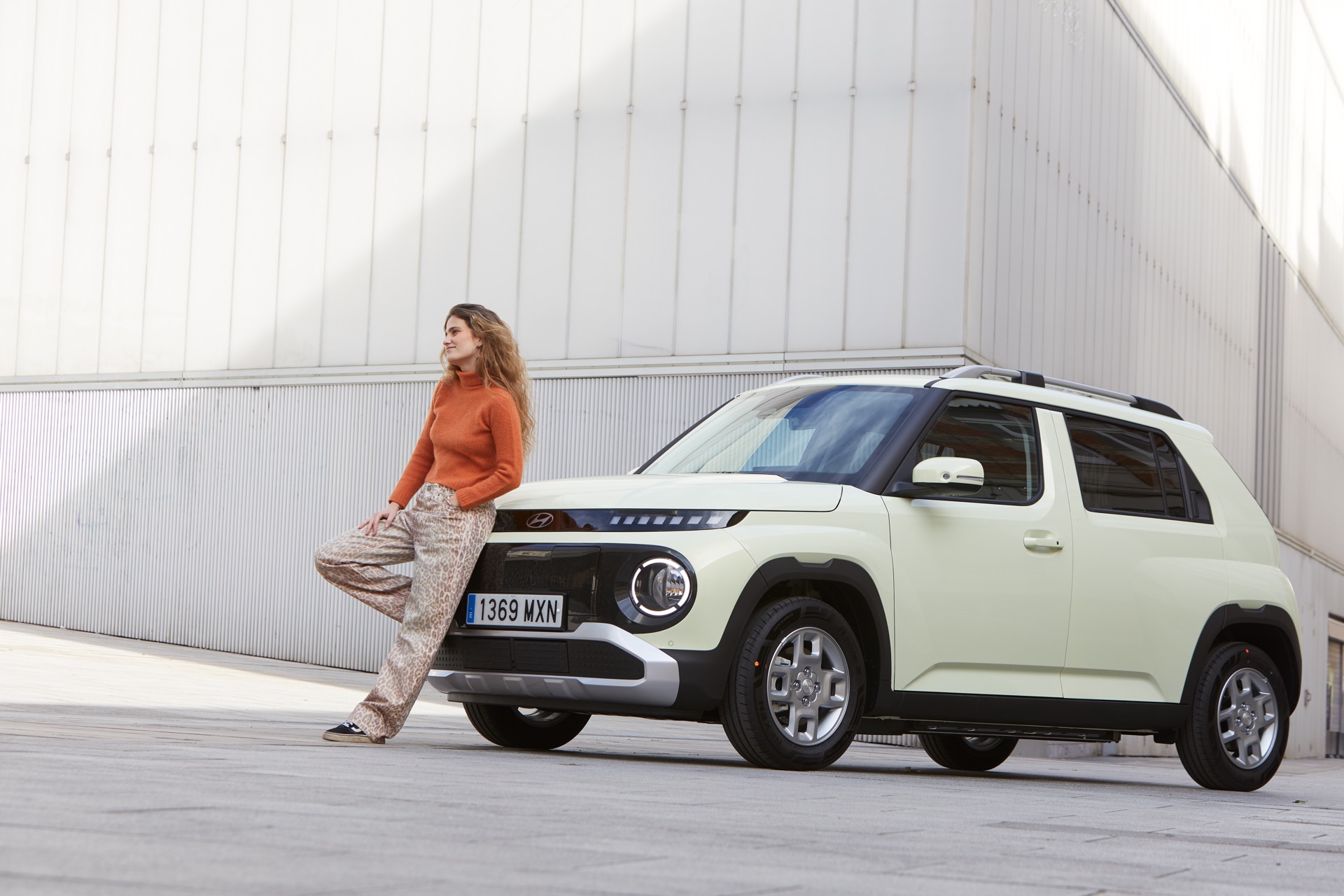
The Hyundai Inster arrives on the Spanish market as the smallest and most versatile electric vehicle from the South Korean brand, an urban crossover with bold design, its own personality and state-of-the-art technology.
Designed with urban environments in mind, the Hyundai Inster seeks to balance range and visual appeal without sacrificing practicality. Its 100% electric layout, with a battery of approximately 58 kWh and a combined output close to 150 kW, aims to offer everyday usability that makes long journeys within and beyond the city easier: a WLTP range announced at around 420 km and agile responses in town.
The recommended price starts at €28,900 (before incentives and discounts), placing it in a competitive segment against compact electric and premium urban cars. Does the real-world range hold up on mixed routes? What consumption and running costs can be expected with intensive city and motorway driving? Does it offer enough interior space and load capacity for an urban family? Below, real figures, behaviour and costs are analysed to assess whether the balance between design and functionality justifies the investment.
The essentials of the Hyundai Inster
The Hyundai Inster is a coherent choice for those who prioritise contemporary design and a real-world range geared to metropolitan use with occasional road trips. It stands out for a well-resolved interior, a fast-charging system and a driver-assistance package adapted to urban traffic. It is worth considering if most journeys are daily and you want a compact vehicle with a certain composure on fast roads; it may be less efficient for users who demand continuous long-distance driving at high speeds.
Technical specifications and main features
| Powertrain | Electric, single motor on the front axle |
| Power | 150 kW (approx. 204 CV) combined |
| WLTP range | 420 km (WLTP combined cycle) |
| Battery / Capacity | 58 kWh |
| Homologated consumption | 15.5 kWh/100 km (WLTP combined) |
| 0-100 km/h acceleration | 7.6 s |
| Length | 4,150 mm |
| Boot | 350 litres |
| Price from | … from €28,900 (before incentives and discounts) … |
Hyundai Inster Sales 2025
In 2025 the urban segment and compact electric cars maintained sustained growth in Spain, according to data compiled by ANFAC and market sources. The Hyundai Inster entered with moderate launch figures compared with well-established models, but with acceptance among urban fleets and private buyers interested in design and range.
| Model | Sales 2025 (Spain) |
| Hyundai Inster | 3,800 |
| Fiat 500e | 5,200 |
| Peugeot e-208 | 6,000 |
| Renault Mégane E-Tech | 4,500 |
Design and market positioning
The Inster opts for modern lines and compact proportions that seek a balance between urban presence and practicality. The minimal grille, clean surfaces and contrasting details position it as a more sophisticated alternative to pure city cars. Its positioning aims to attract buyers who value aesthetics without giving up everyday usability and a certain level of technological equipment.
Interior, space and technology
The cabin prioritises functionality: comfortable seats, pleasant-to-touch materials and good ergonomics for driver and passenger. The central infotainment screen is intuitive and compatible with Apple CarPlay and Android Auto. The boot, at 350 litres, is competitive for the category, although the rear seats can be tight for three adults on long journeys.
Engine, real-world range and handling
In town the Inster makes good use of its electric motor: instant response, energy recovery and consumption below the segment average in dense traffic. On the motorway the range drops noticeably compared with the WLTP cycle if high speed is maintained; in real tests a mixed pace usually places it between 300 and 360 real km. The suspension seeks a compromise between comfort and control, with a setup that filters urban potholes without sacrificing stability on fast stretches.
Charging, efficiency and running costs
Fast charging allows going from 10% to 80% in approximately 35–40 minutes with a 100 kW charger, while on a 7 kW home charger a full charge takes around 8 hours. In terms of costs, real-world urban consumption can be around 12–14 kWh/100 km, which with conventional domestic tariffs notably reduces the cost per 100 km compared with fossil fuels.
Price, versions and equipment
The range includes versions with different equipment levels: base, intermediate and top with advanced assistants and premium finishes. The starting price remains from €28,900 (before incentives and discounts) …, with options that increase cost depending on batteries, panoramic roof or safety packs. The relationship between price and content is competitive against equivalent alternatives, especially in well-equipped versions.
Purchase incentives
- Direct aid: discount applied at the dealership.
- Amount: up to €4,500 for electric / €3,375 for PHEV.
- Retroactivity: from 1 January 2026.
- Price limits: normally up to €45,000.
- Beneficiaries: private individuals, self-employed and companies.
Who this car is for
Ideal for urban or peri-urban users who share daily commutes with occasional road trips. It fits well with small families, professionals who need an attractive and efficient vehicle, and fleets looking for design and sufficient range for the working day. Less recommended for those who make frequent long trips at high speed or require maximum cargo space.
The best and the improvable
The best
Attractive urban design, competitive WLTP range, adequate charging speed and a setup geared towards comfort in town. The technological equipment and driver-assistance systems make it practical for everyday use.
To be improved
Real-world motorway range below the WLTP figure in demanding conditions, somewhat tight rear seats and boot space that may fall short against larger compact rivals.
Alternatives on the market
Fiat 500e (from €25,900)
The quintessential urban version, smaller and nimbler in city environments; it has an advantage in manoeuvrability and retro style, but less range and space than the Inster.
Peugeot e-208 (from €28,500)
Good dynamics and a carefully finished interior; it offers balanced driving sensations and robust finishes, although its range may be similar and the equipment offer varies by trim level.
Renault Mégane E-Tech (from €34,900)
An alternative with more space and a layout more oriented to long journeys; larger battery and greater versatility, at the cost of a higher price and larger dimensions.
Frequently asked questions about the Hyundai Inster
Is the Hyundai Inster worth it compared with an equivalent diesel?
From an operational point of view in the city, yes: lower costs per km, zero local emissions and better response in traffic. Compared with a diesel on constant long-distance routes the advantage depends on energy cost and the available charging infrastructure.
What real-world range does the Hyundai Inster offer on the motorway?
In sustained motorway conditions the real-world range is typically between 300 and 360 km, below the announced WLTP figure, due to higher consumption at constant speed and less energy recovery.
What happens if the battery is not recharged?
If the battery runs out completely, the vehicle is immobilised like any electric car; the management systems try to avoid full discharge, but it will depend on the charging plan and the availability of charging points to resume use.
Is it a good choice as the only family car?
It can be suitable for small families with urban commutes and occasional trips; for families who make frequent long journeys or need large cargo capacity, a larger or hybrid model may be more practical.
What estimated charging cost is there per 100 km?
With real consumption of 12–15 kWh/100 km and average domestic tariffs, the cost is around €1.2–2.5 per 100 km depending on the kWh price applied and driving efficiency.
Expert opinion
The Hyundai Inster positions itself as a balanced alternative in the urban market: its technical and aesthetic proposal is aligned with the needs of drivers who value sufficient range for the city and mixed routes, without giving up modern equipment. From the user’s perspective, it is more coherent for profiles that prioritise everyday comfort and design.
In terms of price, the offer is competitive when compared with direct rivals, although the decision will depend on usage patterns and the available charging infrastructure. In the 2026 market, its greatest contribution is combining presence and functionality in a package that is manageable for the metropolitan environment.
Technical specifications of this car
 Peugeot E-208 GTi: a battery-powered toy that revives the spirit of the 1980s sports cars
 New Lexus ES: luxury grows and goes electric
 First contact with the Dacia Sandero Hybrid 155: power and efficiency from €19,890
Deja un comentario