Hyundai Inster vs BYD Dolphin: Which is the best electric city car for you?
 Iván Navarro
11 March 2026
4 min.
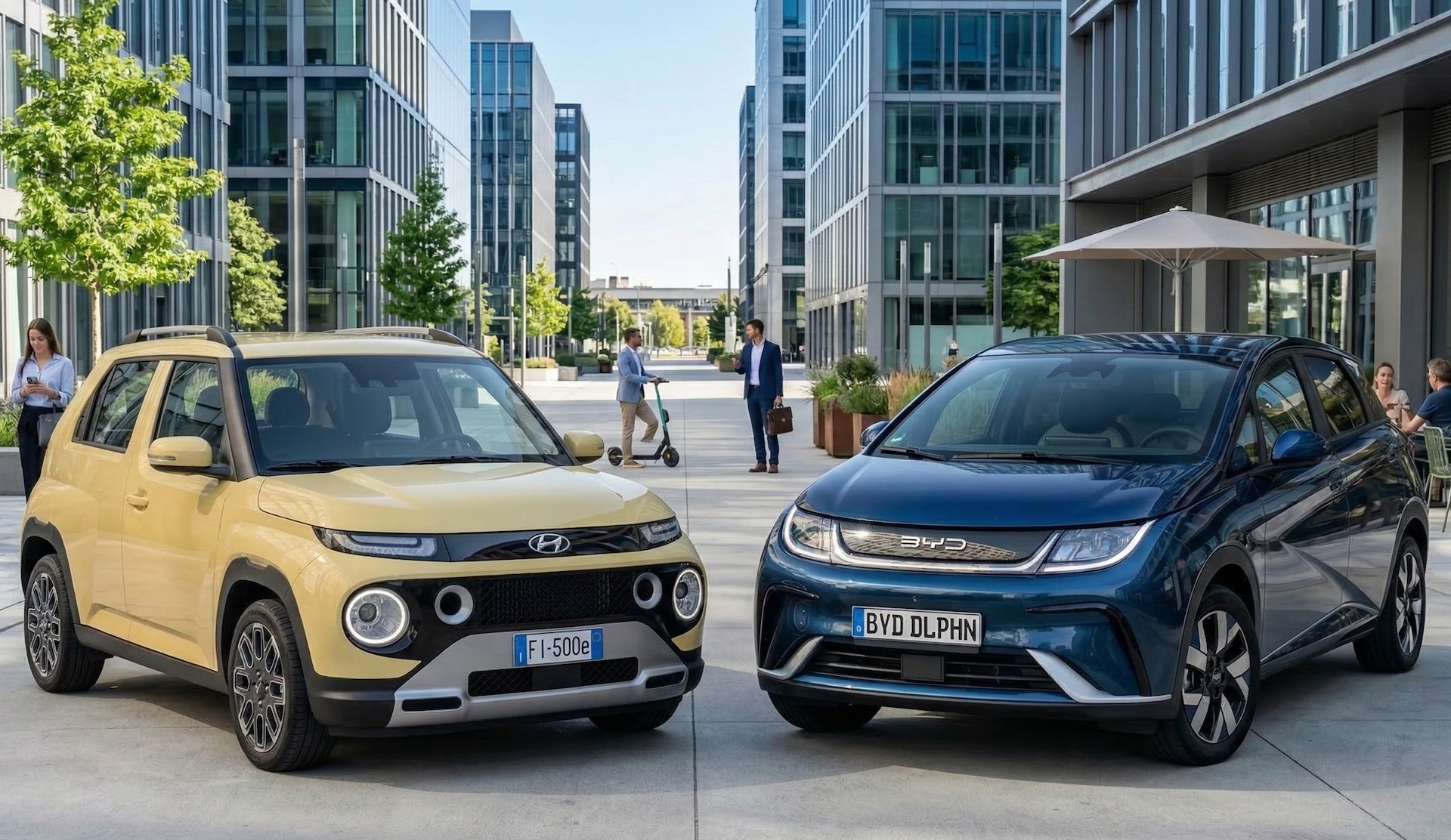
For getting around the city, two of the most interesting Asian vehicles are the Hyundai Inster and the BYD Dolphin. If you’re not sure which one to choose, this comparison may help you.
In Spanish cities in 2026, demand for compact electric cars remains high due to lower running costs and access restrictions in city centres. This comparison between the Hyundai Inster and the BYD Dolphin analyses range, design, technology and price for everyday urban use. In 2026, electric city cars account for a significant share of registrations in Spanish cities and shape daily mobility decisions.
Context of the comparison
Both models compete in the same niche: practical electric city cars for metropolitan environments, focused on efficiency and ease of use. They are compared because their technical proposition and market positioning target urban drivers who prioritise running costs and ease of parking. In 2026, users place greater value on real-world city range and public charging infrastructure.
Key differences in approach
Hyundai Inster
Focus on simplicity and user experience, with a battery architecture optimised for frequent charging. Design oriented towards urban ergonomics and easy maintenance.
BYD Dolphin
Focus on pack efficiency and energy density; battery technology and thermal management designed to maximise range in mixed driving. Design more oriented towards interior space and connectivity.
Comparison by objective criteria
Interior space
The BYD Dolphin generally prioritises longitudinal interior space, with a sense of openness in the rear seats. The Hyundai Inster seeks a balance between comfortable front seats and rear accessibility for urban parking.
Boot
Small differences in volume matter to users who regularly carry urban luggage or weekly shopping. Boot volumes in this segment vary between compact city cars and more versatile models.
Powertrains and efficiency
Both are BEV electric cars aimed at urban use; differences come from the power-to-consumption ratio and battery management. The BYD offers packs with higher energy density in some versions; the Hyundai focuses on charging efficiency and calibration for the city.
Relevant technology
Connectivity and driver assistance systems are present in both, with differences in infotainment systems and urban assistants (sign recognition, parking assistant, urban braking). Availability of OTA updates may vary by manufacturer.
Driving experience
In the city, engine response and regeneration management define the driving feel. The Inster aims for linear power delivery and predictability; the Dolphin generally prioritises energy recovery efficiency in dense traffic.
Key data comparison table
| Model | Engine type | Power (CV) | WLTP range/consumption | Top speed | Dimensions | Boot |
|---|---|---|---|---|---|---|
| Hyundai Inster | Electric BEV (front-wheel drive) | 136 CV | 300–360 km WLTP | 150 km/h | ≈ 4,020 x 1,770 x 1,510 mm | ≈ 300 L |
| BYD Dolphin | Electric BEV (front-wheel drive) | 95–136 CV | 305–420 km WLTP | 150–160 km/h | ≈ 4,080 x 1,730 x 1,550 mm | ≈ 320 L |
Price and real cost
Hyundai Inster (from €21,990*)
The final price varies by trim level, equipment packages, optional paint and financing terms. Options such as a larger battery or technology packs raise the base price.
BYD Dolphin (from €23,990*)
The final cost depends on the battery size chosen, safety and connectivity equipment, and any financing programmes offered by the brand. Versions with greater range increase the base price.
* Indicative price excluding public aid and the brand’s commercial discounts.
Purchase incentives (where applicable)
Both are 100% electric vehicles; therefore, they may be eligible for the public aid in force in Spain in 2026 (Plan Auto+ and direct discount programmes), always subject to scrappage requirements and deadlines. Regional or local incentives may also exist that reduce the net cost. The prices shown above do not include these aids.
Strengths and limitations of each model
Hyundai Inster
Strengths: 1) Calibration oriented to urban use and frequent charging. 2) Focus on ergonomics and easy maintenance. Limitations: 1) Maximum range lower than some Dolphin versions. 2) Fewer engine/variant options in some markets.
BYD Dolphin
Strengths: 1) Battery packs with options offering greater WLTP range. 2) Optimised interior space and good use of boot volume. Limitations: 1) Greater range complexity due to multiple versions. 2) Possible difference in maintenance costs due to battery specifications.
Which user each one suits best
If your use is mainly urban with frequent charging and you want a simple, predictable experience → Hyundai Inster. If you prioritise maximum range in mixed driving and interior space for passengers and occasional cargo → BYD Dolphin.
When to move on to a ranking or buying guide
If you need to choose among more options in the segment (more models, 3–5 year cost comparisons, ANFAC market data or specific versions), it is worth moving to a buying guide that includes total cost of ownership, real-world range tests and variations depending on city versus motorway use.
This comparison is based on market data, official specifications and published tests, and reflects the state of the segment in the Spanish market in 2026.


 Peugeot E-208 GTi: a battery-powered toy that revives the spirit of the 1980s sports cars
 New Lexus ES: luxury grows and goes electric
 First contact with the Dacia Sandero Hybrid 155: power and efficiency from €19,890
Deja un comentario