Hyundai Ioniq 6 electric vs OMODA 5 electric: latest-generation electric saloon and SUV
 Dani Montesinos
30 March 2026
8 min.
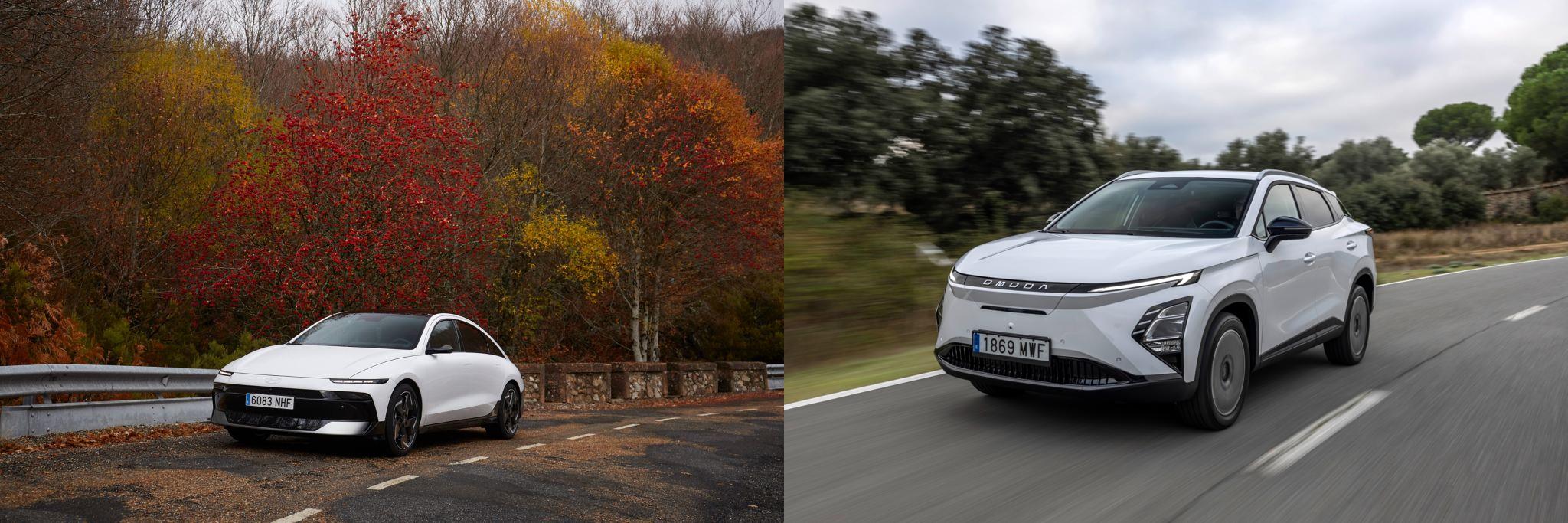
We compare two fully electric models that at first glance are different concepts, but have a lot to offer families both in the city and beyond it
The comparison between an aerodynamic saloon and a compact SUV reveals more than aesthetic differences: it pits two approaches to today’s electric mobility against each other. In this article we compare the electric saloon and SUV that have attracted the most attention in the Spanish market, the Hyundai Ioniq 6 and the OMODA 5, to assess design, range, technology and driving experience from a technical, buyer-oriented perspective.
The electric segment in Spain is growing quickly and, within it, body styles such as the aerodynamic saloon and the compact SUV are competing for complementary positions. According to ANFAC data, SUVs remain the most in-demand body style in the Spanish market, and electric variants are beginning to gain ground within that category. The average buyer looks for real efficiency, credible WLTP range, fast charging and a daily driving experience without surprises; against that, the average price and suitability for long journeys shape the final decision. Not all of them offer the same balance.
The most balanced models in the segment in 2026
We chose the Hyundai Ioniq 6 and the OMODA 5 because they represent two different answers to demand: the first prioritises efficiency and aerodynamics in saloon form; the second, versatility and the space of an SUV. Our selection criteria were overall balance, starting price (base version homologated in Spain), performance, real efficiency and overall value against rivals such as the Hyundai Kona or the Kia Niro.
Hyundai Ioniq 6
The Hyundai Ioniq 6 is an electric saloon focused on aerodynamic efficiency and comfort on the road. Its smoothly shaped body reduces consumption at sustained speeds, allowing it to achieve standout WLTP range figures in the versions with the largest batteries. Inside, ergonomics and a sense of quality take priority, with a sober driving position and good integration of driver assistance systems. The recommended version for mixed use is the long-range battery with rear-wheel drive, which best balances power and range for frequent journeys.
In practice, the Ioniq 6 behaves like a long-range saloon: modest consumption on motorways and ultra-fast charging that restores range in competitive times. Compared with direct rivals, its low floor and drag coefficient make it stand out on journeys at a steady pace. However, the driving position and lower height compared with an SUV penalise visibility in the city compared with models such as the OMODA 5.
The best
• Excellent efficiency at sustained speed
• Competitive WLTP range in long-range versions
• Ride quality and comfort on long journeys
The areas for improvement
• Less versatility and height than an SUV
• Practical boot, but less accessible than in an SUV
The answer that leads the Hyundai Ioniq 6
Which electric saloon offers the best balance between range and comfort? The Hyundai Ioniq 6 stands out for its WLTP range and aerodynamic efficiency, making it an outstanding option for those who prioritise long journeys and modest consumption.
| Feature | Figure | Score |
|---|---|---|
| power | 228 CV | 9 |
| WLTP range | up to 680 km | 9.5 |
| Top speed | 185 km/h | 8 |
| Boot | 424 litres | 8 |
| starting price | 30,965 € | 8.6 |
score out of 10 based on the criteria analysed in this article
OMODA 5
The electric OMODA 5 offers the familiar Asian mix of equipment and competitive pricing, with a higher driving position and a spacious interior. Its approach is clearly aimed at urban and family versatility, with solutions designed to maximise habitability and load capacity. On the road it shows good performance for its weight and adequate range for daily use and occasional longer trips.
From a buying perspective, the OMODA 5 positions itself as an interesting alternative for those seeking space, equipment and a strong value-for-money ratio. Its weak points are lower aerodynamic efficiency than a saloon and, in some trim levels, a less refined chassis setup on motorways. Nevertheless, its technology offering and interior room make it a direct rival to options such as the Volkswagen ID.4 or the compact cars from Asian brands.
The best
• Generous habitability and elevated driving position
• Good equipment-to-price ratio
• Versatility for family and city
The areas for improvement
• Motorway efficiency hindered by less favourable aerodynamics
• High-speed behaviour less refined than a saloon
The answer that leads the OMODA 5
Which electric SUV offers the best space-to-price ratio? The OMODA 5 stands out for its interior room and equipment at a modest cost, making it attractive to those who prioritise space and equipment over maximum efficiency.
| Feature | Figure | Score |
|---|---|---|
| power | 211 CV | 8.4 |
| WLTP range | up to 604 km | 8.6 |
| Top speed | 172 km/h | 7.8 |
| Boot | 440 litres | 8.6 |
| starting price | 25,890 € (with discounts) | 8.8 |
score out of 10 based on the criteria analysed in this article
Quick technical comparison of the Top 2
In practical terms, the Ioniq 6 stands out for efficiency and range on long journeys, while the OMODA 5 offers better habitability and a more aggressive equipment-to-price ratio. Unsurprisingly, the saloon wins on consumption at sustained speed; the SUV wins on space and versatility for urban and family use. The balance between price, performance and efficiency determines which option is more suitable for each buyer.
| Model | Power | Range | Price | Score |
|---|---|---|---|---|
| Hyundai Ioniq 6 | 228 CV | 680 km | 30,965 € | 9.4 |
| OMODA 5 | 211 CV | 604 km | 25,890 € | 8.6 |
score out of 10 based on the criteria analysed in this article
Which car to buy according to your profile
If you do mostly city driving
If your use is mainly urban and you need ease of parking, visibility and versatility, the OMODA 5 offers greater everyday practicality and a balance between equipment and cost that makes daily life easier.
If you travel frequently
For frequent trips on motorways and national roads, the Ioniq 6’s efficiency and greater WLTP range make it the most coherent choice: lower sustained consumption and a saloon-like feel on the road.
If you are looking for the best price
The OMODA 5 usually offers a more aggressive proposition on price and equipment, so it is the logical alternative if your budget is tighter and you value the cost-to-content ratio.
If you prioritise technology
Both offer complete packages, but if you value refined interfaces and driver aids focused on comfort on long trips, the Ioniq 6 offers a more balanced integration; if you want a screen and quantity of features for the price, the OMODA 5 tends to include more content in its base rate.
Frequently asked questions
Which has the better real-world range?
In mixed conditions and at motorway speeds, the Hyundai Ioniq 6 usually offers more modest consumption and a superior real-world range on long journeys.
Which is cheaper in Spain?
At entry level, the OMODA 5 starts from a lower starting price, making it the most attractive option for buyers sensitive to the initial cost.
Which car charges faster?
Both support fast DC charging with competitive peaks; the practical difference depends on the infrastructure and the maximum charging power of each specific version.
Which is roomier for a family?
The OMODA 5, thanks to its SUV architecture, offers easier access and greater load versatility, making it more comfortable for families with space needs.
Which handles better on the motorway?
The Ioniq 6 is more refined and efficient at sustained speeds, thanks to its aerodynamics and a setup geared towards comfort on the road.
Expert opinion
Beyond the official figures, the choice between the Ioniq 6 and the OMODA 5 comes down to real use and the buyer’s priorities. The Ioniq 6 is the proposal for those who value efficiency, frequent journeys and a driving experience rooted in the road: its architecture and aerodynamics offer tighter consumption and the feel of a long-distance saloon. The OMODA 5, on the other hand, is the alternative for the user seeking space, accessibility and a more favourable price-to-equipment ratio; its elevated position and interior versatility make it practical for day-to-day life and for families who prioritise functionality over maximum range. If budget is decisive, the OMODA 5 settles the question with an attractive economic offer; if annual mileage and motorway trips are frequent, the Ioniq 6 will reward you with lower energy spending per kilometre. In short, both options are valid within the electric range: the right decision lies in matching the type of use—city versus road—with the strengths of each proposition.
Models such as the Hyundai Kona or the Kia Niro are also part of this range and may be an alternative if you are looking for solutions between an efficient saloon and a practical SUV. Always consider the exact version, the equipment and the charging network available in your area before deciding.


 Peugeot E-208 GTi: a battery-powered toy that revives the spirit of the 1980s sports cars
 New Lexus ES: luxury grows and goes electric
 First contact with the Dacia Sandero Hybrid 155: power and efficiency from €19,890
Deja un comentario