Hyundai i40 Octavia Skoda Comparisons
Hyundai i40 Estate Hybrid vs Skoda Octavia: Competition among hybrid estates in Spain
 Iván Navarro
30 March 2026
9 min.
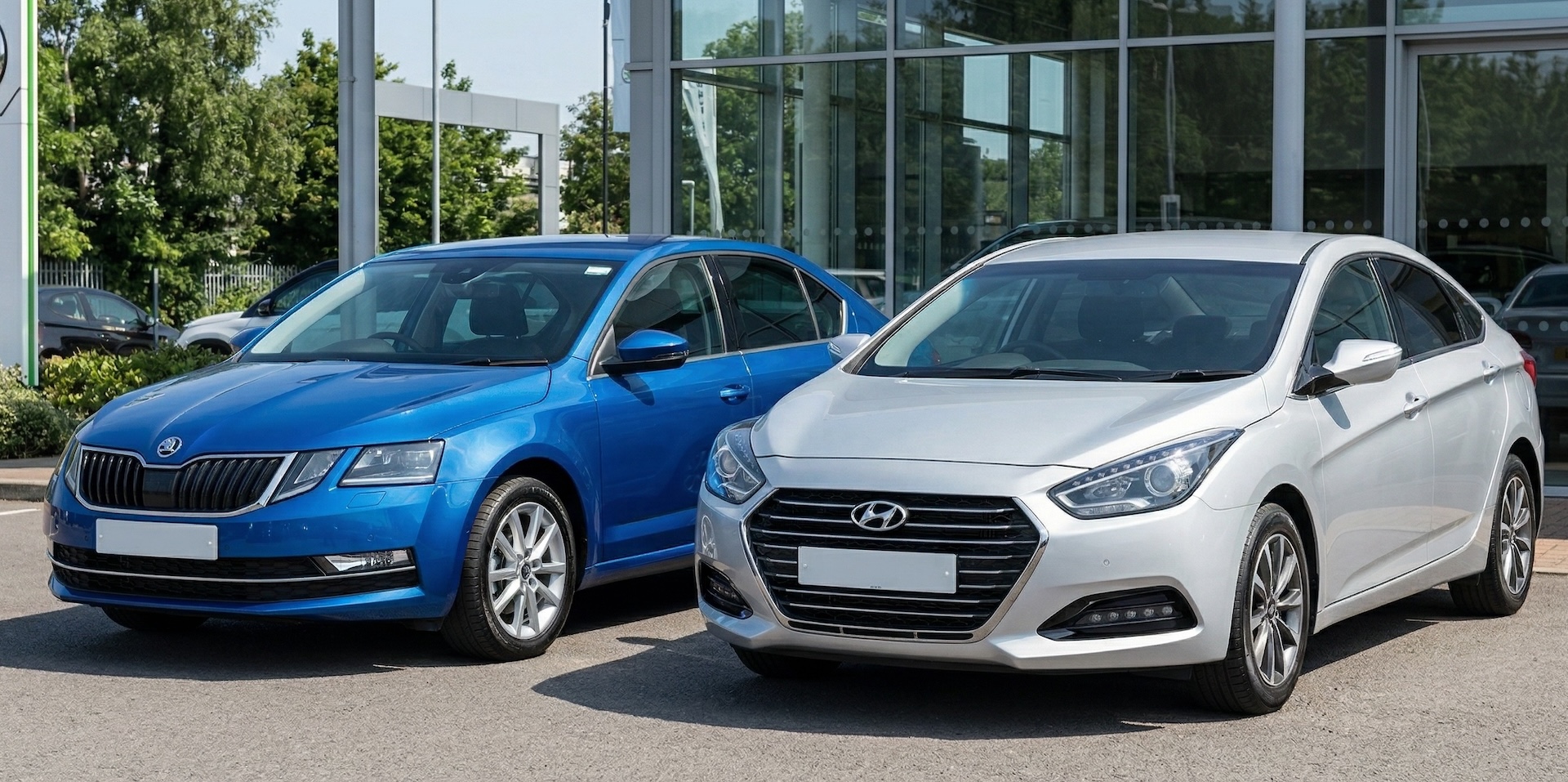
Korean elegance versus Czech practicality. We analyse these two benchmarks of the D segment
Hybrid estates remain a practical option for those seeking space and efficiency without giving up the versatility of a body with a generous boot. In Spain, demand for vehicles with electrified powertrains has been gaining ground in recent years: many buyers value lower consumption in combined driving and the ability to drive with fewer urban restrictions. Compared with SUVs and saloons, hybrid estates offer a balanced combination of interior space, load capacity and real-world running costs, which explains why they remain a relevant choice for families and professionals who cover a lot of miles.
This analysis pits two proposals that represent that approach against each other: the Hyundai i40 in its hybrid configuration and the Skoda Octavia with the hybrid offering available for the estate body. We will assess space, comfort, technology, consumption and driving feel to offer a useful guide for buyers who value functionality above styling appeal. Not all buyers prioritise the same things: some look for hybrid estates for efficiency, others for boot capacity or for the balance between price and equipment. This article focuses on the equivalent versions of both models and compares official manufacturer figures and homologation data where applicable, as well as the impression given in real use.
The most balanced models in the segment in 2026
For this head-to-head we have prioritised the relationship between starting price, performance and efficiency. The editorial criteria weigh: real-world consumption, usable space, safety equipment and resale value. We are looking for models that offer a coherent proposition for those who need an efficient alternative to traditional saloons without sacrificing boot space or comfort on long journeys. In that equation, balance is measured both by official figures and by dynamic behaviour and running cost.
Hyundai i40
The Hyundai i40 in its hybrid version stands out for a set-up geared towards comfort and efficiency on mixed routes. Its responsiveness in town and the smoothness of the hybrid engine management make it an interesting option for families who prioritise moderate daily consumption and good boot figures. On the motorway its stability and active safety are appreciated, with state-of-the-art aids in the best-equipped versions. The recommended version combines a petrol engine with electric assistance that reduces consumption in urban traffic and helps with pick-up at low revs.
In terms of performance it offers a response that is sufficient for overtaking and moderate changes of pace; its approach is not sporty but functional. In homologated and real-world consumption it sits in the lower band of the segment thanks to hybrid management. The cabin is oriented towards comfort, with correct materials and carefully considered ergonomics. Natural rivals include family compacts and some PHEVs for their electric capacity, although here we are comparing equivalent hybrid solutions.
The best
• Ride comfort and a set-up geared towards families.
• Practical boot with easy access.
• Hybrid management that reduces consumption in town.
The room for improvement
• Less eye-catching design compared with some rivals.
• Some plastics feel cheap in base versions.
Which hybrid estate offers the best balance between space and consumption?
The Hyundai i40 stands out for its efficiency in mixed use and a generous boot, which makes it a very well-balanced option for families seeking low running costs.
| Feature | Data | Score |
|---|---|---|
| power | 140 CV (combined system) | 8.4 |
| WLTP range | Full hybrid — no exclusive electric range | 7.6 |
| Top speed | 200 km/h (approx.) | 7.0 |
| Boot | 533 litres | 8.8 |
| starting price | 31,500 € | 8.2 |
score out of 10 based on the criteria analysed in this article
Skoda Octavia
The Skoda Octavia hybrid estate (in its electrified version) pursues maximum practicality: a good boot, outstanding interior space and a sober but functional presentation. The Octavia’s hybrid offering includes variants with electric assistance that allow zero-emission driving over short journeys, reducing average consumption on daily trips. Its chassis is tuned to offer composure on the road and comfort on long journeys, making it one of the benchmarks among estates for versatility.
The recommended version for those seeking balance is the one that combines an efficient combustion engine with electric support to reduce consumption and emissions in urban and peri-urban environments. In terms of equipment it offers multiple safety assistants and practical solutions for everyday use. Natural rivals include other electrified family saloons and some SUVs with hybrid configurations, although the Octavia retains the advantage of interior space and load capacity.
The best
• Large, usable boot.
• Stable motorway behaviour.
• Electrified options with electric range for urban use.
The room for improvement
• Sober design that may look conservative.
• Some versions pile on equipment that raises the price.
Which hybrid estate has the best boot capacity without sacrificing efficiency?
The Skoda Octavia stands out for its boot and for offering hybrid solutions that reduce consumption on everyday journeys, making it a logical choice for those who prioritise space.
| Feature | Data | Score |
|---|---|---|
| power | 204 CV (plug-in hybrid version) | 9.0 |
| WLTP range | approx. 60 km (electric, PHEV) | 9.2 |
| Top speed | 225 km/h | 8.6 |
| Boot | 610 litres (estate version) | 9.4 |
| starting price | 36,000 € | 8.0 |
score out of 10 based on the criteria analysed in this article
Technical comparison
In this head-to-head, the Octavia positions itself as the alternative more oriented towards capacity and versatility, while the i40 prioritises comfort and simple hybrid management. The main differences lie in electric capacity and boot figures: if you want electric range for daily journeys, the Octavia in plug-in version offers greater reach; if you prefer a solution that needs no charging and has contained consumption, the i40 is more straightforward.
| Model | Power | Range | Price | Score |
|---|---|---|---|---|
| Hyundai i40 | 140 CV | — (full hybrid) | 31,500 € | 8.2 |
| Skoda Octavia | 204 CV | ~60 km (electric, WLTP) | 36,000 € | 9.0 |
score out of 10 based on the criteria analysed in this article
Sales of the models and position in the segment
In Spain, preference for family saloons has declined in favour of the rise of SUVs, but hybrid estates retain a significant share among those who prioritise practicality and running costs. Both models hold consolidated positions in their respective ranges and offer solid arguments within the range of electrified alternatives. Models such as the Hyundai Kona or the Kia Niro also form part of this competitive environment, as do alternatives in the D segment with plug-in hybrid options.
Which car to buy according to your profile
If you do a lot of city driving
Opt for an option with greater electric capacity, or for a PHEV such as the plug-in Octavia, to handle urban journeys in electric mode and reduce daily consumption; the Skoda Octavia is a good choice if frequent charging is feasible.
If you travel frequently
If you cover a lot of motorway miles, the comfort and efficient, charging-free operation of the Hyundai i40 may prove more practical; its set-up favours comfort on long journeys.
If you are looking for the best price
The Hyundai i40 usually offers an attractive price-to-equipment ratio in base and mid-range versions, which makes it an interesting option if budget is decisive.
If you prioritise technology
The Skoda Octavia in its higher versions integrates assistance and connectivity solutions that place it among the most complete options in terms of technology and everyday comfort.
Frequently asked questions
Which uses less in mixed driving?
It depends on how you drive: on routes with regular charging, the PHEV version of the Octavia delivers very low consumption; in mixed driving without charging, the hybrid i40 offers contained figures thanks to its self-charging management.
Which has the better boot?
The Skoda Octavia estate is among the benchmarks for load capacity in its class, with a more usable boot compared with many hybrid alternatives.
Is it necessary to install a home charger for the Octavia PHEV?
It is not essential, but installing a charging point at home or relying on public charging maximises the economic and operational benefit of the plug-in version.
Which maintenance is more expensive?
Both hybrid solutions have maintenance costs comparable to other hybrids and PHEVs on the market; the plug-in version may require specific attention regarding the traction battery over longer intervals.
What similar hybrid alternative could I consider?
Models such as the Toyota Corolla Touring Sports (in its hybrid version) or some variants of the Ford Focus Wagon offer alternatives close in philosophy by combining practicality and efficiency.
Expert opinion
Beyond the figures, the choice between the Hyundai i40 hybrid estate and the Skoda Octavia depends on the buyer’s real priority. If the main need is space and the ability to make urban journeys in electric mode, the plug-in version of the Octavia offers a tangible advantage: useful electric range for daily trips and a boot that maintains its leadership within the category.
Conversely, if you are seeking a simple solution, not dependent on charging and focused on reducing consumption in mixed use with a set-up geared towards comfort, the hybrid i40 is more straightforward and economical in the initial purchase. For those who cover many motorway miles and value smooth ride, the i40 may be the most balanced option; for those who alternate city and short trips with the possibility of daily charging, the plug-in Octavia gets more out of its system. In either case, the decision should rest on a real test drive and on comparing specific offers in the Spanish market, weighing not only the starting price but also the running cost and behaviour on long journeys. Models such as the Hyundai Kona or the Kia Niro are also references worth considering within the range of hybrid estates and electrified compacts.
Technical specifications of this car


 Peugeot E-208 GTi: a battery-powered toy that revives the spirit of the 1980s sports cars
 New Lexus ES: luxury grows and goes electric
 First contact with the Dacia Sandero Hybrid 155: power and efficiency from €19,890
Deja un comentario