Avenger Hyundai Jeep Kona Electric Cars Hybrid Cars Comparisons SUV
Hyundai Kona Electric vs Jeep Avenger: which electric SUV-B offers more value under €40,000?
 Iván Navarro
24 September 2026
7 min.
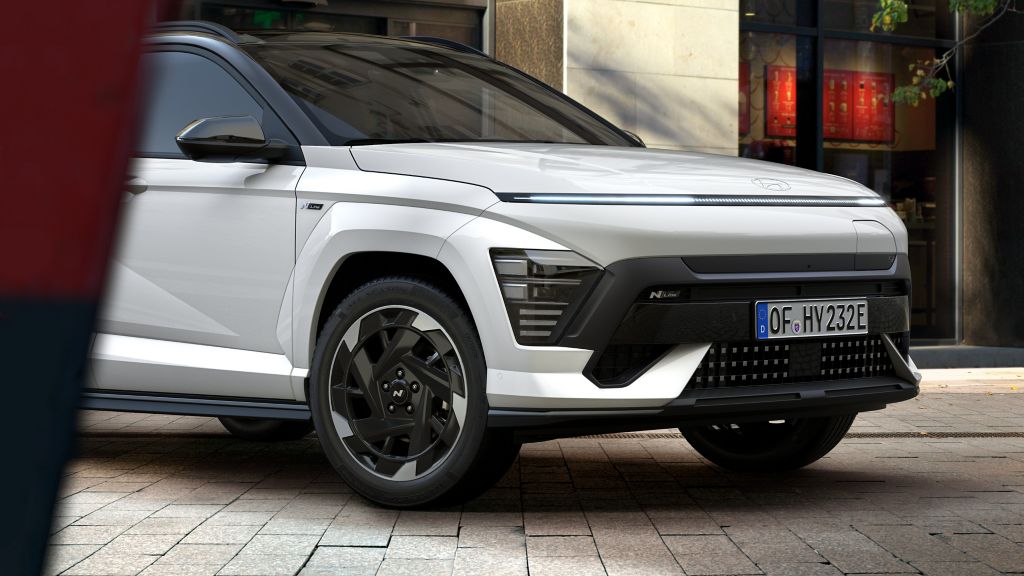
We compare two very different ways of understanding the SUV-B under €40,000: the 100% electric bet of the Hyundai Kona versus the pragmatic mild-hybrid approach of the Jeep Avenger Upland.
The SUV-B segment has become Europe’s great battleground. This is where the everyday family car is decided, the second vehicle meant to be the only one, and the step up from the city car. And when €40,000 is set as the psychological ceiling, the conversation narrows to two philosophies that barely touch: the pure electric that no longer apologises for its range, and the light hybrid that still backs well-executed petrol.
This analysis deliberately leaves out the offerings from Nissan and BYD within the segment. It is not a criticism of their cars — both have their merits — but an editorial decision: in our view, there are alternatives that offer a more competitive package in equipment, technology, range and perceived quality for a similar budget, and in this piece we want to focus precisely on that comparison. A note for the reader too: the prices we quote are indicative manufacturer RRPs, without dealer discounts, one-off campaigns or government aid.
Hyundai Kona Electric from €38,050
The second-generation Kona arrived with a clear premise: to stop being an electric derivative of the combustion model and become the flagship of the family. And it shows. Its design, with that continuous light bar across the front and more mature proportions, moves away from the pocket-sized crossover and settles into a format that feels like a bigger car. At 4,355 mm long, it is enough to compete with rivals that on paper sit a rung above.
The large-battery version fits an electric motor producing 150 kW / 204 CV that takes the Kona to 100 km/h in about 8 seconds (7.8–8.1 s). It is not a sports toy, nor does it aim to be. What is interesting is how it integrates that power: linear delivery, without the abruptness that spoils some rivals, and a homologated range of close to 510 km with a declared consumption of around 14.7 kWh/100 km. In real-world driving, if motorway speeds are respected, the figure holds up far better than one would expect from an electric SUV-B.
Inside, Hyundai has raised the bar on perceived quality and ergonomics compared with the previous generation. Dual screens, physical buttons where they matter — climate control, quick shortcuts — and rear seats that adults can genuinely use. On paper it is a well-rounded car in its class; in practice, one of the few electric SUV-Bs that does not feel like a compromise.
| Power kW | Power CV | Top speed | Range | Consumption | Label | Fuel |
|---|---|---|---|---|---|---|
| 150 kW | 204 CV | 172 km/h | 510-514 km | 14.7 kWh/100 km | ZERO | Electric |
Jeep Avenger e-Hybrid 1.2 145 Upland from ≈€33,700
The Avenger is another beast. Born electric in origin — it shares its platform with the Stellantis siblings in the segment — but the version we analyse here, the e-Hybrid 1.2 145 Upland eAWD, opts for the petrol mild hybrid with a off-road wink that none of its direct rivals offers at this price. And that is its real hook.
Under the bonnet, the three-cylinder 1.2 turbo is supported by a small electric motor integrated into the S/SDCT6 dual-clutch gearbox to deliver 107 kW / 145 CV combined. There is no need to plug it in. There is no need to plan charging stops. Homologated consumption is around 5.4 l/100 km and emissions sit at around ≈120 g/km CO₂ 121–123 g/km, with a top speed close to 194 km/h. Figures that are modest, yes, but honest for an SUV-B with light all-wheel drive and a rugged spirit.
The Upland trim plays precisely that card: specific wheels, symbolic recovery hooks, protective cladding and a styling that asserts the Jeep DNA without slipping into parody. Inside, the Avenger still shows the Stellantis line: correct, functional, with no pretensions of premium quality. That is not its territory.
Its main argument is the entry price, which opens the door to the buyer who wants an SUV-B with genuine all-road capability and without the range anxiety of a pure electric. The trade-off is obvious: an ECO label, not ZERO. No privileged access to low-emission zones and no plug-in tax advantages.
| Power kW | Power CV | Top speed | Consumption | Label | Fuel |
|---|---|---|---|---|---|
| 107 kW | 145 CV | 194 km/h | 5.4 l/100 km | ECO | Petrol mild hybrid |
Head to head: two philosophies, one price ceiling
Comparing these two cars is a little unfair, and yet it makes perfect sense. They share a segment, they share the €40,000 ceiling, and they share the buyer profile who asks which SUV-B to buy without leaving that budget. Everything else changes.
The Kona puts on the table 204 CV, 510 km of range and a ZERO label for about €8,750 more than the Avenger Upland. The Avenger answers with symbolic all-wheel drive, petrol-station range — where the fuel gauge barely moves — and a lighter monthly entry cost. The question is not which car is better; it is which user each one is facing.
If the daily commute is urban-metropolitan with the option to charge at home or at work, the Kona is pure arithmetic. Lower cost per kilometre, free access to ZBE zones, superior refinement. If use is mixed, with frequent long journeys and no convenient charging infrastructure — or if the buyer simply does not yet want to enter the plug-in game — the Avenger has a very defensible logic. It is debatable whether paying the electric premium makes sense for someone who drives 25,000 km a year on motorways and parks on the street.
For readers seeking additional context on how the segment is moving, the SUV-B buying guide under €25,000 clearly marks the floor of the market and helps explain why the €33–40,000 band is today the most interesting in the high-body category.
Summary table and editorial score
| Model | Price from | Power | Range/Consumption | Label | Score /10 |
|---|---|---|---|---|---|
| Hyundai Kona Electric | €38,050 | 204 CV | 510 km | ZERO | 8.5 |
| Jeep Avenger e-Hybrid Upland | ≈€33,700 | 145 CV | 5.4 l/100 km | ECO | 7.5 |
The Kona takes the highest score for its technology package, real-world range and ZERO label, which today weighs heavily in the value equation. The Avenger, however, is not relegated: for the right profile, its price-to-use ratio is more efficient than that of many entry-level electric rivals. Two cars, two answers — both legitimate.
Frequently asked questions
Which has the better real-world range, the Kona Electric or the Avenger?
In terms of kilometres per tank or charge, the Avenger wins by definition: refuelling petrol takes minutes. In pure electric range, the Kona is homologated at 510 km and in real mixed use it manages around 400 km, an outstanding figure in the SUV-B segment.
Can I access low-emission zones with the Jeep Avenger e-Hybrid?
The mild-hybrid Avenger carries an ECO label, which allows access to most current Spanish low-emission zones, although with stricter restrictions than a ZERO-labelled vehicle such as the Kona Electric.
Which public aid can I apply to these prices?
The Kona Electric, being 100% electric, is eligible for the Plan Auto+ for electrified vehicles. The Avenger e-Hybrid, being a petrol mild hybrid, does not fall under the same aid scheme. Current amounts and conditions should be checked on the official programme website.
Which holds its resale value better?
The market today rewards electric cars with good range in popular segments, and the Kona, with its 510 km, is well positioned. The Avenger, relying on known combustion mechanics and offering the light 4×4 card, maintains a stable used market, especially in rural and mountain areas.
Technical specifications of the cars in this article

 Peugeot E-208 GTi: a battery-powered toy that revives the spirit of the 1980s sports cars
 New Lexus ES: luxury grows and goes electric
 First contact with the Dacia Sandero Hybrid 155: power and efficiency from €19,890
Deja un comentario