Hyundai Kona Hybrid Cars Comparisons SUV
Hyundai Kona vs Toyota C-HR: which hybrid SUV offers better value for money under 32,000 euros
 Iván Navarro
13 August 2026
5 min.
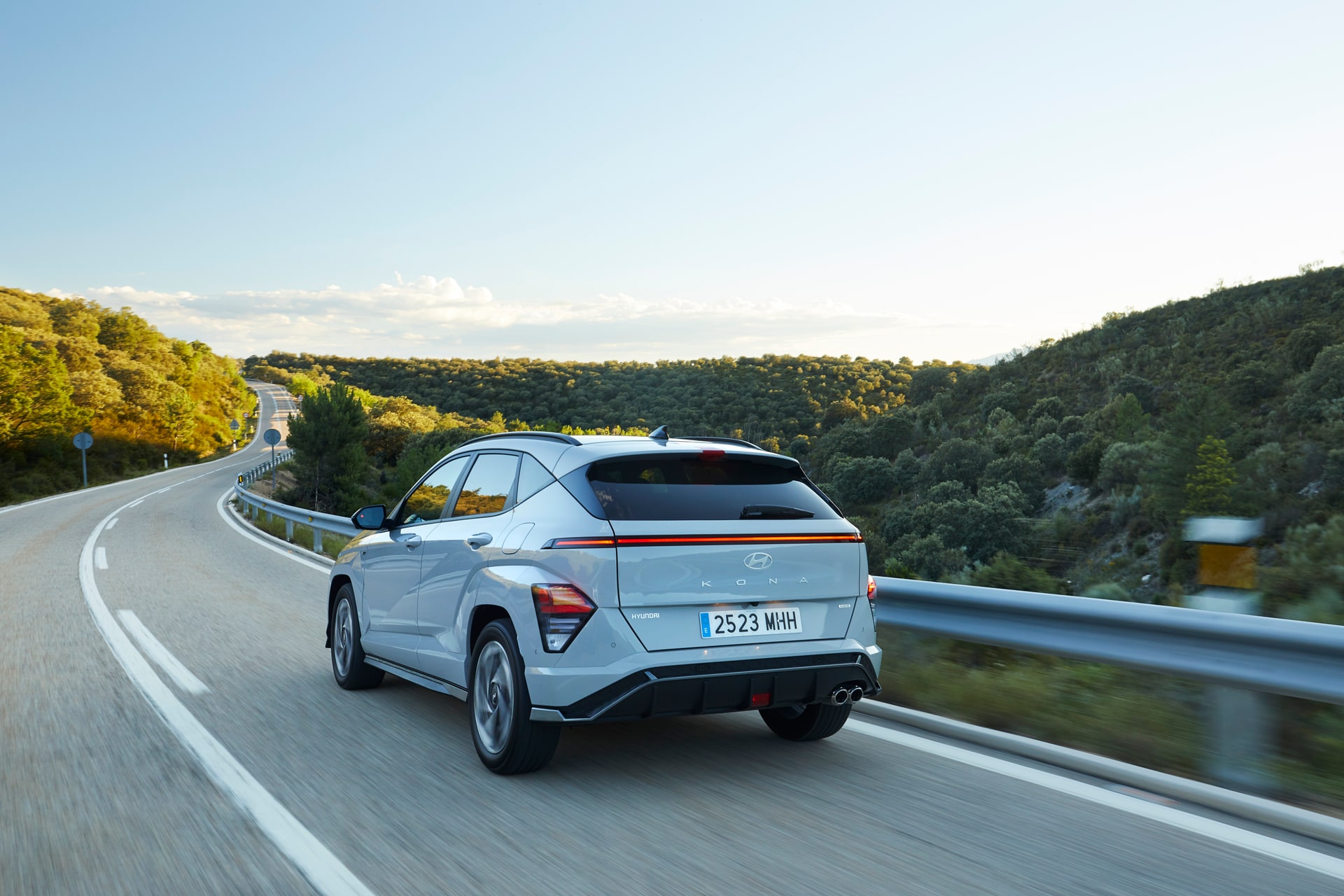
We compare the Hyundai Kona Hybrid and the Toyota C-HR Hybrid in their entry-level versions, with indicative RRP prices and real-world buying criteria.
The hybrid B-SUV segment is going through an unusual moment. On the one hand, demand keeps growing; on the other, finding a decent entry-level version below 32,000 euros is becoming an exercise in patience. Two models set the pace in Spain: the Hyundai Kona and the Toyota C-HR, both in hybrid form. In our view, this comparison boils down to two very different philosophies — the Korean one, more rational and with a long warranty; the Japanese one, more reliable over the long term and with a design that keeps breaking the mould six years on.
Why this comparison: two hybrid B-SUV benchmarks in Spain?
The average Spanish buyer of a hybrid B-SUV is not looking for performance. They want an efficient car, with an ECO label, that handles 15,000-20,000 km a year without trouble and doesn’t collapse in residual value after five years. And that’s where the Kona and the C-HR are the two benchmarks any dealership will put on the table. The question is which one makes more sense when the budget doesn’t quite reach 32,000 euros.
Hyundai Kona Hybrid: from approximately 27,500 €
The entry-level Kona Hybrid combines a 1.6 GDi with an integrated electric motor in a six-speed DCT gearbox. It’s a different approach from the Toyota — more a “conventional car with electric assistance” than a pure series/parallel hybrid. In practice, this translates into more natural driving on motorways and slightly less efficiency in traffic jams. Nothing dramatic, but it can be noticed.
The updated exterior design suits it well. Interior is spacious for the segment, a twin 12.3-inch screen in mid-level trims, and the five-year unlimited-mileage warranty remains a strong commercial argument. That said, you need to look carefully at the trim level: the most basic version falls somewhat short in standard ADAS compared with what the Toyota offers.
| Power kW | Power CV | Top speed | Range | Consumption | Label | Fuel |
|---|---|---|---|---|---|---|
| ≈104 kW | ≈141 CV | ≈165 km/h | ≈850 km | ≈4.5 l/100 km | ECO | Hybrid |
Indicative data for the hybrid version of the Kona. The electric Kona EV is sold separately, with RRP prices from approximately 38,100 €.
Toyota C-HR Hybrid: from approximately 30,900 €
The C-HR plays a different game. The fifth generation of Toyota’s Hybrid Synergy Drive system is, to this day, the segment benchmark for real-world urban consumption. This is where the Japanese car has the edge: in the city, with frequent stops, the C-HR drops below 5 l/100 km without breaking a sweat. On the motorway it holds its own, but it doesn’t shine like the Kona.
Striking design, an interior with materials a step above the Hyundai in the upper plastics — to my taste, the dashboard wraps the driver better — and a reliability that remains its strongest argument. The trade-offs: tighter rear seats, a smaller boot and a driving position somewhat lower than one expects in an SUV.
| Power kW | Power CV | Top speed | Range | Consumption | Label | Fuel |
|---|---|---|---|---|---|---|
| ≈103 kW | ≈140 CV | ≈170 km/h | ≈950 km | ≈4.9 l/100 km | ECO | Hybrid |
Indicative data for the 1.8 hybrid version of the C-HR. The 100% electric C-HR Electric is sold from approximately 40,000 €.
Homologated consumption and real-world behaviour
On paper they are close. In practice, the C-HR wins in the city and the Kona ties or slightly wins on the motorway. A typical route of Madrid city centre → M-40 → office of 25 km a day clearly favours the Toyota. Mixed use with two long trips a month levels the balance considerably.
Standard equipment: where’s the catch?
This is where the fine print matters. The C-HR in its entry trim includes the full Toyota Safety Sense — something we already explained when choosing a compact hybrid SUV for the city — whereas the basic Kona falls short on some assistants that only arrive one step up. The result: the Hyundai’s starting price is lower, but comparable equipment ends up very close.
Maintenance cost and residual value
Toyota leads here. The C-HR’s servicing is reasonable and the network poses no problems. The Kona isn’t bad — Hyundai has professionalised its after-sales service considerably — but the Japanese car’s residual value remains higher at five years. We’re talking about roughly 2,000-3,000 euros of difference on resale depending on the trim.
Purchase grants
Both qualify as ECO hybrids. The Plan Auto+ is the current framework of public purchase grants in Spain; check the official website for the updated amount before signing.
Verdict: which one makes more sense
If your use is 80% urban and you want to sleep soundly for ten years, the C-HR. If you need space, do more motorway driving and value the five-year warranty, the Kona. There is no universal winner — the winner depends on how you drive.
| Model | Price from | Consumption | Equipment | Reliability | Residual value | Score |
|---|---|---|---|---|---|---|
| Hyundai Kona Hybrid | ≈27,500 € | 7/10 | 7/10 | 8/10 | 7/10 | 8.2/10 |
| Toyota C-HR Hybrid | ≈30,900 € | 9/10 | 8/10 | 9.5/10 | 9/10 | 8.8/10 |
RRP prices recommended by the manufacturer, excluding dealer discounts, one-off campaigns or purchase grants.
Frequently asked questions
Which consumes less in the city, the Kona or the C-HR hybrid?
The Toyota C-HR consumes less in urban use thanks to its series/parallel hybrid system, which makes better use of braking and stops. The real difference is around 0.5-0.8 l/100 km in favour of the Japanese car.
What warranty does each brand offer?
Hyundai provides five years with unlimited mileage for the whole vehicle. Toyota offers three years, extendable to ten with official servicing under its Relax programme, specifically for the hybrid system.
Which has the better resale value at five years?
The Toyota C-HR, historically. Demand in the used market for Toyota hybrids remains very strong and that supports resale prices 5-8 percentage points above the Kona.
Do they qualify for Plan Auto+?
Both are hybrids with an ECO label, so they fall within the general framework of grants. The specific conditions and current amounts should be checked on the plan’s official website before finalising the purchase.
Technical specifications of this car

 Kia offers an electric range of 10 models, 50 versions and 400 possible combinations
 The seven finalists for the 2027 European Car of the Year (COTY) are exclusively electric
 Peugeot E-208 GTi: a battery-powered toy that revives the spirit of the 1980s sports cars
Deja un comentario