Omoda 9 vs Jaecoo 7 SHS: showdown between Chinese plug-in hybrid SUVs under €45,000
 Iván Navarro
13 August 2026
6 min.
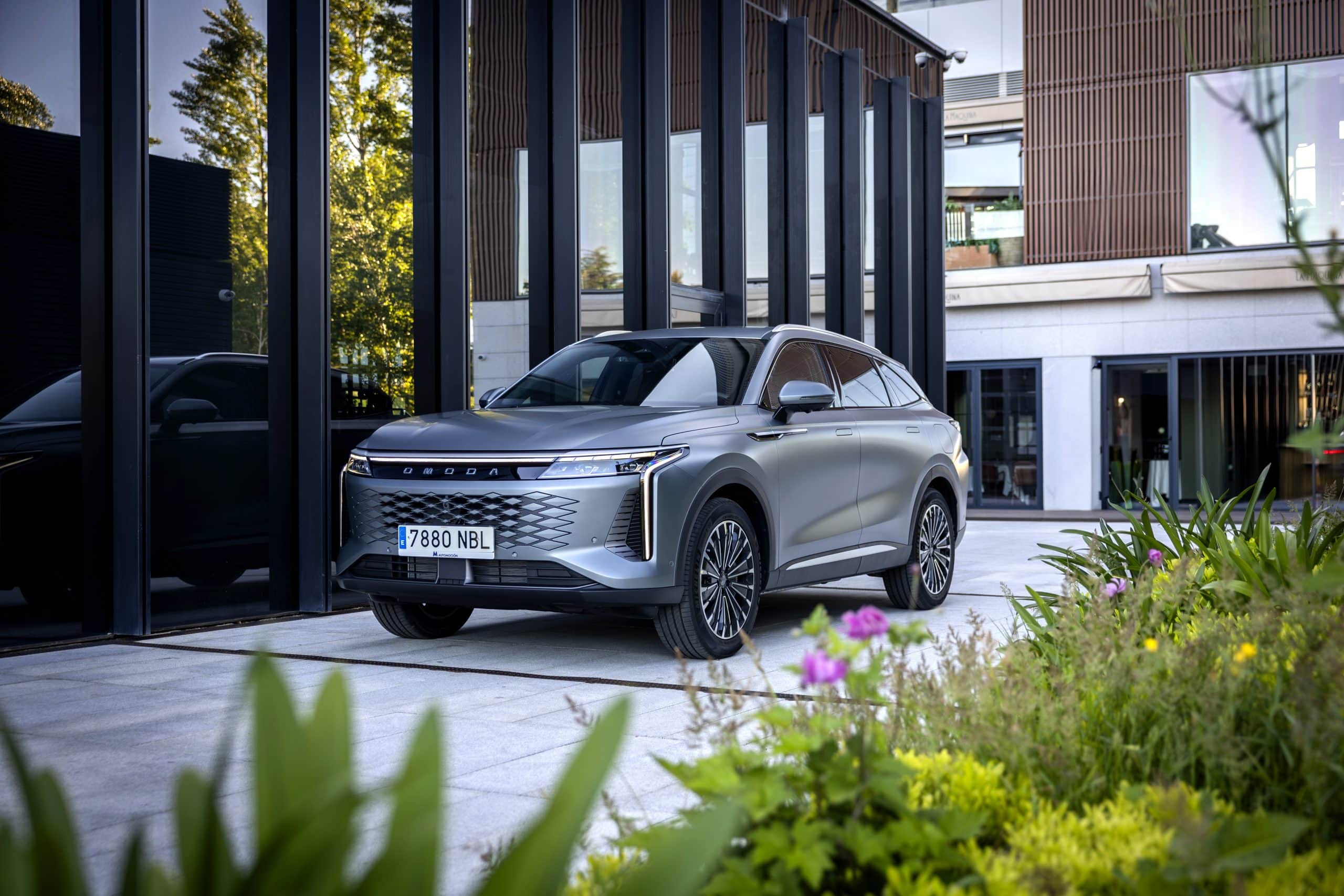
We compare the Omoda 9 PHEV and the Jaecoo 7 SHS, two plug-in hybrid SUVs from the Chery group with different approaches and only one of them under €45,000.
The Chery group has landed in Spain with two brands that look almost identical on paper, but in practice play in different leagues. Omoda and Jaecoo share DNA, platforms and even their plug-in hybrid philosophy, yet they target buyers with very different budgets. One competes head-to-head in the segment of affordable PHEV SUVs; the other stretches into semi-premium territory.
The question that a Spanish buyer with a mental ceiling of €45,000 asks is clear. Is it worth stretching a few thousand euros more to make the leap to the bigger sibling? Let’s look at it with data, not marketing.
Why compare the Omoda 9 with the Jaecoo 7 SHS
Both are plug-in hybrid SUVs, both belong to the same conglomerate, and both arrive in Spain intent on taking market share from established European brands. But much of the resemblance ends there. The Jaecoo 7 SHS moves in the C-D segment with a more rational approach. The Omoda 9, on the other hand, sits a step higher—in size, power and price—and already competes with D-premium SUVs.
It is therefore interesting to understand what you pay for and what you receive in each case.
Jaecoo 7 SHS from ~€39,000: the PHEV that does fit the budget
The Jaecoo 7 SHS (Super Hybrid System) is the brand’s plug-in offering, based on a 1.5 TGDI engine coupled to a hybrid system with a dedicated gearbox. The philosophy is that of the modern PHEV with an urban electric vocation: enough battery for the daily commute, and a combustion engine for weekend trips.
Styling plays the neo-retro card with nods to the British off-road world—vertical grille, straight lines, an affordable Land Rover air—which in our view works better than the more conventional design of its direct rivals. The interior does not reach the sophistication of a Cupra Terramar, but the perceived quality has improved a step compared with what Chinese brands offered two years ago.
| Power kW | Power CV | Top speed | Electric range | Consumption | Label | Fuel |
|---|---|---|---|---|---|---|
| 205 | 279 | 180 km/h | 90 km | 2.4 l/100 km | 0 emissions (CERO) | PHEV (petrol + electric) |
The indicative price from roughly €39,000 places it squarely on the radar of the buyer seeking a PHEV SUV under €45,000 with a CERO label. That said, we are talking about the manufacturer’s recommended RRP without discounts or aid—the Plan Auto+ may reduce the final bill if the vehicle meets the requirements.
Omoda 9 from ~€52,900: when the step up in range has to be paid for
The Omoda 9 plays in a different category, and it is worth saying so plainly. Its 1.5 TGDi 537 Premium AWD PHEV version fits an all-wheel-drive system with a combined output approaching 540 CV. Yes, you read that right. We are talking about a plug-in hybrid SUV with sports-car performance and a 34.5 kWh battery that homologates about 145 km in electric mode. Figures that three years ago belonged only to German premium makers.
The indicative price from €52,900 takes it out of the €45,000 threshold we had set. That is an objective fact. It now competes with European and Korean D-premium SUVs, and the argument in its favour is that it offers more power and more battery than almost any rival for that money.
| Power kW | Power CV | Top speed | Electric range | Consumption | Label | Fuel |
|---|---|---|---|---|---|---|
| ≈400 kW | ≈540 CV | ≈180 km/h | ≈150 km | ≈1.7 l/100 km | 0 emissions (CERO) | PHEV (petrol + electric) |
Design, size and perceived quality: what you notice at first glance
The Jaecoo 7 opts for a sober, almost British image, with flat surfaces and discreet chrome details. It is a car that will age well, in my view. The Omoda 9, meanwhile, goes for a more organic language, with wraparound LED light signatures and an enormous grille that will not leave anyone indifferent. Longer, wider, more presence.
Inside, both share the dual-screen philosophy, but the Omoda raises the bar with materials that can already hold their own against a BMW X3 without blushing. The Jaecoo sits a step lower, although at its price that is consistent.
PHEV mechanics: the SHS system versus the Omoda 9 layout
Here lies the real difference. The Jaecoo 7 SHS uses Chery’s Super Hybrid System with a 1.5 TGDI engine, front-wheel drive and an efficiency-oriented approach. The Omoda 9 uses an evolved development of the same 1.5 TGDi block but paired with more powerful electric motors, all-wheel drive and a significantly larger battery. In practice, one prioritises consumption and the other performance.
On paper, the Omoda 9 covers almost twice the electric kilometres of the PHEV segment average. A daily Madrid–Alcalá round trip—about 60 km—fits comfortably in its battery without ever firing up the petrol engine.
Summary table and rating
| Model | Price from | Power | Electric range | Drive | Segment | Score /10 |
|---|---|---|---|---|---|---|
| Jaecoo 7 SHS | ≈€39,000 | 279 CV | 90 km | Front | SUV C-D | 8.0 |
| Omoda 9 PHEV | ≈€52,900 | ≈540 CV | ≈150 km | AWD | SUV D | 8.5 |
Editorial conclusion: which to choose depending on your profile
If your real ceiling is €45,000, the decision is made: the Jaecoo 7 SHS is the logical candidate, offering a CERO label, sufficient electric range for everyday use and a design that does not tire. It is consistent with what we saw in the analysis of the Ebro S700 HEV: Chinese brands are refining their value-for-money proposition at a pace that unsettles Europeans.
The Omoda 9, on the other hand, requires accepting that you are paying for an SUV from another category. Its 540 CV and 150 electric km are serious arguments, but they fall outside the threshold we had set. It remains to be seen whether the Spanish market will accept paying €53,000 for a brand that is still young here, when for that money there are European options with years on the road. For the buyer who prioritises technology and performance per euro, the Omoda 9 has an argument that is hard to refute. For everyone else, the Jaecoo 7 SHS is the answer.
Frequently asked questions
Which of the two comes in under €45,000?
Only the Jaecoo 7 SHS, with an indicative RRP from roughly €39,000. The Omoda 9 PHEV starts around €52,900, placing it outside that threshold.
What electric range does the Omoda 9 PHEV offer?
It homologates about 150 km in electric mode thanks to its battery of approximately 34.5 kWh, an outstanding figure within the plug-in hybrid segment.
Do the Omoda 9 and the Jaecoo 7 SHS share a platform?
Both belong to the Chery group and share a hybrid philosophy based on the 1.5 TGDi, but the Omoda 9 is positioned a segment higher with all-wheel drive, more power and a larger battery.
Do they have the DGT CERO label?
Yes. By exceeding 40 km of homologated electric range, both models qualify for the CERO zero-emissions label, with the access advantages to ZBE zones and regulated parking that this entails.

 Peugeot E-208 GTi: a battery-powered toy that revives the spirit of the 1980s sports cars
 New Lexus ES: luxury grows and goes electric
 First contact with the Dacia Sandero Hybrid 155: power and efficiency from €19,890
Deja un comentario