Lexus NX Hybrid Cars Comparisons SUV
Lexus NX 350h vs. Toyota RAV4: a hybrid SUV test with the best on-board technology
 Iván Navarro
10 July 2026
5 min.
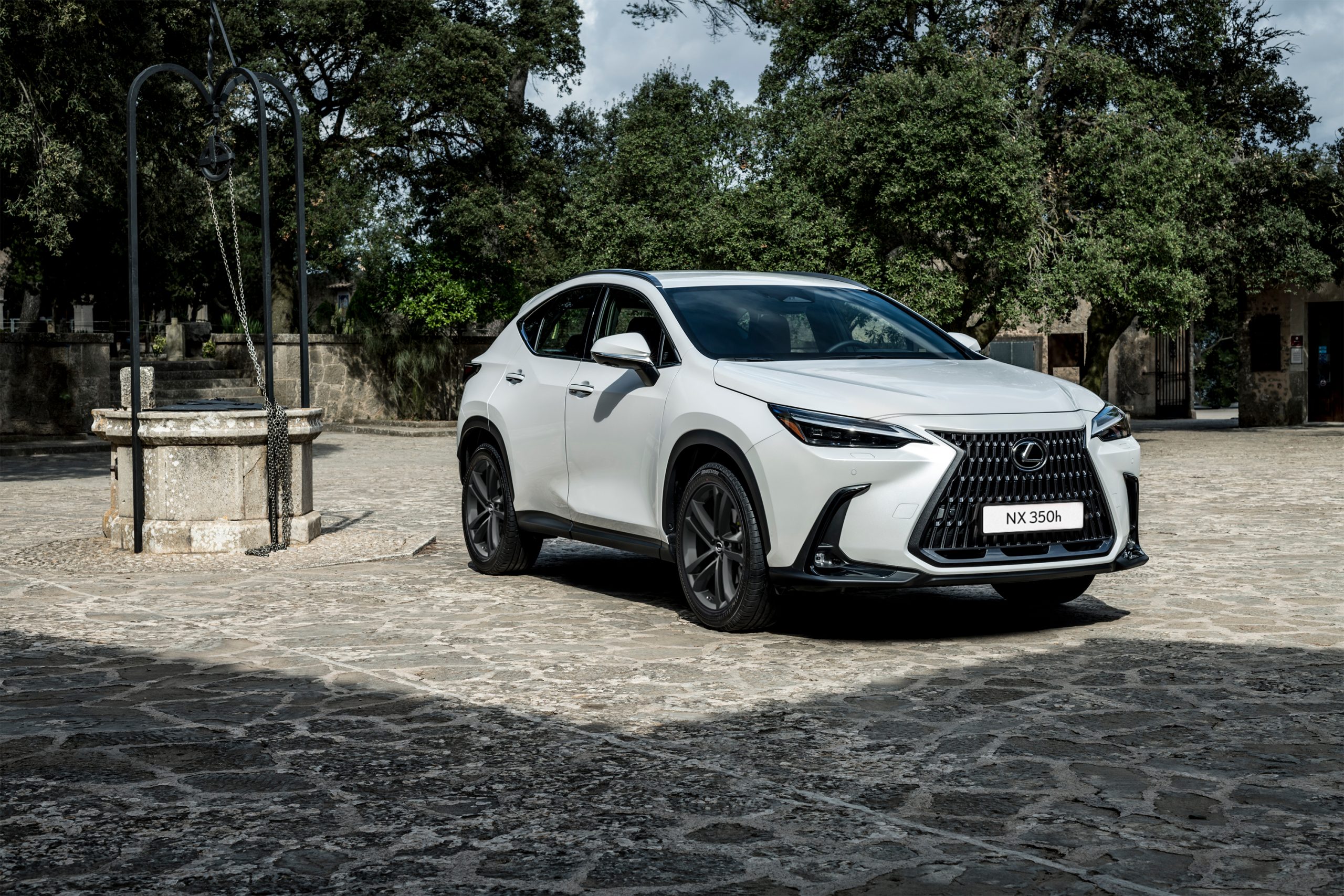
We compare the Lexus NX 350h and the Toyota RAV4 PHEV, two Japanese SUVs from the same group with opposite positioning: technology-focused premium versus practical rationality.
The non-plug-in hybrid SUV segment remains the favourite refuge of the buyer who does not want to depend on a plug, yet does not want to give up the ECO label. And within that universe there is a particularly interesting duel: the one pitting two cousins from the Toyota group against each other, one dressed in a suit and the other in well-cut jeans. We are talking about the Lexus NX 350h vs. Toyota RAV4, two SUVs with a shared mechanical base but different purposes.
Before getting into the details, an editorial note: we have left Chinese contenders out of this comparison, starting with BYD. In our view, other offerings in the segment deliver torque curves, driving feel and mechanical refinement closer to what a European driver expects, and that gap — debatable, but real — led us to focus the analysis on the Japanese school.
Two hybrid SUVs, two philosophies within the same group
The RAV4 has for decades been the touchstone of the rational hybrid SUV. The NX 350h, by contrast, takes a different approach: it takes the same technological base and wraps it in a premium treatment, with materials, soundproofing and a screen that play in a different league. Same group, same electrified DNA, two very different ways of understanding the car.
Lexus NX 350h from ≈€54,100
The NX 350h is the aspirational reading of the Japanese hybrid. A naturally aspirated 2.5 supported by the electric side, available all-wheel drive and a setup that prioritises acoustic comfort over sporty attack. On the road you can feel what lies beneath: careful insulation, steering slightly heavier than the RAV4’s, and an accelerator response that avoids the “jet ski” effect typical of e-CVT gearboxes when pushed hard.
Inside is the great asset: the 14-inch central screen with Lexus Link, sharp graphics, quick response and an integration of connected services that feels a step above the Toyota system. The finishes — leather, trims, the tactile feel of the physical controls that survive — give the impression of an expensive car. Because it is one.
| Power kW | Power hp | Top speed | Range | Consumption | Label | Fuel |
|---|---|---|---|---|---|---|
| ≈180 kW | ≈240 hp | ≈200 km/h | Not applicable (HEV) | ≈5.5 l/100 km | ECO | Petrol hybrid |
Toyota RAV4 from ≈€46,500
The RAV4 we bring to the table is the Plug-in Hybrid variant, and here we should be honest with the reader: technically, the RAV4 available in the top range plays in the plug-in league, with a declared electric range above 100 km. On paper, a homologated consumption of just 1.3 l/100 km and 30 g/km of CO₂.
In practice it is a very different car from the NX 350h: more rational, less sophisticated in materials, with a screen and software that do the job without shining. But it is also an SUV with a CERO label — not ECO — and with a real ability to run in electric mode around town. That nuance changes the equation for anyone who can charge at home and makes a 40 km daily commute with a stop in a low-emission zone.
| Power kW | Power hp | Top speed | Electric range | Consumption | Label | Fuel |
|---|---|---|---|---|---|---|
| ≈197 kW | ≈268 hp | ≈180 km/h | over 100 km | ≈1.3 l/100 km | CERO | PHEV petrol |
On-board technology: the big differentiator
This is where the NX stakes its ground. The 14-inch screen with Lexus Link, over-the-air updates, remote services and graphic quality that never falters feel like a generational leap over the RAV4. Toyota has improved its multimedia, yes, but it is not as enjoyable to use. The difference shows in small gestures: how the touchscreen responds, how long the navigation takes to load, the logic of the menus.
For the driver who spends many hours behind the wheel and values the digital environment as much as the mechanics, the NX offers a clearly superior experience. For someone who sees the screen as an accessory, the RAV4 does the job without complaint.
Cost, label and purchase decision
The prices are the manufacturer’s recommended retail prices, without discounts, one-off campaigns or purchase incentives. With that clarification up front, the gap between the two is around €8,000, somewhat less than one would expect between a premium car and a well-equipped mainstream model. Is the step up to the NX worth it? It depends on use. If the daily commute allows charging and making the most of the RAV4 PHEV’s electric mode, the economics favour the Toyota. If you are looking for a pure, quiet hybrid with a benchmark on-board technology, the Lexus is the answer.
Summary table and editorial score
| Model | Power | Consumption | Label | Price from | Technology | Overall score |
|---|---|---|---|---|---|---|
| Lexus NX 350h | ≈240 hp | ≈5.5 l/100 km | ECO | ≈€54,100 | 9/10 | 8.7/10 |
| Toyota RAV4 PHEV | ≈268 hp | ≈1.3 l/100 km | CERO | ≈€46,500 | 7/10 | 8.3/10 |
Frequently asked questions
Which has better on-board technology, the Lexus NX 350h or the Toyota RAV4?
The Lexus NX 350h, with its 14-inch screen and the Lexus Link system, offers a clearly superior digital experience in fluidity, graphics and connected services.
What environmental label does each one carry?
The Lexus NX 350h carries the ECO label as a non-plug-in hybrid, while the Toyota RAV4 Plug-in Hybrid qualifies for the CERO label thanks to its higher-capacity battery.
Is the price premium of the Lexus over the Toyota worth paying?
It depends on the profile: if you value premium finish, soundproofing and cutting-edge technology, yes. If rational use and the ability to charge at home come first, the RAV4 PHEV is better balanced.
Why are Chinese hybrid SUVs not included in the comparison?
It is an editorial decision: we consider that other offerings in the segment provide mechanical refinement and driving feel better suited to the taste of the European driver.
Technical specifications of this car

 Peugeot E-208 GTi: a battery-powered toy that revives the spirit of the 1980s sports cars
 New Lexus ES: luxury grows and goes electric
 First contact with the Dacia Sandero Hybrid 155: power and efficiency from €19,890
Deja un comentario