Nissan accelerates in Spain: five new electric models, AI and a leading role in the European strategy
 Rafa Guitart @GuitartRafa
10 July 2026
4 min.
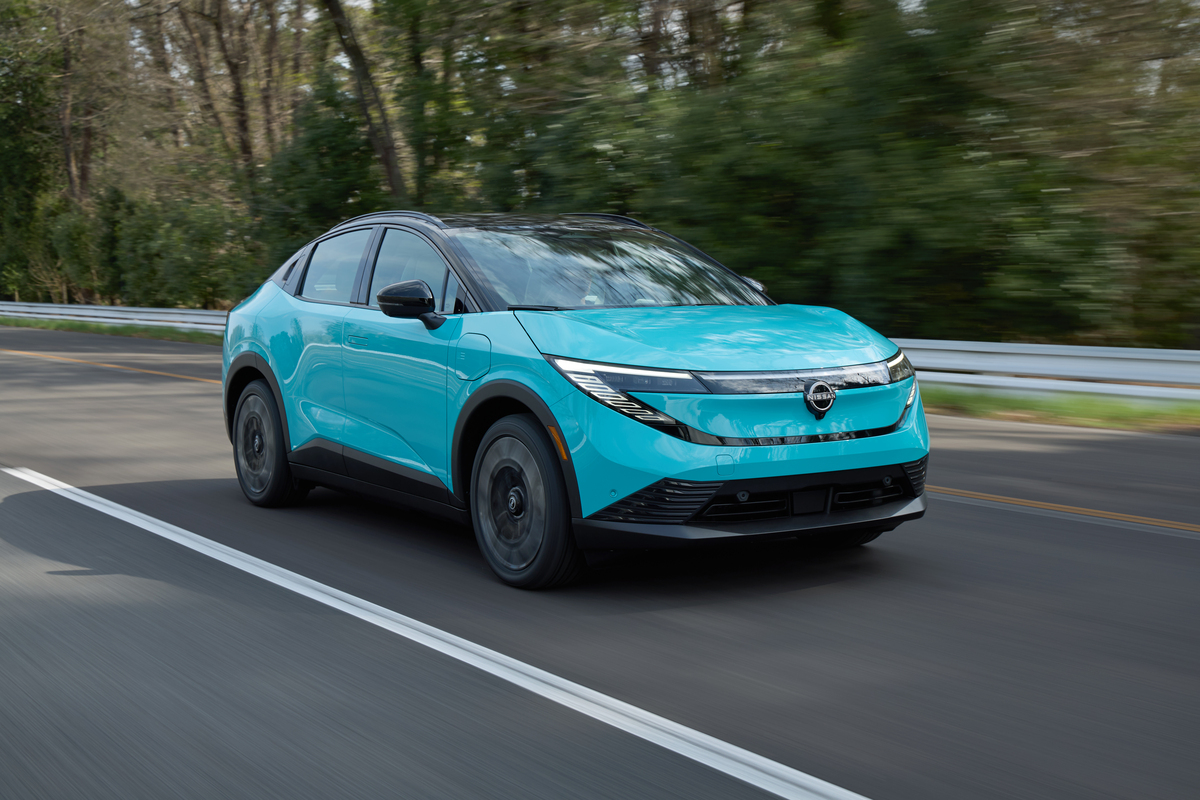
After several years focused on internal reorganisation and on recovering profitability, Nissan is entering a new phase. The company has presented a roadmap that combines financial discipline with a renewed commitment to technology and product, and Spain emerges as one of the countries where that strategy will have the greatest visibility.
This is no coincidence. Spain is today Nissan’s second-largest market in Europe and ninth worldwide, a commercial weight that explains why much of the brand’s electric offensive will have one of its main showcases here.
An almost entirely new range
The most relevant announcement for the Spanish market is the launch of the biggest product renewal Nissan has undertaken in years. The Ariya is joined by the new Leaf, with a range exceeding 600 kilometres, a 100% electric Micra developed for the urban segment, an electric Juke that will progressively replace the current crossover and, later, an entry-level electric model for segment A.
The strategy coincides with a reduction of Nissan’s global catalogue, which will fall from 56 to 45 models. However, this rationalisation will not affect the Spanish market. On the contrary: the offer will grow and will be clearly oriented towards electrification.
e-Power will remain a protagonist
Although the electric vehicle will be the axis of growth, Nissan is not giving up a gradual transition. The e-Power technology, which uses an electric motor to always drive the wheels while a petrol engine acts as a generator, will continue to play an important role.
The brand states that this technology already accounts for 60% of Qashqai and X-Trail sales in Spain, confirming that there is a group of customers who want to reduce emissions without yet depending on charging infrastructure. Nissan defends a strategy of “electrification with choice”, adapting its offer to the different pace at which the various European markets are advancing.
Spain, a laboratory for electric mobility
Nissan wants to position itself as a player in the future energy ecosystem. The company insists that the electric car will cease to be merely a means of transport and become an active element of the electricity grid through Vehicle-to-Grid (V2G), Vehicle-to-Home (V2H) and Vehicle-to-Everything (V2X) technologies.
The approach is based on using vehicle batteries to store renewable energy and then return it to homes or to the grid itself when needed.
According to the data presented by the company, more than 10,600 electric Nissan vehicles currently circulate in Spain, avoiding the emission of some 18,500 tonnes of CO₂ per year. In addition, the brand is developing battery reuse projects for energy storage, one of the areas where it expects to grow over the next decade.
Formula E as a test bench
Another message Nissan wants to reinforce is technology transfer from competition. The brand directly links developments in Formula E with the evolution of its future electric models under the motto “what happens on the track stays on the street”: the electronic management, energy efficiency and much of the control software developed in competition will end up in production vehicles.
Artificial intelligence, the next step
Nissan wants to position itself among the manufacturers leading the software-defined vehicle. Its strategy called AI Defined Vehicle outlines an evolution in which artificial intelligence will be responsible for improving driver assistance systems ProPilot, offering more natural interaction with the driver and enabling future automated driving functions. It is already working with Wayve and NVIDIA to develop these technologies, with the aim of progressively extending them to most of its range.
A market that still needs to accelerate
Despite the brand’s optimism, Nissan acknowledges that Spain continues to advance at a slower pace than Europe in electrification. While countries such as Norway have practically completed the transition and markets such as Germany, France or Portugal already far exceed a 20% electric market share, Spain remains at around 10%, conditioned by regulatory uncertainty and dependence on subsidy programmes.
For Nissan, the problem no longer lies in the vehicle offer. The challenge will be to generate sufficient consumer confidence through stable incentives, more robust charging infrastructure and a regulatory framework that facilitates the deployment of technologies such as V2G.
The renewal of the range comes at a particularly important moment for Nissan. The growing pressure from Chinese manufacturers, competition among traditional brands and rapid technological transformation make it necessary to differentiate beyond the product itself.
With five new electric models, a strong commitment to software, artificial intelligence and the integration of the vehicle into the energy system, Nissan aims to recover part of the prominence it had a decade ago, when the Leaf set the course for electric mobility.


 Peugeot E-208 GTi: a battery-powered toy that revives the spirit of the 1980s sports cars
 New Lexus ES: luxury grows and goes electric
 First contact with the Dacia Sandero Hybrid 155: power and efficiency from €19,890
Deja un comentario