Loose objects inside a car can cause fatal injuries
 Miguel Lorente
15 December 2020
3 min.
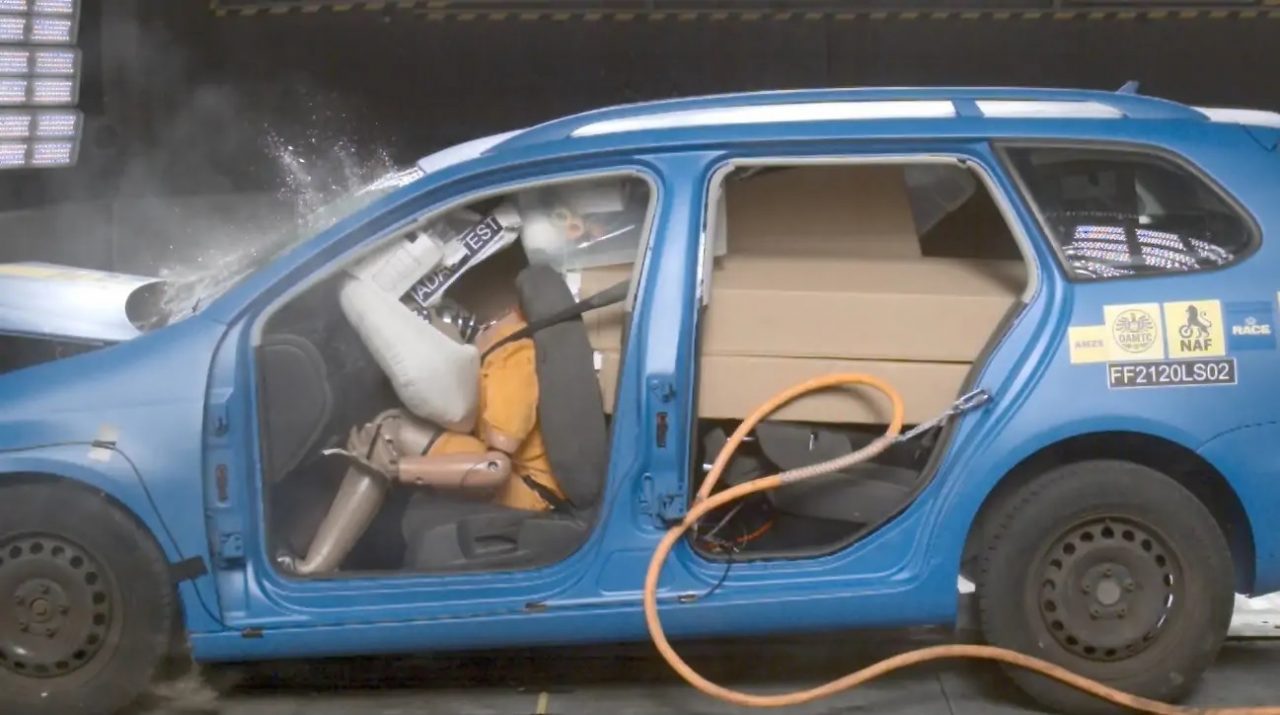
Two different simulations show the consequences of travelling with secured or unsecured cargo in the passenger compartment, with the aim of raising awareness of this practice
We know that the danger of travelling in a car with the seatbelt incorrectly fastened, or not fastened at all, exponentially multiplies the risk of suffering injuries of various kinds. But, very often, the cargo carried in the passenger compartment is neglected.
In addition, according to Article 14 of the General Traffic Regulations, which governs the placement of cargo, how everything located outside the boot must be transported is established. In cases of necessity or convenience, it is common for everything that can be housed outside the cargo compartment to be carried alongside passengers.
Objects as commonplace to carry with us as a mobile phone, keys or a can of soft drink can become projectiles in the event of a sudden braking or impact.
Once again, a new study, in this case carried out by the Royal Automobile Club of Spain (RACE), once again highlights the risk we expose ourselves to when travelling with loose objects inside a vehicle. In fact, according to its data, 40 per cent of respondents admit to having transported cargo irregularly.
At just 45 km/h, the risk of carrying loose cargo can be fatal
The test we are sharing took into account two simulations: one in which the vehicle travelled with the cargo secured, while in the other scenario it was carried out with the cargo unsecured.
The test was carried out by subjecting the vehicle to a frontal collision with a concrete block at a speed of just 45 km/h.
Impact test: vehicle with secured cargo
https://youtu.be/N91gHZnsmlQ
Impact test: vehicle with unsecured cargo
https://youtu.be/UNqbMxo5Bhg
In the analysis of the first, in which the cargo is firmly secured, the consequences of the collision had it been suffered by people would have been minor but considerable injuries, as there were no additional dangers beyond those of the collision itself.
For its part, the evaluation of the second, where the cargo is placed without any restraint and distributed at random, showed dummies sustaining injuries that, in humans, would have been serious in several areas, most notably the injuries to the skull, which could have caused life-threatening injuries to the driver.
Both in periods such as the one we are currently living through and in times of high road mobility, on both interurban and urban roads, such as special operations during summer campaigns, long weekends and public holidays, when vehicles serve not only to carry their passengers but also their belongings, it is more important than ever to stress that carrying objects, regardless of their size or weight, inside the vehicle always poses a risk, to a greater or lesser extent, and can even prove fatal.


 Peugeot E-208 GTi: a battery-powered toy that revives the spirit of the 1980s sports cars
 New Lexus ES: luxury grows and goes electric
 First contact with the Dacia Sandero Hybrid 155: power and efficiency from €19,890
Deja un comentario