Toyota Coches hidrógeno Industry
Madrid's first hydrogen refuelling station opens
 Miguel Lorente
29 January 2021
2 min.
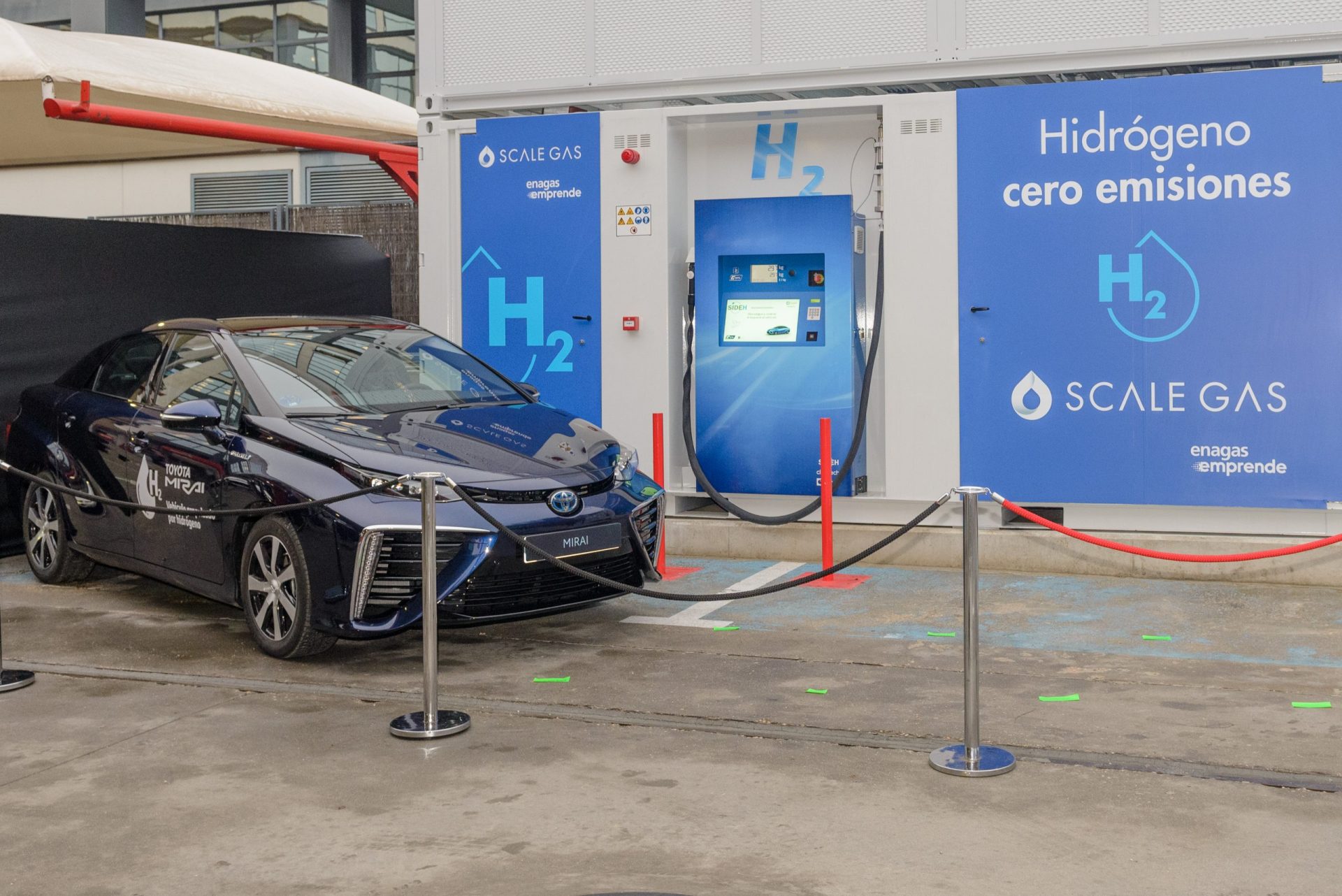
The Madrid hydrogen station is a project to boost the use of this clean fuel, backed by several companies involved in fuel cell electric vehicle (FCEV) systems
If battery electric cars, rechargeable by plugging into the power grid, are battling their own demons (limited range, slow recharging and a grid poorly suited to the task), those that include a hydrogen fuel cell in the equation face the same problems regarding price and the hydrogen distribution network that supplies their fuel. Some of these factors have already been overcome comfortably, while others are on the way to being solved, such as the network of hydrogen stations in Spain, which since yesterday has gained a new hydrogen recharging station in Madrid.
The new and first hydrogen refuelling station in Madrid is the result of collaboration between various players interested in the introduction, use and expansion of fuel cell hydrogen vehicles.
Furthermore, this hydrogen refuelling point offers a refuelling capacity unseen until now since, according to its promoters, it operates at 700 bar of pressure and a daily volume of 10 kg. This means that FCEV fuel tanks can be refilled in roughly the same time it takes to refuel a petrol or diesel car.
This recharging station has public backing but was promoted by the private sector, thanks to the involvement of companies such as Toyota España, Scale Gas, Urbaser, Carburos Metálicos, Sumitomo Corporation España and the Spanish Confederation of Service Station Entrepreneurs. This hydrogen distribution point for fuel cell vehicles in Madrid is already in operation.
Where is the Madrid hydrogen station?
Located at number 34 Avenida de Manoteras, the Madrid hydrogen recharging station is a pioneer not only in the municipality of Madrid but across the whole region. Until now, the nearest one was in Puerto Llano, Ciudad Real, exactly 250 km from the newly opened station.
This meant the capital lacked a hydrogen station where vehicles such as the 12 Toyota Mirai first-generation cars that the Japanese brand introduced into its fleet could refuel.
In connection with the start of sales of the second generation of this vehicle, it seems that, at least in Madrid and Barcelona, initiatives, both private and public, show that, as is logical, if the aim is to promote electric mobility based on energy production systems that store and burn hydrogen, a significant expansion of the gas distribution point network is necessary.

 Peugeot E-208 GTi: a battery-powered toy that revives the spirit of the 1980s sports cars
 New Lexus ES: luxury grows and goes electric
 First contact with the Dacia Sandero Hybrid 155: power and efficiency from €19,890
Deja un comentario