Michelin applies simulation to tyre development
 Óscar Sanz
22 May 2023
4 min.
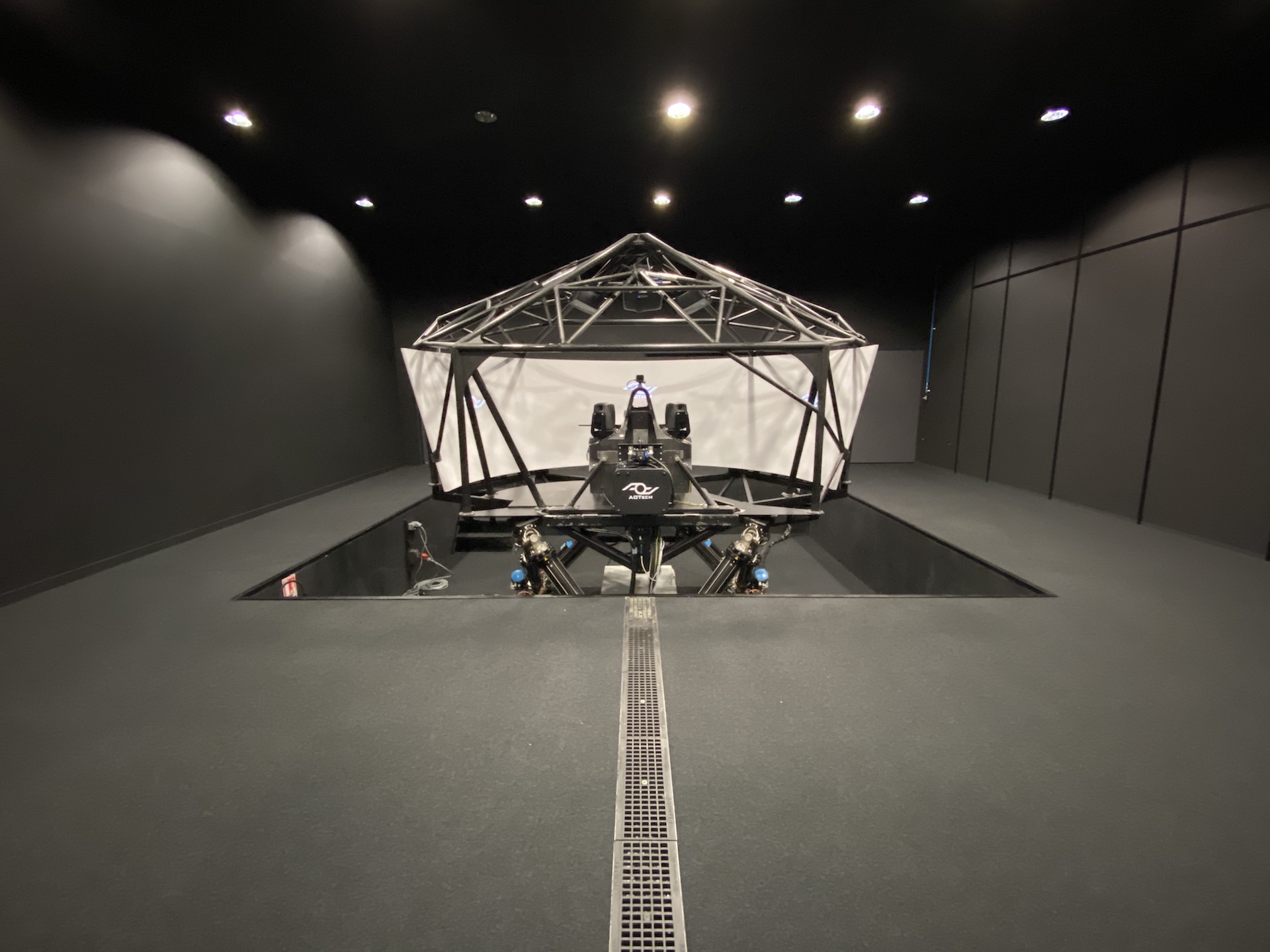
The leading company in the production and development of tyres, Michelin, will carry out the evaluation and development of its tyres through simulation and Canopy Simulation
The new technologies are playing a fundamental role in the automotive world; newer models include an increasing number of technologies that contribute to our safety and comfort. We had previously seen that mathematical simulation software from Michelin made it possible to process data collected during races and generate forecasts that helped teams improve their performance for three decades. At the beginning of the 2000s, this software underwent a first significant evolution, but it was in 2005 that Michelin truly revolutionised the industry by turning its virtual tyres into “dynamic” ones.
That year, Michelin took a decisive step by developing the computer program “Tame Tire“, which allowed the company to interact with virtual tyres in a realistic way, reproducing the deformations and the effects of temperature and inflation pressure on the materials. Michelin’s experts created an independent mathematical model for each element of the tyre structure, which allowed them to simulate its behaviour accurately under different conditions.
Since then, the “Tame Tire” software has continued to evolve and improve thanks to technological advances, which has allowed Michelin to establish itself as one of the most important players in the automotive industry.
Currently, Michelin is using simulation in areas such as tyre development and the manufacturing process, processes in which it has more than one hundred experts at the Michelin Research Centre in Ladoux, especially in the Department of Applied Mathematics, Simulation and Data Science, led by André Colom.
Study of tyre performance through simulation
Michelin uses simulation tools to study all aspects related to the performance of its products. These analyses are applied both to lightweight tyres for bicycles and to heavy tyres used in the mining industry and aircraft tyres. Through different levels of simulation, the behaviour of new and worn tyres is examined, the impact of accidental damage on their performance is assessed, and the best way to extend their service life safely and sustainably is determined.
André Colom, head of Michelin’s Department of Applied Mathematics, Simulation and Data Science explains the benefits of this technology: “Computer simulation gives us the possibility of virtually testing hundreds of possible configurations. It helps validate design intentions and eliminates two thirds of prototypes. Data and AI are evolving our manufacturing processes, our products and our relationships with customers.”
Another feature that has allowed Michelin to position itself at the forefront of the market concerns how the simulator enables it to effectively identify the most suitable dimensions and technologies for new vehicles based on their technical characteristics and weight distribution. The simulators faithfully reproduce real-world dynamics, using three digital models that represent the road profile, the characteristics of the chassis or vehicle, and the detailed behaviour of the tyres. At events such as the 2023 24 Hours of Le Mans, Michelin equips the Hypercar category prototypes with tyres developed with the help of simulation software.
Michelin acquires the best lap-time simulator
Michelin has recently announced the acquisition of Canopy Simulation, a leading British company specialising in lap-time simulation. Canopy Simulation stands out for its advanced simulation software, which combines models of circuits, vehicles and tyres. This tool, designed to evolve and adapt to increasingly detailed models, has a range of applications.
The company already offers a “virtual driver” capable of carrying out standardised tasks, such as simulating the different pit stops made by single-seaters in the four-hour race at Le Mans to assess tyre consistency. In addition, in the field of road tyres, it allows manufacturers to reproduce different driver profiles and evaluate both vehicle use and wear and fuel consumption in relation to the corresponding tyres.
It should be noted that, despite these innovations, the final validation of the tyre specifications and their adaptation to the vehicle will remain the responsibility of a real driver.
‘Michelin simulator’ image gallery


 Peugeot E-208 GTi: a battery-powered toy that revives the spirit of the 1980s sports cars
 New Lexus ES: luxury grows and goes electric
 First contact with the Dacia Sandero Hybrid 155: power and efficiency from €19,890
Deja un comentario