Ranking 2026: SUV hybrids with the best finishes
 Iván Navarro
27 April 2026
8 min.
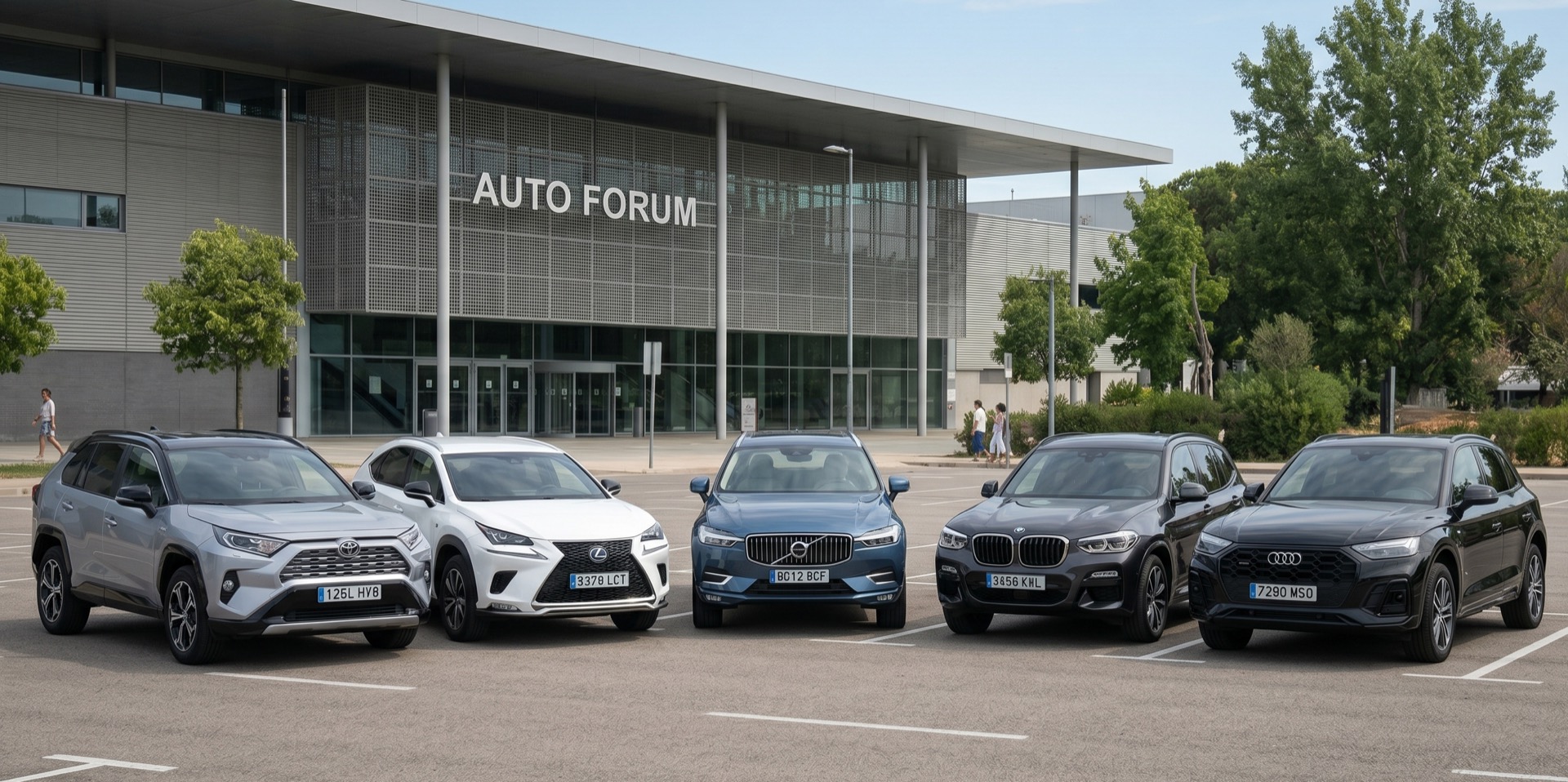
The following analysis will break down the key points of design, powertrain, comfort and versatility of five true titans of the asphalt and benchmarks in their category.
The 2026 hybrid SUV market offers a range where the perceived quality of the interior and the care taken with finishes have become decisive factors for buyers. Brands have incorporated more noble materials, greater attention to assembly and design details that elevate the sense of a premium vehicle without sacrificing hybrid efficiency. In this article you will find a selection of models that stand out for their finish, explaining which type of use they suit best and pointing out technical and commercial advantages and limitations.
Who is this ranking for?
This ranking is based on market data, official specifications and published road tests. It is aimed at those who value cabin quality and finishing details when choosing a hybrid SUV, without focusing solely on power or range figures.
If you are looking for a car with carefully chosen materials for frequent journeys, if you want a hybrid that projects quality in a professional setting, or if you prioritise a sense of robustness and attention to detail in the interior, this list will help you compare options using practical criteria.
What details have we analysed?
We have assessed market positioning and finish level, the official technical data available (power and homologated consumption), electric range where applicable, dimensions and interior ergonomics, and the price-to-technical-proposition ratio to determine what each model offers at its entry level.
Ranking of the hybrid SUVs with the best finishes 2026
Lexus NX 350h (from 45,900 €*)
Indicative price without applying public aid or the brand’s commercial discounts.
Why it’s here: The NX combines a carefully presented interior with tactile materials and precise assembly that enhance the perception of quality. Its focus on details such as stitching, padded panels and a clean driver’s cockpit layout justifies its inclusion.
Ideal for: Users who prioritise comfort and a premium feel on daily routes and short-to-medium distance trips.
Pros:
- Consistent finishes throughout the cabin and doors.
- Well-considered ergonomics and acoustic insulation.
- Good material specification in the mid-range versions.
Cons:
- Entry price higher than some mainstream competitors.
- Rear seat space somewhat tight compared with rivals in a larger segment.
Volvo XC60 Recharge (from 66,000 €*)
Indicative price without applying public aid or the brand’s commercial discounts.
Why it’s here: The XC60 offers a minimalist interior with high-quality materials and Scandinavian design solutions that prioritise touch and visual coherence. The use of wood inserts and metallic finishes contributes to a sophisticated atmosphere.
Ideal for: Buyers seeking a balance between sober interior design and premium presence with good equipment options.
Pros:
- Premium-level materials and interior fit.
- Functional and clean interior design.
- Wide personalisation options.
Cons:
- High price on the best-equipped versions.
- The infotainment system may be less intuitive for some users.
BMW X3 xDrive30e (from 57,900 €*)
Indicative price without applying public aid or the brand’s commercial discounts.
Why it’s here: The X3 combines a solid finish with driver-focused details: well-selected materials, steering wheel and seats with good fit, and an environment that conveys robustness and precision in assembly.
Ideal for: Drivers seeking a dynamic feel without giving up an interior with good fit and durable materials.
Pros:
- Good build quality.
- Seats and ergonomics geared to comfort and control.
- Extensive service network and technical support.
Cons:
- High entry cost compared with mainstream rivals.
- Options and packs can significantly increase the final price.
Audi Q5 55 TFSIe (from 62,900 €*)
Indicative price without applying public aid or the brand’s commercial discounts.
Why it’s here: Audi maintains a high degree of consistency in finishes and assembly; the Q5 stands out for its balance between soft surfaces, metallic inserts and a sober, well-finished overall presentation.
Ideal for: Users who value a balanced interior atmosphere, with technology and materials that feel pleasant to the touch.
Pros:
- Uniform finishes and precise assembly.
- Good ergonomics and quality of controls.
- Strong focus on technology and connectivity.
Cons:
- Costly options that quickly inflate the final price.
- Rear space not as generous as some competitors.
Toyota RAV4 Hybrid (from 36,450 €*)
Indicative price without applying public aid or the brand’s commercial discounts.
Why it’s here: The RAV4 offers a practical proposition with improved finishes on the upper versions; more durable materials and a set-up focused on everyday use make it relevant in terms of value for money.
Ideal for: Families and users seeking a reliable hybrid with good finishes in the mid-range versions without paying a premium brand surcharge.
Pros:
- Attractive value for money across its finish levels.
- Practical interior that withstands daily use.
- Extensive service network and a reputation for reliability.
Cons:
- Less noble materials on the base version compared with premium brands.
- Interior design less innovative than European alternatives.
The prices shown in this ranking are indicative and do not apply public aid or the brand’s commercial discounts.
Technical comparison
| Model | Range | Power | Consumption | Top speed | Price (€*) |
|---|---|---|---|---|---|
| Lexus NX 350h | ND | ND | ND | ND | 45,900 €* |
| Volvo XC60 Recharge | WLTP electric: 50–52 km | ND | ND | ND | 66,000 €* |
| BMW X3 xDrive30e | WLTP electric: 50–60 km | ND | ND | ND | 57,900 €* |
| Audi Q5 55 TFSIe | WLTP electric: 50–60 km | ND | ND | ND | 62,900 €* |
| Toyota RAV4 Hybrid | ND | ND | ND | ND | 36,450 €* |
These data are official and taken from the brands’ official websites.
Purchase aid in 2026: Plan Auto+ and tax benefits
The 2026 Plan Auto+ replaces the previous MOVES programmes and establishes a new direct aid system for the purchase of electrified vehicles in Spain. Its design prioritises electrification, with differentiated incentives depending on the type of vehicle and its price.
Main amounts of the 2026 Plan Auto+
– Direct aid of up to 4,500 € for electric passenger cars.
– Up to 5,000 € for light vans in category N1.
– Retroactive effect from 1 January 2026.
– Approximate budget allocation of 400 million euros.
Who can benefit and priority criteria
Beneficiaries: individuals, self-employed workers and companies. The EEE criterion (Electric, Economic and European) applies, with a greater incentive for pure electric vehicles compared with plug-in hybrids. Vehicles priced below 35,000 € receive higher aid; between 35,000 € and 45,000 € they qualify for reduced aid. There is an additional incentive if the final assembly or the batteries come from the European Union.
Additional requirements and tax advantages
The Plan establishes a mandatory minimum discount of 1,000 € from the dealer. It also provides a 15% deduction on personal income tax (IRPF) up to a maximum of 3,000 €. The fiscal validity of these measures extends until 31 December 2026.
Management and possible regional aid
Management is coordinated by the Ministry of Industry together with the Autonomous Communities; additional regional programmes may exist. One example is the Plan Cambia 360 in the Community of Madrid. At the time of writing, it is not officially confirmed whether these regional aids are fully compatible with the Plan Auto+ 2026.
FAQ · The 5 questions everyone asks
How do finishes influence resale value?
Quality finishes usually improve the perception of the vehicle and make it easier to sell on the second-hand market, especially in premium segments; however, demand and the brand remain key factors for resale value.
Is a self-charging hybrid or a plug-in better if I’m looking for premium finishes?
Plug-in hybrids usually offer more technological equipment and finish options in higher ranges, but self-charging hybrids can offer quality materials at lower price levels; the choice depends on the expected electric use.
What influence does equipment have on the feeling of finish?
Equipment packs with soft surfaces, upper-grade upholstery and real trim pieces increase the sense of quality more than purely technological options; touch on the steering wheel and the feel of materials are direct indicators.
Is it worth paying more for versions with better finishes?
It depends on use: if you spend many hours inside the car and value a sense of luxury, yes; if use is occasional, it is better to prioritise value for money and keep budget for maintenance and running costs.
How can I check the finishes before buying?
Visit the vehicle in person, touch the materials, open and close the doors and glovebox, try the seats and assess how the panels fit together; the physical experience is decisive compared with photos or listings.
Expert Conclusion
This ranking shows that in 2026 the quality of finishes is as relevant as the powertrain in the decision to buy a hybrid SUV. For the buyer, it means you should not only compare consumption or range figures: the choice of material, fit and ergonomics influence daily satisfaction and the real cost of ownership.
If you want to get the most for your money, first look at the real entry price and what comes as standard. If you prefer to play it safe, consider market demand and the reputation of the service network; if your use is mainly urban, prioritise efficiency and interior comfort. If the model is in high demand, it is usually also easier to sell later. And if you do a lot of kilometres, energy cost and efficiency matter more than the power figure.


 Peugeot E-208 GTi: a battery-powered toy that revives the spirit of the 1980s sports cars
 New Lexus ES: luxury grows and goes electric
 First contact with the Dacia Sandero Hybrid 155: power and efficiency from €19,890
Deja un comentario