Ranking 2026: The best compact SUVs with the best value for money
 Iván Navarro
26 April 2026
7 min.
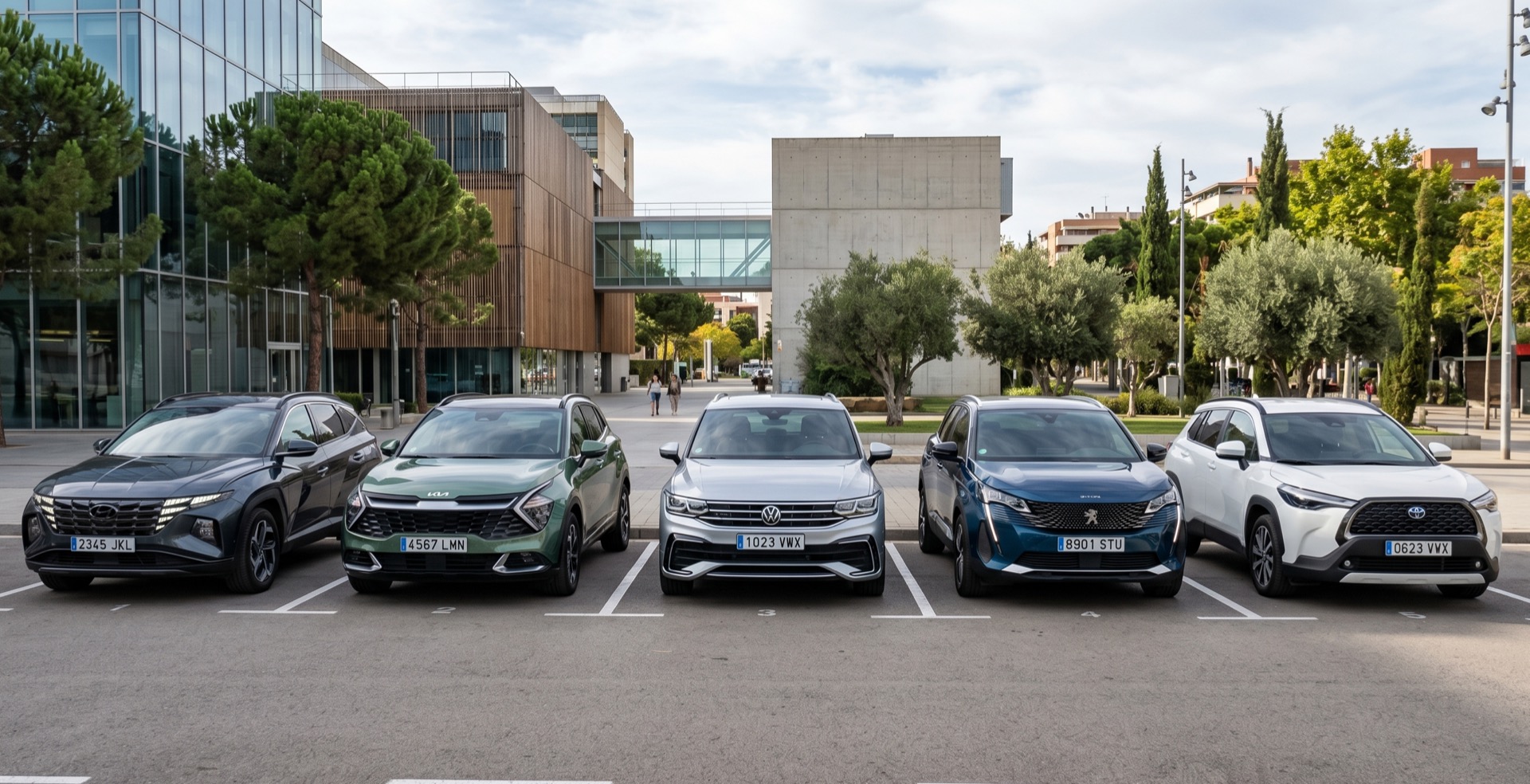
The compact SUV segment is one of the most hotly contested. Below, we break down the main features of five interesting models to find out which one best suits the needs of each driver.
The compact SUV market in 2026 offers a wide range of choices where value for money drives the purchase decision. Competition has focused on delivering coherent combinations of engine, equipment and running costs, with multiple hybrid alternatives that reduce consumption without disproportionately raising the entry price. In this overview you will find models that stand out for their technical balance, standard equipment and initial cost, along with guidance on the use for which each fits best: urban, mixed or frequent long journeys. Objective advantages and limitations are also highlighted to make a quick and practical comparison easier.
Who is this ranking for?
This ranking is based on market data, official specifications and published road tests.
If you are looking for a compact SUV with a good balance between price, equipment and running costs, this list will help you narrow down your options. If you drive many kilometres a year, prioritise efficiency, or want a car with good standard equipment and contained maintenance costs, the spec sheets and technical comparison will let you distinguish between alternatives depending on use: city, family or long-distance travel.
What details have we analysed?
We have compared market positioning, power outputs and available configurations, WLTP homologated consumption and range data where applicable, dimensions and practical capacity, as well as the price/technical approach ratio and the safety and connectivity equipment offered as standard.
Ranking of the best compact SUVs with the best value for money of 2026
Hyundai Tucson (from €32,000*)
Indicative price without applying public aid or the brand’s commercial discounts.
Why it is here: The Tucson combines a wide range of engines (including hybrids) with a competitively priced entry-level safety and connectivity package. Its balance between purchase cost and equipment makes it relevant in markets that value practicality and brand warranty.
Ideal for: Drivers seeking versatility for daily use and regular trips with a contained cost per kilometre.
Pros:
- Wide range of engines, including a hybrid variant.
- Competitive safety and connectivity equipment as standard.
- Good interior space for its segment.
Cons:
- The price of the most efficient versions rises compared with the entry level.
- Driving dynamics less sporty than premium alternatives.
Kia Sportage (from €30,900*)
Indicative price without applying public aid or the brand’s commercial discounts.
Why it is here: The Sportage offers a value-for-money proposition, with high comfort equipment in mid-range trims and a range with hybrid options that reduce consumption without excessively raising the entry price. Its positioning makes it frequent on shopping lists based on total cost of ownership.
Ideal for: Buyers who prioritise equipment and a tight purchase cost without giving up hybrid efficiency.
Pros:
- Good equipment-to-price ratio in mid-range versions.
- Hybrid options that improve real-world consumption.
- Warranty and a wide dealer network.
Cons:
- Boot space varies depending on the version.
- Some options significantly increase the final price.
Volkswagen Tiguan (from €36,000*)
Indicative price without applying public aid or the brand’s commercial discounts.
Why it is here: The Tiguan balances a solid product proposition, brand reputation and available technology. Although its entry price is higher than general alternatives, its finish and behaviour lead many buyers to consider it a safe medium-term investment.
Ideal for: Those who prefer a conservative purchase with good resale potential and consistent finishes.
Pros:
- Consistent finish and overall fit.
- Wide availability of engines and equipment levels.
- Good perception of residual value.
Cons:
- Entry price higher than general-purpose competitors.
- Attractive options quickly increase the final cost.
Peugeot 3008 (from €33,000*)
Indicative price without applying public aid or the brand’s commercial discounts.
Why it is here: The 3008 stands out for its combination of design, comfort and efficient versions that do not sacrifice equipment. Its technical approach and interior presentation place it as a balanced option between cost and on-board feel.
Ideal for: Drivers who value interior design, comfort and efficiency on varied routes.
Pros:
- Distinctive interior and ergonomics in its segment.
- Efficient options without giving up equipment.
- Good dynamics in petrol and hybrid variants.
Cons:
- Some versions may be expensive relative to their actual equipment.
- Driving position that not everyone likes.
Toyota Corolla Cross (from €29,900*)
Indicative price without applying public aid or the brand’s commercial discounts.
Why it is here: The Corolla Cross version brings the efficiency of Toyota hybrid technology with a competitive entry price. Its low homologated consumption and reliability reputation make it an attractive alternative for buyers who value running costs.
Ideal for: Users who drive many kilometres and value low consumption and proven reliability.
Pros:
- Low real-world consumption thanks to its hybrid system.
- Reduced maintenance costs and reliability reputation.
- Competitive entry price among compact hybrids.
Cons:
- Boot space is somewhat limited compared with larger rivals.
- Design and road presence less eye-catching for some tastes.
The prices shown in this ranking are indicative, without applying public aid or the brand’s commercial discounts.
Technical comparison
| Model | Range | ||||
|---|---|---|---|---|---|
| Hyundai Tucson | ND | 150–265 CV | 5.6–7.0 l/100 km (WLTP) | 180–210 km/h | 32,000 |
| Kia Sportage | ND | 150–265 CV | 5.4–7.2 l/100 km (WLTP) | 185–210 km/h | 30,900 |
| Volkswagen Tiguan | ND | 150–245 CV | 6.0–7.8 l/100 km (WLTP) | 190–230 km/h | 36,000 |
| Peugeot 3008 | ND | 130–225 CV | 5.0–7.4 l/100 km (WLTP) | 185–225 km/h | 33,000 |
| Toyota Corolla Cross | ND | 136–184 CV | 4.4–5.0 l/100 km (WLTP) | 180–200 km/h | 29,900 |
These data are official and taken from the brands’ official websites.
FAQ · The 5 questions everyone asks
What real advantages does a compact SUV offer over a traditional compact?
Compact SUVs usually provide a higher driving position, better visibility and rear-seat space; they also offer modularity and, in many cases, all-wheel-drive versions. Running costs can be similar to a compact if an efficient engine is chosen.
Is it better to choose a hybrid or a petrol model for the best value for money?
A hybrid usually improves efficiency in mixed and urban use, reducing consumption and energy costs; the decision depends on annual mileage: the more kilometres, the greater the relative saving of the hybrid alternative over petrol.
What should I check in the entry price to measure value for money?
Check standard equipment (safety and comfort), warranty, maintenance costs and which elements are optional. The entry price may be attractive, but essential optional extras can make the overall cost much higher.
Does the brand have a big influence on the resale of these models?
Brand and perceived reliability usually influence resale value; models with good market acceptance and a service network tend to hold their value better, which can offset a slightly higher purchase price.
How does family use affect the choice between these models?
For family use, prioritise space, active safety and consumption on long trips. Models with a larger boot and accessible child-seat anchorage options (ISOFIX) will be more practical day to day.
Expert Conclusion
This ranking shows that in 2026 value for money in the compact SUV segment depends less on a single dimension and more on the balance between entry price, standard equipment and running costs. For the buyer, this means there are competitive alternatives both among general-purpose brands and among brands with a stronger dealer network; choosing well means comparing specific versions, not just model names.
If you want to get the most for your money, first look at the real entry price and what comes as standard. If a model is in high demand, it is usually also easier to sell later. And if you drive many kilometres, energy cost and efficiency matter more than the power figure. If you won’t charge often, don’t buy from the catalogue: buy according to your routine. Depending on your use, prioritise the Toyota Corolla Cross or hybrid versions of the Sportage/Tucson for efficiency; if you prefer to play it safe with better finish and perceived value, the Tiguan is the benchmark; for a mix of price and equipment, the Sportage and the 3008 are sensible alternatives.


 Peugeot E-208 GTi: a battery-powered toy that revives the spirit of the 1980s sports cars
 New Lexus ES: luxury grows and goes electric
 First contact with the Dacia Sandero Hybrid 155: power and efficiency from €19,890
Deja un comentario