Ranking 2026: the 6 electric compact SUVs with the best regenerative braking system for urban driving
 Dani Montesinos
7 August 2026
6 min.
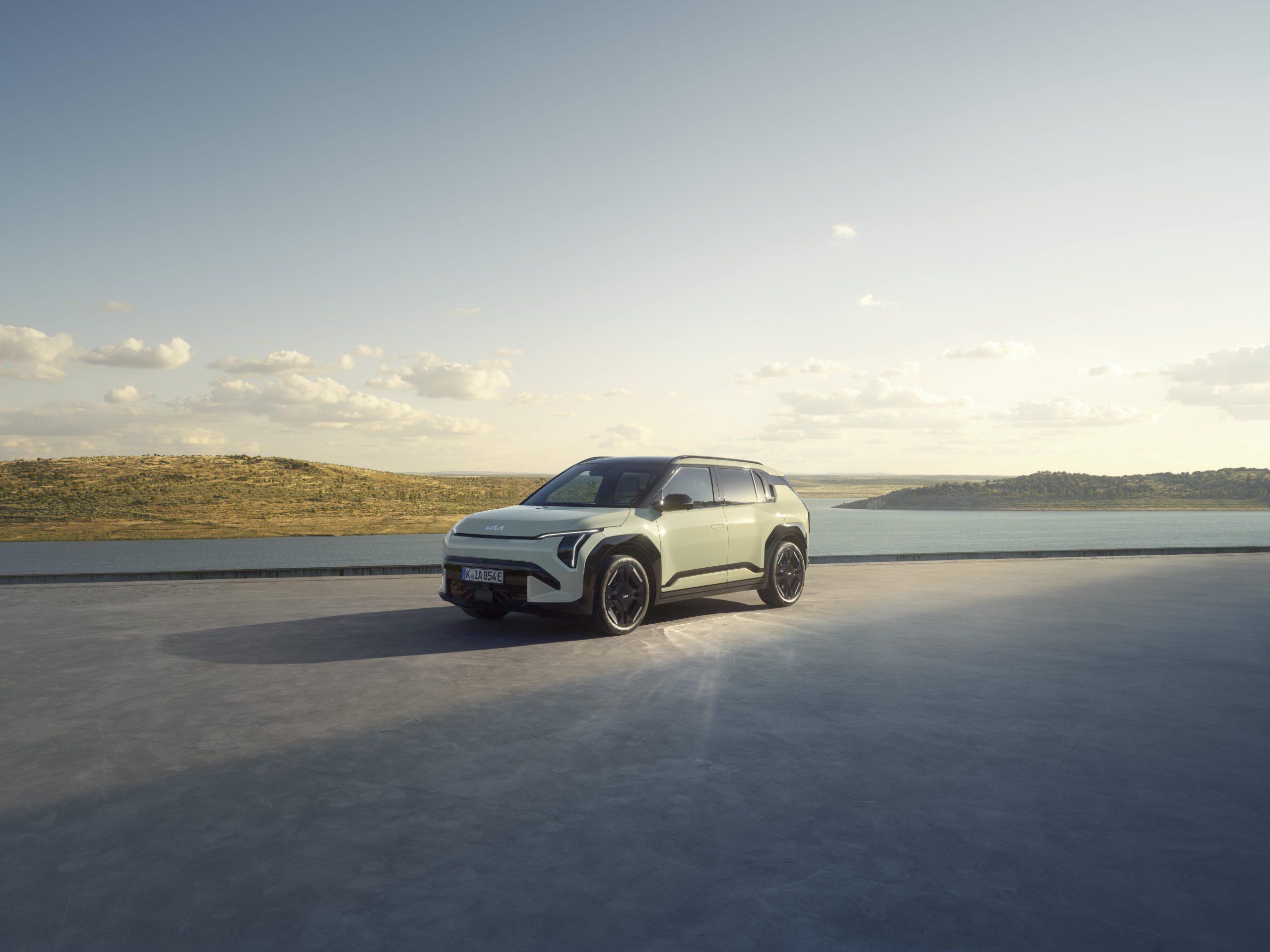
We analyse the six electric compact SUVs with the most refined regenerative braking for the city. One-pedal driving, steering-wheel paddles and adjustable levels compared
Regenerative braking stopped being a technicality a long time ago. In the city, with traffic lights every 200 metres and ZBE low-emission zones everywhere, it is what separates a pleasant electric car from one that wears you out. Recovering energy on every deceleration does more than stretch the range: it completely changes the way you drive. And not all manufacturers get it right with the same finesse.
We have spent time in Madrid, Barcelona and Valencia with six electric compact SUVs currently on sale in Spain, and these are the ones that have handled the challenge best. The criteria: number of adjustable levels, quality of one-pedal driving, presence (or absence) of steering-wheel paddles, and consistency between the theoretical deceleration and the real feel under the right foot.
What a good regenerative braking system really delivers in the city
A good regenerative system is judged on three things. First, progressiveness: the car should not jolt when you lift off the accelerator. Second, modulation: you should be able to dose the retardation according to traffic, rather than being forced into a single mode. And third, the energy recovered. In a typical Spanish urban cycle—an average of 30-40 km/h with frequent stops—a well-calibrated system can return between 15% and 25% of the energy consumed. Not bad for a journey from Chamberí to Cuatro Caminos.
One-pedal driving, when properly implemented, lets you drive for hours without touching the mechanical brake. That is welcome. However, not all cars understand it in the same way: some brake all the way to a complete stop, others keep creeping along at 5 km/h. That nuance matters more than it seems.
Kia EV3 — from 28,805 €
The EV3 has earned first place the hard way. Three regeneration levels plus i-Pedal 2.0 mode, well-placed steering-wheel paddles and a progressiveness that others should study. The i-Pedal brings the car to a complete stop and holds it there on hills, something that is very welcome on the steep streets of central Bilbao. The calibration is among the most natural on the market: no jerks, no strange lag.
On a 40 km urban journey with stops, we recorded recoveries close to 22% of the energy used. And the feel of the pedal—the thing spec sheets never mention—is remarkably natural. To our taste, the benchmark of the segment.
| Power kW | Power hp | Top speed | Range | Consumption | Label | Fuel |
|---|---|---|---|---|---|---|
| 150 | 204 | 170 km/h | 605 km | 14.9 kWh/100 km | ZERO | Electric |
If you want to go deeper into the model, we have already broken it down in the full EV3 review.
Hyundai Kona Electric — from 38,050 €
It shares its philosophy with its Korean cousin, but the Kona adds its own nuance. Four regeneration levels—including Auto mode, which reads traffic with the front camera and adjusts retardation according to the car ahead—and large, firm-action steering-wheel paddles. Auto mode is not perfect: sometimes it is overly conservative. Even so, in traffic jams it works surprisingly well.
The Kona’s one-pedal driving does bring the car to a complete stop. It is a matter of taste, but in the city that is what most people want.
| Power kW | Power hp | Top speed | Range | Consumption | Label | Fuel |
|---|---|---|---|---|---|---|
| 150 | 204 | 172 km/h | 14.7 kWh/100 km | ZERO | Electric |
Volvo EX30 — from 41,790 €
The EX30 plays in a different league when it comes to philosophy: it’s one-pedal or nothing. Just two modes—normal and one-pedal driving—and not a single steering-wheel paddle. It sounds poor, but the calibration is so good that you rarely miss more levels. The deceleration is strong and very linear, and it stops the car with clockwork precision. Behind it lies the Swedish school: fewer options, better resolved.
That said, if you enjoy switching levels according to the road, you will be bored here. It is a car that imposes a driving philosophy on you, rather than the other way round.
| Power kW | Power hp | Top speed | Range | Consumption | Label | Fuel |
|---|---|---|---|---|---|---|
| 200 | 272 | 180 km/h | 474 km | 17.0 kWh/100 km | ZERO | Electric |
BMW iX1 — from 57,900 €
BMW approaches regeneration with an adaptive focus. B mode adds firm retardation, almost one-pedal, and Adaptive mode—the most interesting—uses navigation data and sensors to modulate recovery for bends, roundabouts and traffic. On the open road it works wonderfully. On narrow streets, it sometimes falls short.
No steering-wheel paddles. And that, in a premium car at this price, is surprising.
| Power kW | Power hp | Top speed | Range | Consumption | Label | Fuel |
|---|---|---|---|---|---|---|
| 225 | 306 | 180 km/h | 467 km | 17.2 kWh/100 km | ZERO | Electric |
Volkswagen ID.4 — from 46,090 €
The Wolfsburg proposal is more conservative. D mode with very gentle regeneration—it feels like a combustion car—and B mode with marked retardation, but without reaching pure one-pedal driving: the car keeps rolling at low speed. No steering-wheel paddles and no intermediate levels. It is the classic German interpretation: regenerative braking assists, it does not take the lead.
In practice, some drivers prefer it. It does not quite convince me in long traffic jams, where you end up using the brake pedal more than you would like.
| Power kW | Power hp | Top speed | Range | Consumption | Label | Fuel |
|---|---|---|---|---|---|---|
| 210 | 286 | 180 km/h | 561 km | 15.7 kWh/100 km | ZERO | Electric |
Peugeot e-3008 — from 42,650 €
The e-3008 offers three levels via a paddle placed behind the gear lever—not on the steering wheel, a debatable detail—and a Brake mode that provides decent retardation. There is no real one-pedal driving, and that is its urban Achilles’ heel. On paper, the recovered efficiency is correct; in practice, you miss being able to stop the car without touching the brake.
| Power kW | Power hp | Top speed | Range | Consumption | Label | Fuel |
|---|---|---|---|---|---|---|
| 157 | 210 | 170 km/h | 525 km | 16.8 kWh/100 km | ZERO | Electric |
Summary table and overall score
| Model | Regen levels | One pedal | Paddles | Range | Price from | Score /10 |
|---|---|---|---|---|---|---|
| Kia EV3 | 3 + i-Pedal 2.0 | Yes, to a complete stop | Yes | 605 km | 28,805 € | 9.4 |
| Hyundai Kona Electric | 4 + Auto | Yes, to a complete stop | Yes | 510 km | 38,050 € | 9.0 |
| Volvo EX30 | Yes, to a complete stop | No | 474 km | 41,790 € | 8.6 | |
| BMW iX1 | 3 + Adaptive | Partial (B mode) | No | 467 km | 57,900 € | 8.2 |
| Volkswagen ID.4 | 2 (D/B) | No | No | 561 km | 46,090 € | 7.2 |
| Peugeot e-3008 | No | Console lever | 525 km | 42,650 € | 7.0 |
If you are looking for more urban angles on the segment, the efficiency ranking of electric B-SUVs in the city is a good complement to this comparison.
FAQ
Which electric compact SUV has the best regenerative braking system for the city in 2026?
The Kia EV3, with three adjustable levels plus i-Pedal 2.0 mode, steering-wheel paddles and especially progressive calibration. It is the one that best balances options and refinement.
Do all electric compact SUVs offer real one-pedal driving?
No. The Kia EV3, Hyundai Kona Electric and Volvo EX30 bring the car to a complete stop without touching the brake. The BMW iX1 comes close, while the Volkswagen ID.4 and the Peugeot e-3008 do not offer a true one-pedal experience.
How much energy can regenerative braking recover in the city?
In a typical Spanish urban cycle, a well-calibrated system recovers between 15% and 25% of the energy consumed. Journeys with many stops and gradients favour the higher percentages.
Are steering-wheel paddles useful for regeneration?
Yes, provided the system allows quick changes between levels depending on the road. You gain fine control without taking your eyes off the road. In models such as the Kia EV3 or the Hyundai Kona, they make a real difference; in others with fewer levels, they add less.


 Peugeot E-208 GTi: a battery-powered toy that revives the spirit of the 1980s sports cars
 New Lexus ES: luxury grows and goes electric
 First contact with the Dacia Sandero Hybrid 155: power and efficiency from €19,890
Deja un comentario