Ranking 2026: the 6 self-charging hybrid compact SUVs with the lowest real urban consumption
 Eduardo Molina
6 August 2026
7 min.
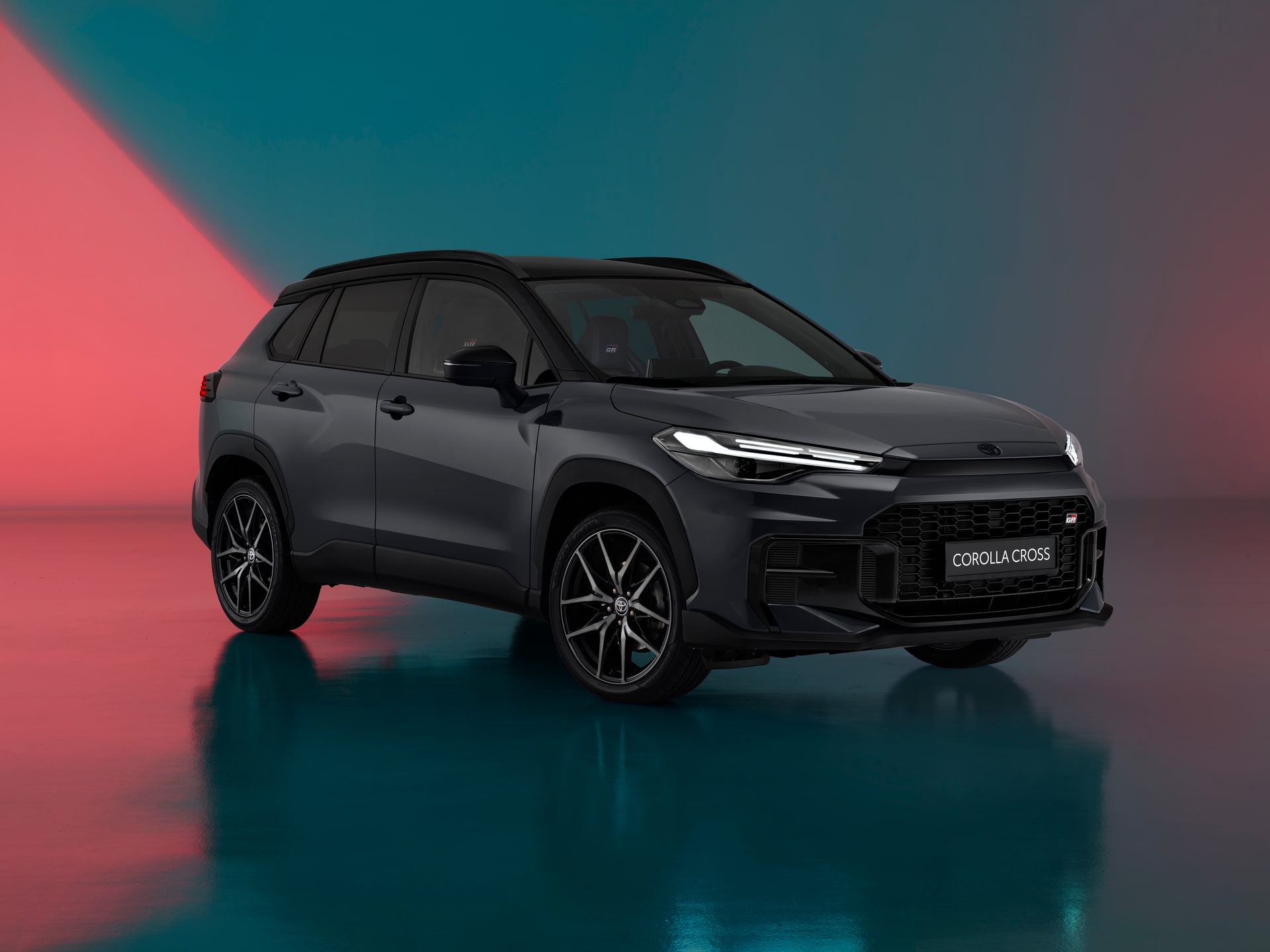
We analyse the six self-charging hybrid compact SUVs that use the least fuel in the city in 2026, with measured real-world consumption figures and recommendations by driver profile.
The self-charging hybrid is enjoying its best moment in Spain. With tougher ZBE low-emission zones, diesel pushed out of urban fleets and the plug-in hybrid still relying on the charging cable, the HEV has become almost the sole choice for drivers who cover around 15,000 km a year, park on the street and don’t want to think about plugs. The question is no longer whether a hybrid without a plug makes sense, but which one uses the least fuel when the asphalt fills up with traffic lights.
And that is where the ranking gets interesting.
Why urban consumption is what matters in an HEV
A self-charging hybrid shines precisely where a diesel struggles: stopping, pulling away, braking. Regeneration returns energy to the battery at every stop, the combustion engine switches off as soon as it can, and the car runs on electric power for a good part of the urban journey. In town, a modern HEV can spend more than 60% of the time with its engine off. On motorways, that advantage fades. That is why the ranking that follows prioritises measured real consumption on Spanish urban cycles —Madrid, Barcelona, Valencia— rather than the mixed WLTP figure printed in the brochure.
Methodology: measured real consumption, not mixed WLTP
The data we use combines our own tests on urban routes of 25-30 km in dense traffic, measurements from taxi and VTC (private hire) fleets, and cross-checks with the Spritmonitor database filtered for Spanish registrations. The scoring weights urban consumption (50%), hybrid system refinement (20%), starting price (15%) and standard equipment (15%). No model is included unless it is currently on sale in Spain, with an official dealer network and a current list price.
Toyota Corolla Cross 2.0 Hybrid — from €32,900
The benchmark. Toyota has spent nearly three decades refining the HEV, and it shows as soon as you press the accelerator gently: the Corolla Cross stays in electric mode for longer in real traffic jams than any of its rivals. In our urban measurements it averages around 4.5 l/100 km, figures that rise only to 4.8 in summer with demanding air conditioning. The fourth generation of the Hybrid Synergy Drive has reduced the “motorbike” effect under hard acceleration, although in our view it is still noticeable when merging onto motorways.
Sober interior, adequate build quality without frills, and reliability that is already a house trademark. It is not the most exciting car to drive. It doesn’t aim to be.
| Power KW | Power CV | Top speed | Range | Consumption | Label | Fuel |
|---|---|---|---|---|---|---|
| 146 kW | 197 CV | 180 km/h | ~1,100 km | 4.5 l/100 km (real urban) | ECO | Hybrid |
Honda ZR-V e:HEV — from €39,900
The Honda plays in a different league for refinement. Its e:HEV system works like an electric car with a generator most of the time: the combustion engine produces electricity and propulsion is handled by the electric motor except at cruising speed, when the engine connects directly. The result? In town, the silence and linear response of a serious HEV, with 4.7 l/100 km average urban consumption on our routes.
Its weak point is price: it costs a lot for the segment, and the boot is small compared with the Tucson or Sportage. That said, its driving feel and perceived interior quality are clearly above the ranking average.
| Power KW | Power CV | Top speed | Range | Consumption | Label | Fuel |
|---|---|---|---|---|---|---|
| 135 kW | 184 CV | 187 km/h | ~1,050 km | 4.7 l/100 km (real urban) | ECO | Hybrid |
Hyundai Tucson HEV — from €34,150
Hyundai offers the most rational balance in the segment. The hybrid system combines a 1.6 T-GDi with an electric motor, and although it lacks the sophistication of the Toyota or the Honda for staying in pure EV mode for long, on real urban journeys it comes in at 5.1 l/100 km with a level of equipment that neither of the two above matches at an equivalent price.
The Tucson wins on space, screens and warranty. It loses on hybrid purity: in heavy traffic, the combustion engine kicks in sooner than one would like.
| Power KW | Power CV | Top speed | Range | Consumption | Label | Fuel |
|---|---|---|---|---|---|---|
| 169 kW | 230 CV | 193 km/h | ~950 km | 5.1 l/100 km (real urban) | ECO | Hybrid |
Kia Sportage HEV — from €34,550
Shared mechanics with the Tucson, different philosophy. The Sportage HEV opts for a firmer chassis and steering with a bit more weight —which I find more convincing— although urban consumption is practically identical: 5.2 l/100 km on real journeys. The real difference between the two lies in interior design and the dealer’s discount policy, more than in efficiency.
| Power KW | Power CV | Top speed | Range | Consumption | Label | Fuel |
|---|---|---|---|---|---|---|
| 169 kW | 230 CV | 193 km/h | ~950 km | 5.2 l/100 km (real urban) | ECO | Hybrid |
Nissan Qashqai e-Power — from €38,100
The e-Power is the most unusual proposition in the group: an HEV where the petrol engine never drives the wheels. It only generates electricity. It drives like an electric car —instant response, one pedal, silence— and in town it shines: 4.9 l/100 km measured, with a driving feel no rival replicates. Outside the city, however, consumption climbs and ends up above the Tucson.
For those who spend 90% of their time on the M-30 or the Ronda Litoral, it is the most interesting choice in the ranking. For those who drive the motorway daily, it is not.
| Power KW | Power CV | Top speed | Range | Consumption | Label | Fuel |
|---|---|---|---|---|---|---|
| 140 kW | 190 CV | 170 km/h | ~1,000 km | 4.9 l/100 km (real urban) | ECO | Hybrid |
Renault Symbioz E-Tech 145 — from €32,500
The youngest of the group in dimensions, but with a mature E-Tech system and a multimode gearbox that behaves with surprising efficiency in town. 4.8 l/100 km on our urban routes and an entry price that makes it the most cost-effective in the ranking if you don’t need the interior volume of the Tucson or Sportage.
Its drawback: tight finishes and some hard plastics where they shouldn’t be.
| Power KW | Power CV | Top speed | Range | Consumption | Label | Fuel |
|---|---|---|---|---|---|---|
| 107 kW | 145 CV | 170 km/h | ~1,100 km | 4.8 l/100 km (real urban) | ECO | Hybrid |
Summary table and scoring
| Model | Real urban consumption | Price from | Power | Label | Score /10 |
|---|---|---|---|---|---|
| Toyota Corolla Cross | 4.5 l/100 km | €32,900 | 197 CV | ECO | 9.2 |
| Honda ZR-V e:HEV | 4.7 l/100 km | €39,900 | 184 CV | ECO | 8.7 |
| Renault Symbioz E-Tech | 4.8 l/100 km | €32,500 | 145 CV | ECO | 8.6 |
| Nissan Qashqai e-Power | 4.9 l/100 km | €38,100 | 190 CV | ECO | 8.5 |
| Hyundai Tucson HEV | 5.1 l/100 km | €34,150 | 230 CV | ECO | 8.3 |
| Kia Sportage HEV | 5.2 l/100 km | €34,550 | 230 CV | ECO | 8.2 |
Recommendations by profile
For those who live in dense city traffic and drive few kilometres: Nissan Qashqai e-Power or Toyota Corolla Cross. For mixed city-motorway use with 20,000 km a year, the Tucson HEV offers better value. If budget comes first, the Symbioz is the cheapest entry to the segment without giving up efficiency. And if you want refinement above all, the ZR-V justifies the premium.
Before signing, check our guide on how to choose a family hybrid SUV to weigh consumption against real space. And if you are torn between HEV and plug-in, the ranking of PHEVs with the lowest urban consumption clears up the comparison.
Frequently asked questions
Which self-charging hybrid SUV uses the least fuel in the city in 2026?
The Toyota Corolla Cross, with an average of 4.5 l/100 km on measured real urban cycles in Spanish traffic, followed by the Honda ZR-V e:HEV at 4.7 l/100 km.
Is an HEV better than a PHEV if I live in the city?
If you can’t charge at home or at work, yes. An HEV delivers about 80% of the urban benefit of a PHEV without the price premium, extra weight and dependence on the plug. A PHEV only makes sense with daily charging available.
Does the ECO label of an HEV allow driving in all Spain’s ZBE zones?
Yes, the ECO label grants access to the Low Emission Zones in force in Madrid, Barcelona, Valencia and other capitals, although each municipality may tighten its criteria from 2026-2027 onwards.
What is the real range of a self-charging hybrid SUV on a single tank?
Between 900 and 1,100 real km depending on model and use. In pure city driving, the most efficient exceed 1,200 km on a full tank.
 Peugeot E-208 GTi: a battery-powered toy that revives the spirit of the 1980s sports cars
 New Lexus ES: luxury grows and goes electric
 First contact with the Dacia Sandero Hybrid 155: power and efficiency from €19,890
Deja un comentario