Electric Cars Comparisons Tests
Hyundai Kona Electric vs Kia EV3: Which Electric SUV-B Performs Better in Everyday Urban Driving?
 Eduardo Molina
6 August 2026
6 min.
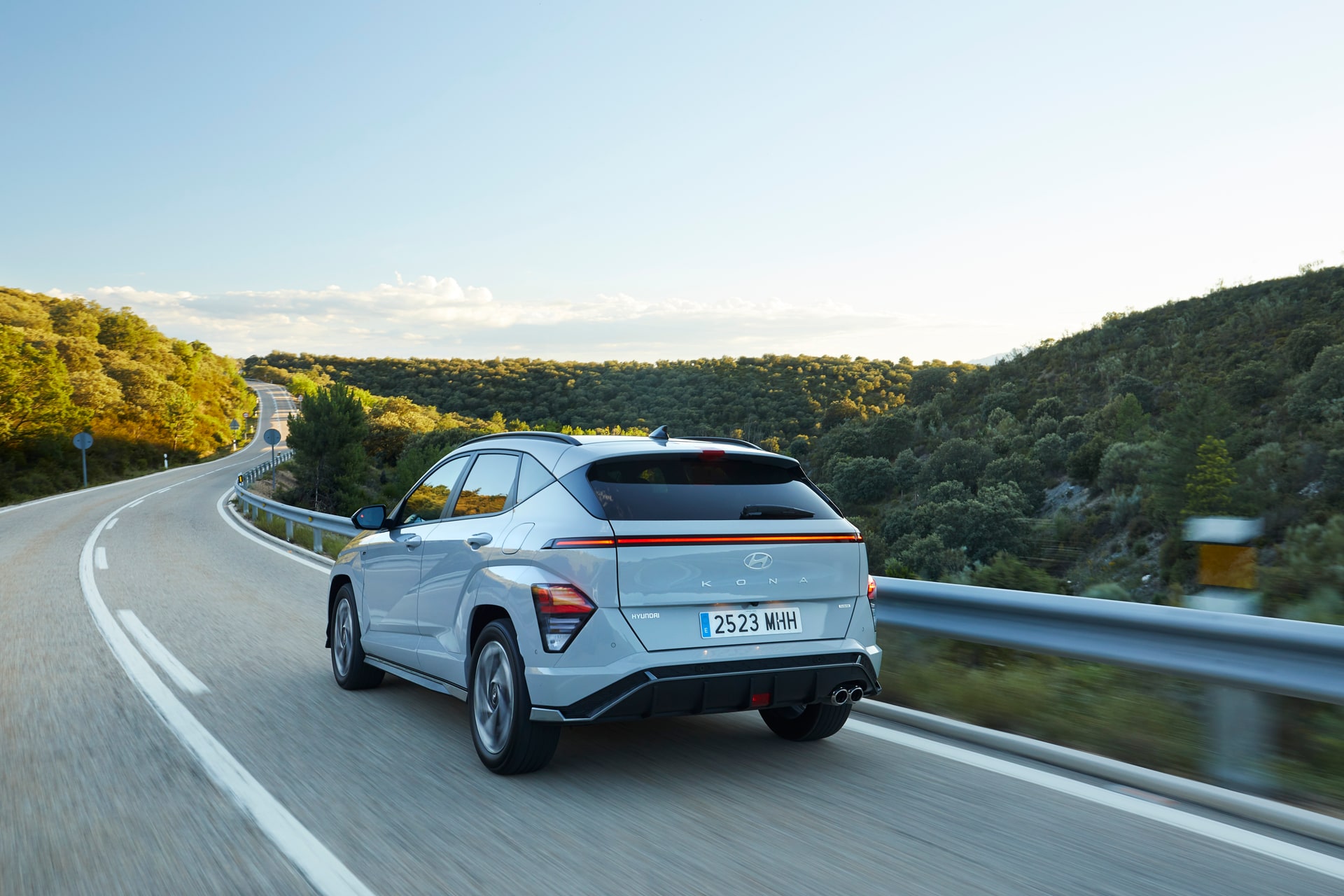
We compare the Hyundai Kona Electric and the Kia EV3 Standard Range in everyday urban use in Spain: real-world range, battery, price and manoeuvrability side by side.
Two Korean cousins, same corporate platform, different philosophies. The Hyundai Kona Electric vs Kia EV3 is probably the most interesting duel in the electric SUV-B segment in Spain right now, because neither of them is a compromise: each defends its ground with solid arguments. And choosing between them is not as obvious as it looks on paper.
The context: why this duel matters in 2024
The electric SUV-B has become the reference format for anyone who wants to leave combustion behind without giving up driving height or space. City car during the week, weekend getaway on Saturday. That is the real usage pattern in Spain, and that is where these two Koreans compete.
Design philosophy: evolutionary continuity versus rupture
The Kona Electric plays the card of continuity. Fluid shapes, an LED light line running across the front, proportions we already knew. Elegant, yes, though to my taste it is starting to show its age next to more recent proposals.
The EV3 takes a different path. Boxy styling, inherited from the EV9, with that almost miniature presence of a large SUV that Kia is pulling off very well. It is more disruptive, more aspirational, and it will probably age better.
Hyundai Kona Electric — from ≈42,400 €
The second generation of the Kona Electric was built from scratch as an electric car, and that shows in the use of interior space. A good boot for the segment, reasonable rear seats for two adults and a driving position somewhat higher than its body would suggest.
In numbers, the 510 km WLTP range and the 65 kWh battery place it among the benchmarks of the segment in energy efficiency. It consumes little. In pure urban driving, those advertised 14.5 kWh/100 km fall short with ease — downwards, I mean.
| Power kW | Power CV | Top speed | Range | Consumption | Label | Fuel |
|---|---|---|---|---|---|---|
| 150 kW | 200 CV | 190 km/h | 510 km | 14.5 kWh/100 | CERO | Electric |
Kia EV3 — from ≈37,000 €
The EV3 Standard Range with its 58.5 kWh battery comes in lower in both price and capacity, but not in its proposition. Interior noticeably more modern than the Kona’s, with a double panoramic screen, well-executed recycled materials and a voice assistant that is starting to be genuinely useful. The feeling when you sit inside is a step above.
It offers 440 km of WLTP range with the Standard Range. Enough for the city, tight for long trips if you don’t want to depend on the fast-charging network. That said, be realistic here: it is not the Long Range, and anyone looking for pure range should look higher up the line-up.
| Power kW | Power CV | Top speed | Range | Consumption | Label | Fuel |
|---|---|---|---|---|---|---|
| 150 kW | 204 CV | 170 km/h | 440 km | data not available | CERO | Electric |
Real-world urban range: where each one wins
On paper, the Kona wins the Kia EV3 range contest by 70 km. In practical urban use the gap narrows, because city consumption tends to be low in both and the differences dissolve between traffic lights and ZBE zones. For a typical user with 40-50 km a day, both last a long week without plugging in.
Now, if the weekend means Madrid-Valencia or a getaway to the Pyrenees, those 70 extra km of the Kona start to matter. One fewer stop, or a shorter one.
Manoeuvrability and dimensions: the detail that decides in the car park
The Kona measures around 4,360 mm. The EV3, slightly shorter and squarer, is somewhat easier to park on narrow old-town streets. Both have good visibility, a 360º camera available depending on trim and a contained turning radius. In everyday urban use, it’s a draw: there is no clear winner. Each buyer should measure their garage space.
Technology and the in-car experience
Here the EV3 comes across as fresher. A more refined graphical interface, integration with user profiles, OTA updates and an HVAC system with physical controls that Hyundai has also managed to keep in the Kona. As a reference for what the segment demands, we already discussed it when talking about technology in compact electric SUVs: smart charging and remote updates are no longer a luxury.
Price and real cost: the variable that breaks ties
The Hyundai Kona Electric price starts at around 42,400 €. The EV3 Standard Range starts at around 37,000 €. That is an indicative difference of 5,400 € — enough for many kWh at a fast charger, and for quite a few years of maintenance.
A necessary reminder: these figures are the manufacturer’s recommended RRP, without dealer discounts, campaigns or purchase grants. The real price at the dealership is usually considerably friendlier.
Electric SUV-B comparison: summary table and score
| Model | Range | Battery | Power | Price from | Score /10 |
|---|---|---|---|---|---|
| Hyundai Kona Electric | 510 km | 65 kWh | 200 CV | ≈42,400 € | 8.3 |
| Kia EV3 Standard Range | 440 km | 58.5 kWh | 204 CV | ≈37,000 € | 8.5 |
Verdict: the best urban electric SUV in 2024?
If your use is 90% city and budget is king, the EV3 is the answer. More modern inside, cheaper, with more than enough range for the daily routine. If, on the other hand, your life includes frequent trips outside the ZBE zone, the Kona justifies the premium with those extra 70 km and slightly better motorway efficiency. Neither is a bad purchase — the price gap is what decides.
Frequently asked questions
Which has better real-world urban range, the Kona Electric or the EV3?
Both offer very similar urban range below 14 kWh/100 km in real use. The Kona starts with more battery (65 kWh versus 58.5 kWh), so it lasts more days without charging on a pattern of 40-50 km a day.
What is the price difference between the two models?
The Kia EV3 Standard Range starts at around 37,000 € RRP, while the Hyundai Kona Electric starts from around 42,400 €. Roughly 5,400 € indicative difference, without grants or discounts.
Which is easier to handle in the city?
They are very evenly matched. The EV3 is slightly shorter and has squarer lines, which helps when parking. The Kona has better forward visibility thanks to its longer bonnet.
Is it worth paying more for the Kona Electric?
It depends on use. For exclusively urban trips, the EV3 performs just as well for less money. For mixed city-road use with frequent long journeys, the Kona’s extra 70 km of range does justify the premium.
 Peugeot E-208 GTi: a battery-powered toy that revives the spirit of the 1980s sports cars
 New Lexus ES: luxury grows and goes electric
 First contact with the Dacia Sandero Hybrid 155: power and efficiency from €19,890
Deja un comentario