Renault H1st vision: a concept car showing what the future of mobility could look like
 Jaime Avilés
14 June 2023
3 min.
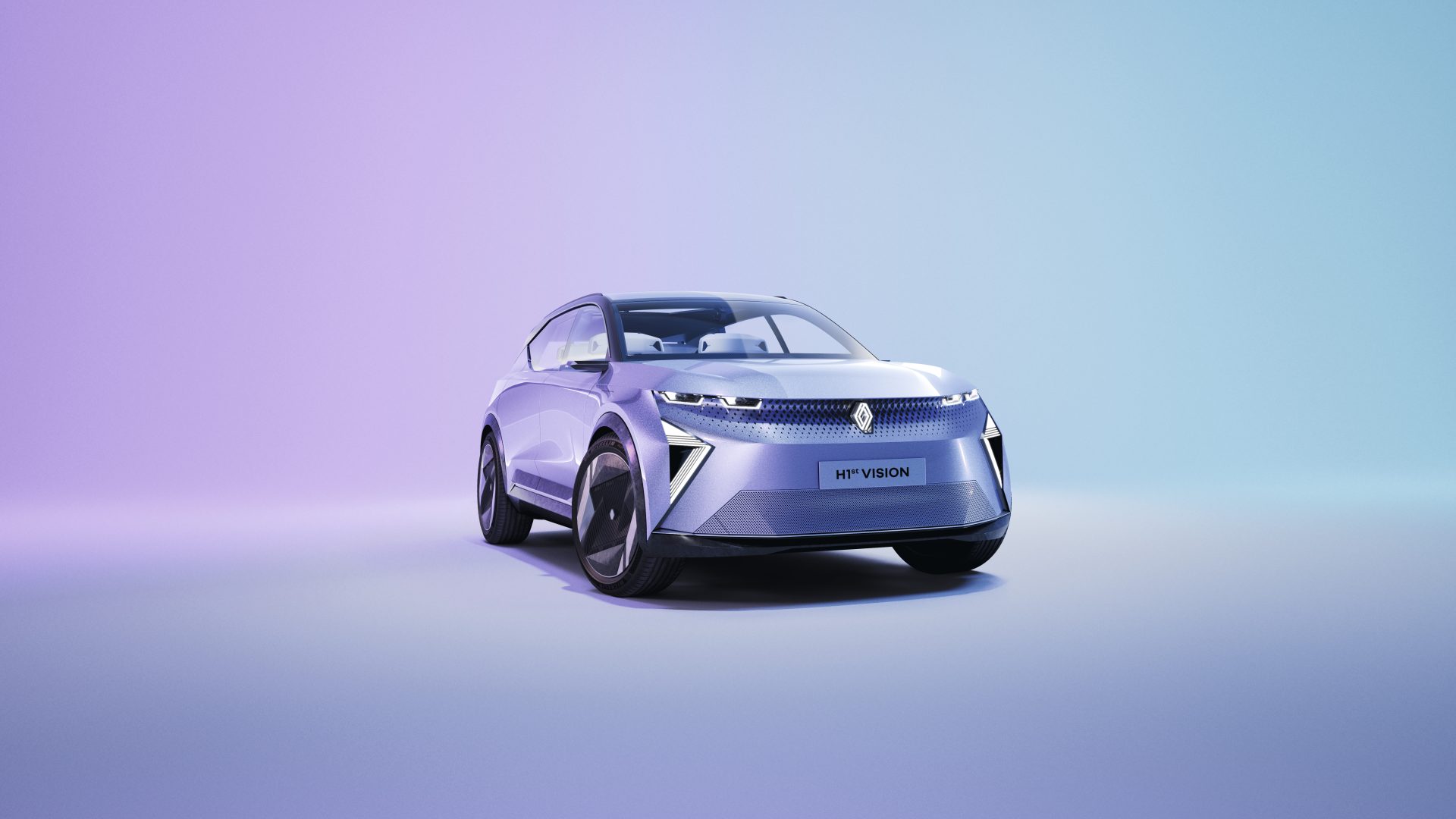
This revolutionary concept, created by Software République, has been developed with people and the environment at the centre of the equation
In a constantly evolving world, the new Renault H1stvision stands out as an example of innovation and technology. This concept, created by Software République, an innovation ecosystem made up of six major companies, among which is Renault, is concerned not only with the safety and well-being of its occupants, but also takes into account its impact on the environment. With a wide range of innovative features, the H1stvision redefines what will be possible in a vehicle of the future.
Among its many operational innovations, one of the most striking features of the H1stvision is its advanced recognition system, which uses each person’s posture and facial recognition to grant access and start the vehicle, bringing up an avatar projected onto the window that welcomes the user and guides them through all the available functions.
A unique experience
The on-board experience in the H1stvision is further enhanced by its surround sound system, designed in collaboration with the renowned musician Jean-Michel Jarre. With 16 speakers strategically placed inside the vehicle, this advanced system immerses occupants in sound of exceptional quality. In addition, an innovative microphone spatialises the emission and reception of sound at each seat, giving every passenger a personalised sound experience.
But the innovations on board the H1stvision are not limited to entertainment. The vehicle also features an in-car payment interface and an intelligent parking assistant. Furthermore, to promote sustainability, the H1stvision uses silicon carbide components in its main systems, which significantly increases efficiency in electric vehicles and charging stations.
Speaking of charging stations, the H1stvision goes one step further by offering two modes of operation. In addition to charging the car, Powerbox stations can also operate in V2G (Vehicle to Grid) mode, meaning the vehicle can feed energy back into the electricity grid or even into homes during peak demand. This ability to return energy to the grid is a demonstration of the H1stvision’s commitment to sustainable mobility.
Caring for the well-being of its occupants
Safety is another key aspect of the H1stvision. The vehicle is equipped with a variety of physical and virtual sensors that monitor the health of its occupants. In the event of an incident, the H1stvision can automatically initiate an emergency call to the relevant services via a mobile or satellite connection. In addition, the vehicle constantly monitors the driver’s heart rate to offer advice for improving their mood or health.
The H1stvision goes beyond being merely a vehicle connected to its driver and passengers. Through a virtual twin of a digital city, the concept establishes an extended connection with its environment. This includes communication with a smart city, other vehicles on the road and other infrastructure, which makes it possible to detect potential hazards and optimise traffic in emergency situations.
The H1stvision concept car is the result of two years of collaboration between six founding members: Atos, Dassault Systèmes, Orange, Renault Group, STMicroelectronics and Thales. This strong alliance has enabled the implementation of twenty technologies in a record time of six months. In addition to the founding members, seven other start-ups and partners have also contributed to this revolutionary concept.


 Kia offers an electric range of 10 models, 50 versions and 400 possible combinations
 The seven finalists for the 2027 European Car of the Year (COTY) are exclusively electric
 Peugeot E-208 GTi: a battery-powered toy that revives the spirit of the 1980s sports cars
Deja un comentario