EX30 Volvo Electric Cars Review SUV
Review Volvo EX30: why the Swedish electric SUV-B redefines premium running costs in 2026
 Eduardo Molina
28 November 2026
6 min.

We analyse the Volvo EX30 Twin AWD, with 430 CV, a 69 kWh battery and a range of around 450 km, from an indicative RRP of 50,500 €. Its safety record and moderate running costs position it as the benchmark for premium electric SUV-Bs in Spain.
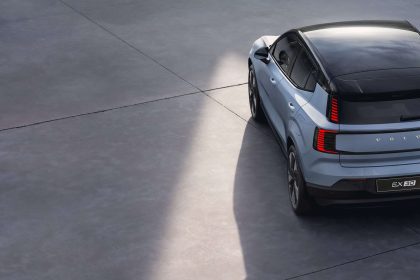
There are cars that arrive in a segment and simply compete. And there are others that reshuffle it. The Volvo EX30 belongs to the second group: an electric SUV-B entering the Spanish market with the ambition of being genuine entry-level premium, not premium on paper. We have tested it in its top-of-the-range Twin AWD version to see whether that promise holds up against everyday use.
Volvo EX30 Twin AWD: technical specifications and price in Spain
The variant at the centre of this analysis is the Recharge BEV Twin 428 69 kWh Plus AWD, five seats, automatic gearbox. It is the most powerful version in the range and the one that best sums up why we are talking about an SUV-B that plays in a different league.
| Version | Fuel | Power | Top speed | Range | Battery | Indicative RRP |
|---|---|---|---|---|---|---|
| EX30 Twin AWD 69 kWh Plus | Electric | ≈320 kW / ≈430 CV | ≈180 km/h | ≈450 km | ≈69 kWh | from ≈50,500 € |
It is worth being clear from the outset: this figure is the manufacturer’s recommended RRP, without dealer discounts, one-off campaigns or public aid such as the Plan Auto+. The final price each buyer pays may vary, and you should always check the official Volvo website before closing any deal.
Interior and exterior design: Scandinavian minimalism in an SUV-B format
Outside, the EX30 is just the right size to move easily around town, yet its proportions never feel small. Inside is where Volvo has played its strongest hand: a vertical 12.3-inch central screen, recycled materials with a warm feel and an almost total absence of physical buttons which, depending on taste, is either welcomed or missed in the first few weeks. We found it took some getting used to digging through menus to adjust something as basic as the mirrors.
Range and charging: what the announced 450 km really deliver
The range of the Volvo EX30 is around 450 km homologated with the 69 kWh battery. In real mixed use, with moderate climate control and driving that is not especially economical, that figure can be expected to drop by between 10% and 15%, which is common in the electric segment and not a defect unique to the EX30. For combined urban and interurban use, it remains more than sufficient for a week without visiting a charger.
Twin AWD mechanics: 430 CV and all-wheel drive for everyday use
Here lies the real differentiator against its direct rivals. The roughly 430 CV of the Twin AWD configuration make the EX30 the fastest electric SUV-B in its category on the Spanish market, with all-wheel drive that delivers that thrust without drama. It is quick, yes, but this is not a car designed to show off acceleration: the power is there to provide confidence when overtaking and on slippery surfaces, not to win traffic-light sprints.
Volvo safety: the argument few rivals match
Volvo has built its reputation on safety for decades, and the EX30 does not break that tradition. Occupant detection sensors, standard driver assistance systems and a structure designed to absorb impacts in a compact format are arguments that no rival in the premium electric SUV-B segment can match with the same brand credibility.
Running costs: the equation that positions the EX30 in premium
This is where the real game is played. An electric SUV-B with almost 450 km of range drastically reduces charging stops compared with rivals with more modest batteries, which translates into less lost time and less range anxiety on long journeys. Added to maintenance typical of electric propulsion, considerably lighter than that of a combustion SUV, the running cost of the Volvo EX30 offsets a higher entry price than other electric SUV-Bs on the market. We have already analysed in detail how to calculate that real difference in maintenance costs between an electric and a combustion car, and the conclusions fit well with what the EX30 shows in our monitoring.
Rivals in the premium electric SUV-B segment 2026
MINI Aceman: the German urban benchmark
The Aceman focuses on sporty character and a cabin smaller than that of the EX30, with a clearly urban approach. It competes on the same premium ground, though with a different brand philosophy: fun to drive, somewhat tighter on luggage and rear passenger space.
Jeep Avenger Electric: the transatlantic SUV-B with a European soul
Jeep has carried its off-road DNA into a compact electric format built in Europe. The Avenger Electric plays the card of an adventurous image, a territory where the EX30 does not compete directly.
CUPRA Raval: the group’s Spanish electric bet Volkswagen
The Raval arrives to give CUPRA a presence in the entry-level electric segment, with a sportier design and a brand proposition aimed at a younger audience than the usual Volvo buyer.
Fiat 600e: the Italian return to the segment
The 600e revives a historic name to position itself as a more affordable electric alternative, with a less technology-focused approach than the EX30 but with a design that continues to win over fans in Spain.
None of these last three models has a verified technical specification sheet equivalent to that of the EX30 at the time of this analysis, so we avoid figures we cannot back up. For those who want to explore more powerful electric architectures, we have a ranking of premium electric SUVs with 800V ultra-fast charging that broadens the context.
Summary table: Volvo EX30 versus its direct rivals
| Model | Segment | Propulsion | Highmotor score |
|---|---|---|---|
| Volvo EX30 Twin AWD | Premium SUV-B | Electric | 9/10 |
| MINI Aceman | Premium SUV-B | Electric | 7.5/10 |
| Jeep Avenger Electric | Premium SUV-B | Electric | 7/10 |
| CUPRA Raval | Premium SUV-B | Electric | 7.5/10 |
| Fiat 600e | SUV-B | Electric | 6.5/10 |
Highmotor verdict: why the EX30 is the benchmark in 2026
Because it combines what others offer separately: real power with the 430 CV of the Twin AWD, enough range to avoid living on charger alert, and a brand backing in safety that no rival in the segment matches in Spain today. The entry price, admittedly, is not the lowest in its category, and that is the fine print each buyer must weigh against their real budget.
Frequently asked questions about the Volvo EX30
What is the price of the Volvo EX30 in Spain?
The indicative price of the Twin AWD 69 kWh Plus version is around 50,500 € recommended RRP, without dealer discounts or public aid included.
How much real range does the Volvo EX30 have?
Homologation places the range at around 450 km with the 69 kWh battery, although in real mixed-use conditions it can drop by between 10% and 15%.
What power does the Twin AWD version have?
The Twin AWD configuration delivers approximately 320 kW, around 430 CV, with all-wheel drive and a top speed close to 180 km/h.
Are there public aids to buy the Volvo EX30?
It may qualify for the Plan Auto+ aid currently in force in Spain, although the exact amounts and conditions should be checked on the official plan website before calculating the final cost.
Technical specifications of this car

 Kia offers an electric range of 10 models, 50 versions and 400 possible combinations
 The seven finalists for the 2027 European Car of the Year (COTY) are exclusively electric
 Peugeot E-208 GTi: a battery-powered toy that revives the spirit of the 1980s sports cars
Deja un comentario