Technology and design that win you over: discovering the Hyundai Ioniq 5
 Dani Montesinos
23 March 2026
8 min.
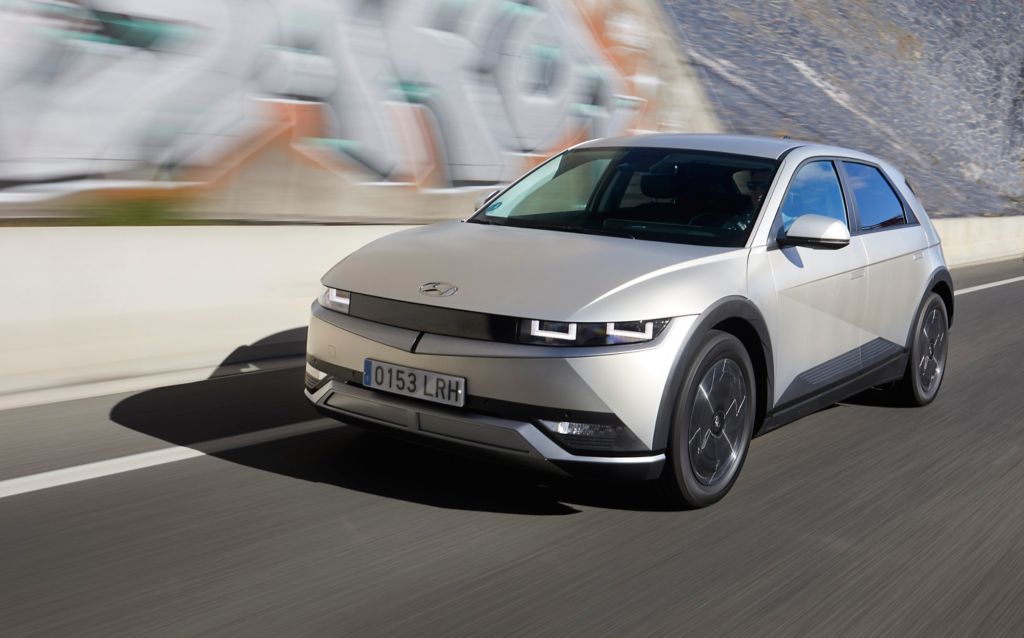
If you are looking for a versatile electric vehicle with character, we propose the Hyundai IONIQ 5, one of the benchmark electric cars
Built on an electric architecture designed to maximise interior space and dynamics, the Hyundai Ioniq 5 reinterprets the idea of an electric compact crossover through a combination of retro-futuristic design and current technical solutions. It offers a homologated range of up to 480 km WLTP, rear-wheel drive or all-wheel drive motorisation options with combined output of up to 325 CV, and a reference 84 kWh battery in the longest-range versions. Does its design-led approach justify itself over more traditional solutions? Does the real-world range hold up on sustained motorway journeys? What running and charging costs can be expected compared with alternatives in the segment? The starting price in the range is from 30,985 euros, included here as a reference for assessing its positioning. Based on these key points, performance, ergonomics, technology and real-world economy will be explored, and an analysis of real figures, behaviour and costs is anticipated.
The essentials of the Hyundai Ioniq 5
The Ioniq 5 stands out for its 100% electric layout on the E-GMP platform, which offers notable interior space relative to its dimensions and ultra-rapid charging that cuts journey times. It is worth considering if you prioritise a technology-led experience and distinctive design without giving up competitive range; it may fall short if your main criterion is the lowest possible price, or if you are seeking maximum aerodynamic efficiency for long journeys at 130 km/h. In short, it positions itself as a balanced choice for those who value comfort, connectivity and fast-charging capability above absolute purchase savings.
Technical data sheet and main features
| Engine | 100% electric, RWD and AWD variants |
| Power | Up to 325 CV combined (dual-motor version) |
| WLTP range | Up to 570 km WLTP (largest-battery version) |
| Battery / Capacity | 84 kWh (long-range option) / also 63 kWh version |
| Homologated consumption | Range depending on version: 15–18.2 kWh/100 km WLTP |
| 0-100 km/h acceleration | 8.5 s (maximum-power AWD) |
| Length | Approx. 4.65 m |
| Boot | 520 litres (variable configuration) |
| Price from | from 30,985 euros (including discounts) |
Hyundai Ioniq 5 sales 2025
In 2025 the electric market in Spain showed a consolidation of SUV and compact models with good load capacity. According to ANFAC data and market sources, the Ioniq 5 remained a relevant alternative within its niche, although behind some models with higher volume logistics or distribution networks.
| Model | Sales 2025 (Spain) |
| Hyundai Ioniq 5 | 871 |
| Kia EV6 | 352 |
| Volkswagen ID.4 | 1,217 |
| Tesla Model Y | 6,005 |
Design and market positioning
The Ioniq 5 embraces an aesthetic that blends clean lines and angular features inspired by classic Hyundai models, with a clearly differentiated identity thanks to its closed grille, pixelated headlights and short overhangs. It positions itself as an accessible premium alternative: it does not aim to compete on the lowest price, but on perceived quality, technology and interior space in the electric compact segment.
Interior, space and technology
The cabin emphasises modularity and minimalist design, with a platform that allows a long wheelbase and a notable sense of spaciousness. The digital equipment includes a dual panoramic screen, OTA updates, advanced driver assistance and ergonomics designed for long journeys. Materials and trim vary by finish, with higher versions integrating more refined solutions and additional comfort features.
Motor, real-world range and behaviour
In town and mixed driving the Ioniq 5 is efficient: energy recovery and the instant response of the electric motor help consumption stay below the segment average. On the motorway at sustained speeds, real-world range typically falls to 60–75% of the WLTP figure depending on weather and speed, so on long stretches it is wise to plan stops at high-power charging points if you want to maintain high speeds.
Charging, efficiency and running costs
Its architecture allows ultra-rapid DC charging (up to 350 kW in theory, although usable power depends on the version and battery temperature), which significantly reduces journey times. The cost per km will depend on your electricity tariff and whether you use public or home charging; with overnight home charging and a real average consumption of 18 kWh/100 km, the cost per 100 km can fall below 5–7 € depending on the price of kWh.
Price, versions and equipment
The offer is split into several versions combining different battery capacities, drivetrains and equipment levels. Base versions cover urban and interurban needs; mid-range versions add assistance systems and better connectivity; top-of-the-range versions increase power and offer more refined finishes. The entry price starts from 30,985 euros, while the best-equipped versions exceed 35,000 euros.
Purchase incentives
- Direct aid: discount applied at the dealership.
- Amount: up to 4,500 € for electric / 3,375 € for PHEV.
- Retroactivity: from 1 January 2026.
- Price limits: typically up to 45,000 €.
- Beneficiaries: private individuals, self-employed workers and companies.
Who this car is for
It is ideal for drivers seeking a combination of design and technology with good interior space and fast-charging capability: couples or families who value comfort and connectivity, as well as users who make regular journeys and will appreciate the advantage of ultra-rapid charging. Less recommended for those who prioritise the cheapest possible purchase, or for fleets with maximum demands on cost per kilometre per unit.
The good and the not-so-good
The good
Distinctive, carefully crafted design, surprising interior space for its size, ultra-rapid charging and a coherent technology package including advanced connectivity and driver assistance.
The not-so-good
Price of the best-equipped versions, motorway efficiency at sustained speeds compared with more aerodynamic models, and availability of some options in markets with waiting lists.
Alternatives on the market
Kia EV6 (from 40,230 €)
A close technical relative, with a slightly sportier focus and similar charging capabilities; it offers a more dynamic interior and a tuned chassis for more engaging driving.
Volkswagen ID.4 (from 32,600 €)
A more conservative option in design and with a more competitive entry price; it stands out for its wide service network and pleasant behaviour, though with less visual character than the Ioniq 5.
Tesla Model Y (from 40,970 €)
Aimed at buyers who prioritise the supercharger network and software-based performance; greater motorway efficiency on some routes, but with a more minimalist interior proposition and higher prices.
Frequently asked questions about the Hyundai Ioniq 5
Is the Hyundai Ioniq 5 worth it compared with an equivalent diesel?
From a technical point of view, yes, if your use includes town and interurban driving with the possibility of charging: the energy cost per km is usually lower and the driving experience more refined. If your main need is to travel long distances every day without the chance of rapid charging, a diesel may be more practical in specific circumstances.
What real-world range does the Hyundai Ioniq 5 offer on the motorway?
On the motorway at sustained speeds, real-world range is usually between 60% and 75% of the WLTP value, which for a homologated figure of about 480 km would mean effective journeys of 290–360 km depending on speed, temperature and vehicle load.
What happens if the battery is not recharged?
If it is not recharged, the vehicle works like any electric car until the battery runs out: available power is reduced as the charge level drops to protect the battery, and the final portion of range must be managed with priorities. There is no alternative fuel; assistance or towing is needed if the battery reaches critical levels away from a charging point.
Is it a good choice as the only family car?
It can be a suitable option if the family has regular access to home charging points or works with rapid charging points on their journeys. It offers enough space and versatility for 4–5 occupants; planning long journeys requires stops for rapid charging, which is usually acceptable for most families.
How long does a rapid charge from 10–80% take?
Depending on the station and battery version, charging from 10% to 80% can take 18–25 minutes at high-power points, although actual times vary with battery temperature and initial state of charge.
Expert opinion
The Ioniq 5’s proposition makes sense for its price when you value the combination of design, technology and flexibility of use: its electric platform and ultra-rapid charging capability place it strategically between more utilitarian options and premium alternatives. For buyers who prioritise user experience, space and a modern technology ecosystem, the Ioniq 5 offers a solid balance; for those for whom the decisive factor is the lowest initial cost or maximum efficiency at high speed, there are alternatives that may fit better. Either way, its presence strengthens the electric offer with a distinctive proposition that continues to set trends in 2026.


 The seven finalists for the 2027 European Car of the Year (COTY) are exclusively electric
 Peugeot E-208 GTi: a battery-powered toy that revives the spirit of the 1980s sports cars
 New Lexus ES: luxury grows and goes electric
Deja un comentario