The 5 best family PHEV SUVs for 2026: space and efficiency
 Iván Navarro
12 May 2026
10 min.
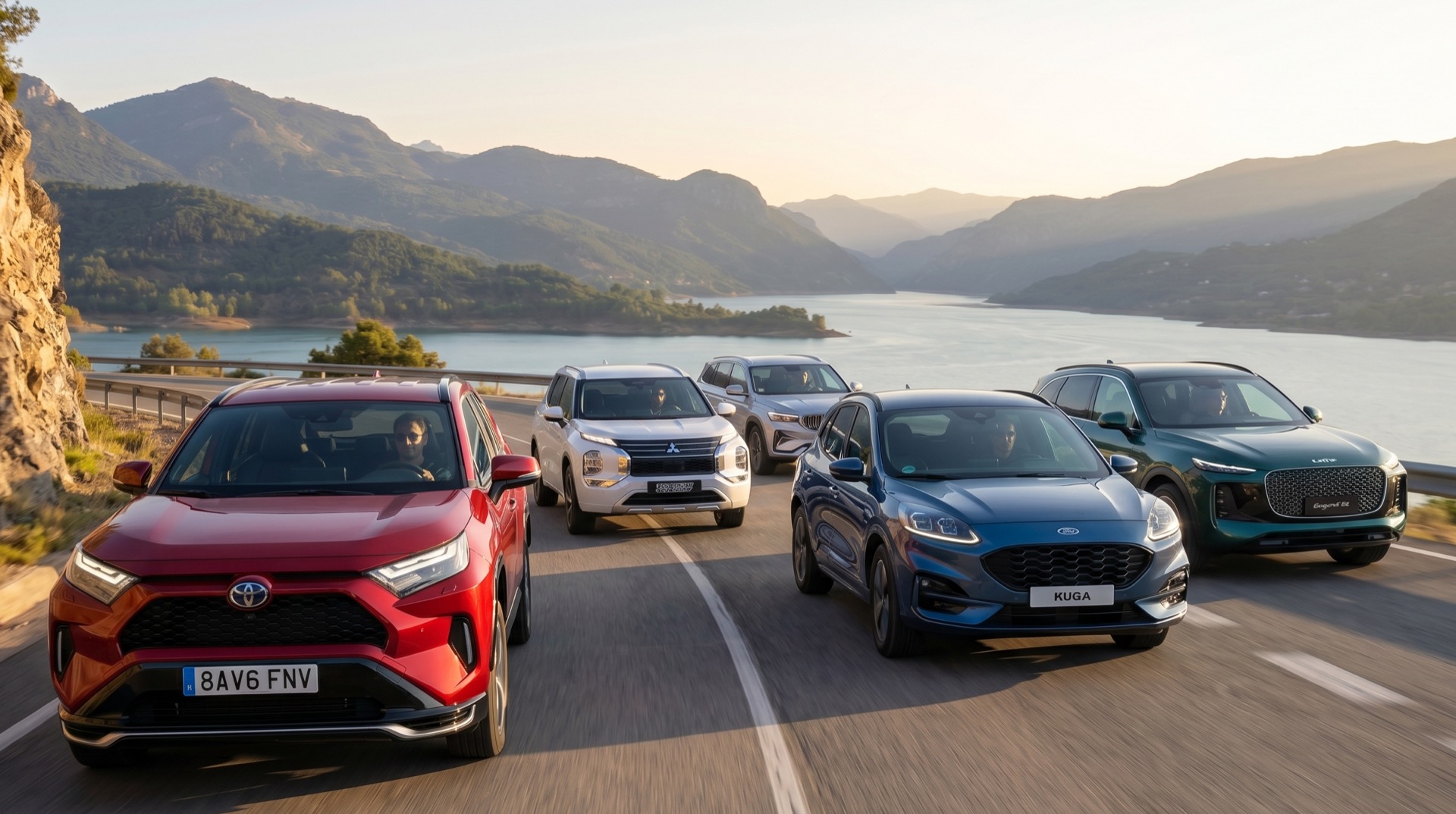
The current evolution of the automotive market has established plug-in hybrid vehicles as the most balanced solution for the energy transition. Below we present a selection of the five we consider most interesting.
The family PHEV SUVs have established themselves as a practical option for anyone looking to combine family space with lower consumption and electric driving in everyday use. In 2026 the offer grows with more efficient variants and greater electric range, which makes daily use in zero-emission mode viable and allows long journeys with restrained hybrid consumption. The family buyer values habitability, boot space and operating costs; for this reason plug-in hybrids with a good balance between electric and combustion operation stand out as a relevant option compared with purely combustion alternatives.
The size of the market shows a clear shift towards electrified versions: according to ANFAC data, plug-in hybrid registrations have increased their share within the electrified total in recent years, supported by a wider offer and WLTP range figures that are increasingly competitive. The average entry price in Spain sits in the 35,000–50,000 € bracket for family versions with reasonable equipment, although premium models raise that benchmark. This article selects five balanced alternatives for 2026 with a focus on space, efficiency and real-world usefulness for the family.
The most balanced models in the segment in 2026
The selection follows an editorial criterion based on balance between starting price, electric and petrol performance, habitability and operating cost. We prioritise cars that offer good electric WLTP range for urban use, boots suitable for family loads and sufficient power for overtaking and motorway journeys. The relationship between sales and real user satisfaction is also considered when weighting the final score.
Lepas L8
The Lepas L8 enters this ranking for its proposal of generous habitability and a clear family orientation. It stands out for offering spacious rear seats and seven-seat configurations designed for long journeys. The PHEV version combines a combustion engine with an electric system capable of covering daily trips in electric mode with a competitive WLTP range, while maintaining comfortable performance for inter-urban driving.
The recommended version is the mid-range one, which balances equipment and cost. On the road the system blends power and efficiency, with restrained consumption when charged regularly. Compared with European rivals it offers more interior space at a similar price, although the service network and brand perception may penalise its resale value against traditional manufacturers.
Pros
• Habitability and 7-seat options.
• Good electric WLTP range for daily use.
• Space-to-price ratio.
Cons
• Limited service network and dealer presence in some markets.
• Perceived interior quality below European brands.
Which family PHEV offers the most space for the price? The Lepas L8 stands out for its generous habitability and loading capacity, making it the most sensible option for families that prioritise seats and boot space.
| Feature | Data | Score |
|---|---|---|
| Power | 320 CV | 8.6 |
| Range | 80 km (WLTP) | 8.7 |
| Top speed | 200 km/h | 7.8 |
| Boot | 540 litres | 9.0 |
| Starting price | 42,000 € | 8.4 |
score out of 10 based on the criteria analysed in this article
Geely Starray EM-1
The Geely Starray EM-1 is a recent proposal that, in its PHEV variant, offers an interesting combination of efficiency and on-board technology. Its strength is the equipment-to-price ratio: it includes advanced driver assistance systems and a generous central screen, with practical solutions aimed at families who spend many hours behind the wheel. In town the electric drive reduces consumption and noise, while the combustion part ensures range for long journeys.
We recommend the mid-range version for its balance between range and accessories. Its power is sufficient to maintain stable cruising and adequate overtaking recovery. Compared with European rivals, the Starray competes better on price and technology, although its positioning depends on continuous improvement of the dealer and after-sales network.
Pros
• Generous technological equipment.
• Good starting price / equipment ratio.
• Ideal for tech-savvy families.
Cons
• Perceived quality of interior plastics.
• Service network still expanding.
Which PHEV offers the most equipment for less money? The Geely Starray EM-1 stands out for its technological equipment and competitive price, making it an attractive option for those who prioritise technology and connectivity.
| Feature | ||
|---|---|---|
score out of 10 based on the criteria analysed in this article
Mitsubishi Outlander PHEV
The Mitsubishi Outlander PHEV is one of the historic benchmarks among family plug-in SUVs. It maintains a proven balance between reliability, habitability and practical capabilities: a spacious interior, road assistance and a technical configuration designed for demanding use. Its updated PHEV version usually offers a greater electric WLTP range than previous generations, which improves urban use and reduces combined consumption on mixed routes.
The editorial recommendation is the mid-to-high equipment version, which ensures driver assistance and active safety without excessive extra cost. In dynamics it behaves obediently and with restrained consumption if charged frequently; its strength is the driving experience and the mechanical reliability proven over years on the market.
Pros
• Proven driving experience and reliability.
• Good habitability and comfort for long journeys.
• Improved WLTP range compared with older models.
Cons
• Interior plastics with a somewhat conservative feel.
• Less striking design compared with contemporary alternatives.
Which family PHEV is the most reliable and proven? The Mitsubishi Outlander PHEV stands out for its reliability and proven driving experience, making it a safe option for families seeking long-term stability.
| Feature | Data | |
|---|---|---|
| Power | 225 CV | 8.8 |
| Range | 87 km (WLTP) | 9.0 |
| Top speed | 180 km/h | 7.8 |
| Boot | 463 litres | 8.2 |
| Starting price | 48,000 € | 8.6 |
score out of 10 based on the criteria analysed in this article
Ford Kuga PHEV
The Ford Kuga PHEV is one of the most balanced alternatives in the niche of compact family plug-ins. Its set-up favours urban driving in electric mode and agile dynamics on the road, with neutral handling and good driver aids. It offers a versatile boot and a technical package proven in the European market.
We recommend the version with standard battery and mid-level equipment for an optimal balance between electric range and cost. It is especially suitable for those seeking real efficiency in daily use without giving up a more sporty driving dynamic than some rivals aimed at comfort.
Pros
• Balanced handling dynamics.
• Real efficiency in urban use.
• Wide dealer and after-sales network.
Cons
• Boot slightly tight compared with larger rivals.
• Interior design less premium than more expensive alternatives.
Which compact PHEV combines driving and efficiency best? The Ford Kuga PHEV stands out for its balanced dynamics and urban efficiency, ideal for families who want an agile and economical car for daily use.
| Feature | Data | Score |
|---|---|---|
| Power | 225 CV | 8.2 |
| Range | 56 km (WLTP) | 7.8 |
| Top speed | 200 km/h | 7.6 |
| Boot | 455 litres | 7.9 |
| Starting price | 38,000 € | 8.4 |
score out of 10 based on the criteria analysed in this article
Toyota RAV4 PHEV
The Toyota RAV4 PHEV (known as the RAV4 Prime in some markets) delivers a convincing mix of reliability, efficiency and performance. Its plug-in hybrid system offers lively response and a relevant electric WLTP range for most daily trips, along with an interior layout designed for the family and good loading capacity.
The recommended version is the mid-range one, which provides driver aids and active safety without the high cost of top-of-the-range versions. Overall value-wise, the RAV4 PHEV stands out for its balance between urban electric use and road performance, together with a well-established service network.
Pros
• Established reliability and service network.
• Energetic behaviour and good electric range.
• Solid resale value.
Cons
• Price somewhat above generalist competitors.
• Limited premium feel in some trim levels.
Which PHEV combines reliability and resale value best? The Toyota RAV4 PHEV stands out for its reliability and service network, making it a safe bet if maintenance and value retention are priorities.
| Feature | Data | Score |
|---|---|---|
| Power | 306 CV | 8.8 |
| Range | 75 km (WLTP) | 8.6 |
| Top speed | 180 km/h | 7.8 |
| Boot | 520 litres | 8.6 |
| Starting price | 47,000 € | 8.4 |
score out of 10 based on the criteria analysed in this article
Technical comparison
This table sets out the most relevant differences: power, WLTP range, starting price and an overall score weighting efficiency, space and value. Models with the best balance between electric range, habitability and cost earn a higher score; best-selling models receive a small bonus within the evaluation.
| Model | ||||
|---|---|---|---|---|
score out of 10 based on the criteria analysed in this article
Which car to buy based on your profile
If you do a lot of city driving
Prioritise a PHEV with good electric WLTP range and convenient charging: the Mitsubishi Outlander PHEV or the Toyota RAV4 PHEV offer electric ranges long enough to cover most urban trips, reducing consumption and emissions.
If you travel frequently
Look for a balance between boot space and hybrid range: the Lepas L8 and the Toyota RAV4 PHEV are the most coherent options for families combining long journeys with occasional charging stops.
If you are looking for the best price
Prioritise equipment-to-price ratio: the Geely Starray EM-1 and the Ford Kuga PHEV offer tighter pricing with full equipment, ideal for restrained budgets.
If you prioritise technology
Choose a vehicle with advanced assistance and connectivity systems: the Geely Starray EM-1 stands out for its technology offer and generous screens for the whole family.
FAQ – FREQUENTLY ASKED QUESTIONS
How much does a PHEV SUV consume in mixed use?
In mixed use consumption varies according to the proportion of electric kilometres recharged; with frequent charging a PHEV can record consumption comparable to conventional compacts, while on long journeys without recharging consumption approaches that of conventional hybrid models.
What electric range do I need for daily family use?
For most urban families, a WLTP range between 50 and 80 km covers daily trips and the working week without using the combustion engine, reducing fuel consumption and cost.
Is a PHEV expensive to maintain compared with a non-plug-in hybrid?
Maintenance is similar to that of a hybrid, although the initial cost is usually higher. With frequent charging and electric use, operating costs (fuel) are reduced, partly offsetting the purchase price difference.
What should I check before buying a family PHEV?
Check the real WLTP range, boot capacity, battery warranty offer and local service network. These factors directly influence the driving experience and long-term cost.
Are new brands reliable compared with traditional ones?
New brands offer a good price/equipment ratio, but tradition guarantees service network and resale value. If you prioritise support and value retention, established brands may be a better choice.


 Peugeot E-208 GTi: a battery-powered toy that revives the spirit of the 1980s sports cars
 New Lexus ES: luxury grows and goes electric
 First contact with the Dacia Sandero Hybrid 155: power and efficiency from €19,890
Deja un comentario