The 5 most innovative SUVs and compact cars of 2026
 Iván Navarro
22 April 2026
8 min.
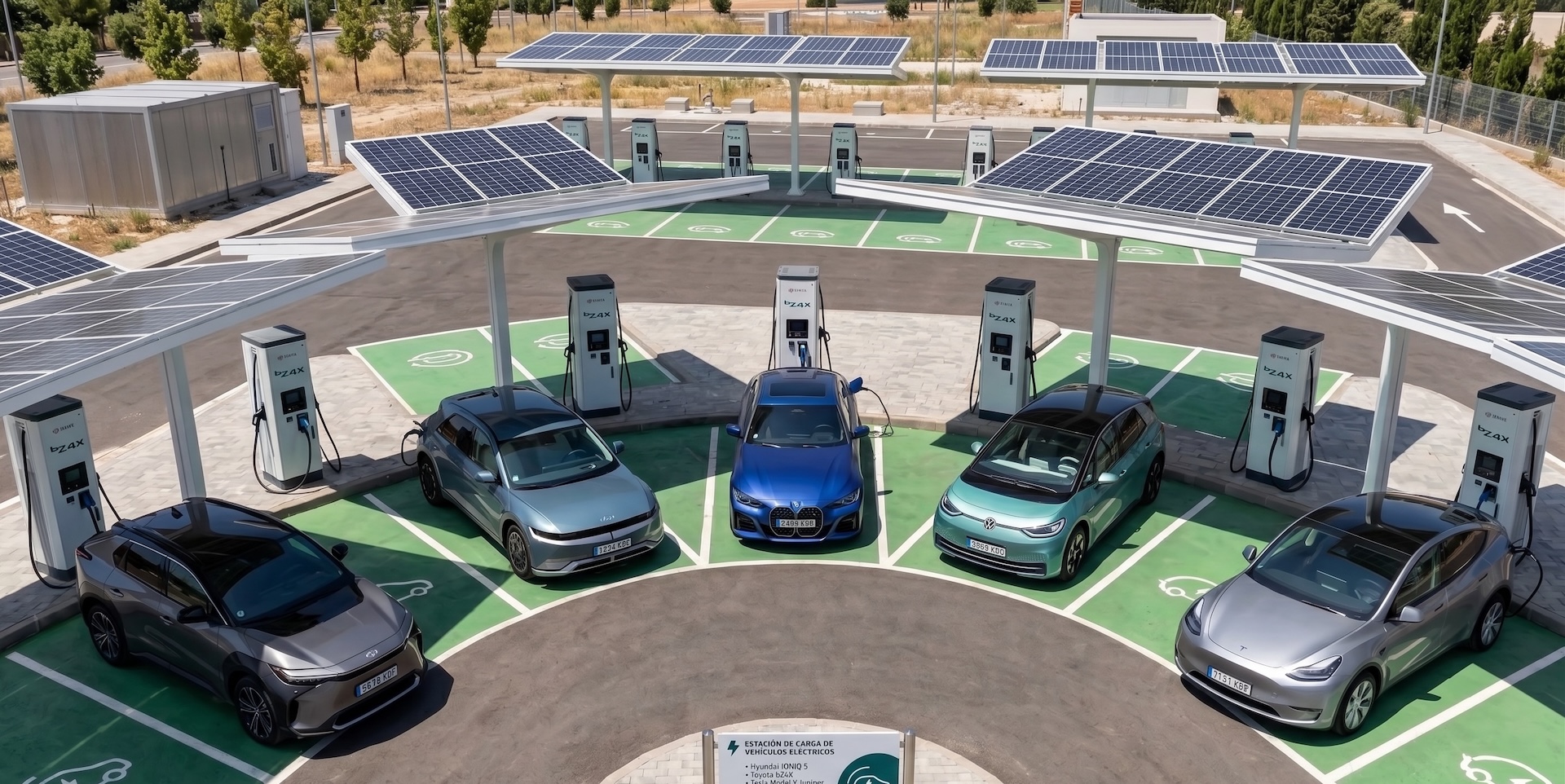
Below you will find a comparative analysis of sustainable mobility today, with which we will try to determine which of the following five models leads the new generation of Zero Emission vehicles.
The 2026 market has accelerated the arrival of technologies that were once exclusive to premium segments: more efficient electrification, advanced driver-assistance software and modular platforms that reduce costs and improve the everyday experience. This review brings together SUVs and compact cars that mark that change, from 100% electric proposals to models that integrate LIDAR sensors, bidirectional charging and cutting-edge electric architectures. Here you will find clear differences in use, technical approach and commercial positioning to help you decide which option best fits your routine.
Who is this ranking for?
This ranking is based on market data, official specifications and published road tests. It is designed for those who value technical advances applied to the everyday car and want to compare concrete solutions among 2026 SUVs and compact cars.
If you drive many kilometres every day and look for energy efficiency, if you prioritise active safety systems or if you value integrating your car with your home through bidirectional charging, this list helps you find options that match your real needs.
What details have we analysed?
We have considered market positioning, official technical specifications (power, battery or powertrain), range or homologated consumption where applicable, connectivity and driver-assistance features, as well as value for money and the practical use expected in urban and long-distance driving.
Ranking of the 5 most innovative SUVs and compact cars of 2026
Tesla Model Y (from €39,990*)
Indicative price without applying public aid or the brand’s commercial discounts.
Why it’s here: It combines an optimised electric architecture, continuous OTA updates and a set of sensors and software that prioritise range and efficiency. In 2026 it remains relevant for its charging ecosystem and its ability to integrate with connected services.
Ideal for: Those seeking an electric SUV with extensive charging infrastructure and software features that evolve over time.
Pros:
- Consolidated electric platform optimised for efficiency.
- Remote updates that improve functions without a workshop visit.
- Access to a proprietary charging network and advanced energy management.
Cons:
- Perceived quality of finish varies compared with traditional rivals.
- Depends largely on the brand’s ecosystem for some functions.
Volkswagen ID.3 (from €34,000*)
Indicative price without applying public aid or the brand’s commercial discounts.
Why it’s here: It represents the adoption of the MEB platform in an urban compact with a balance between range, size and cost; its evolution in electronics and assistants gives it advantages in connectivity and city efficiency.
Ideal for: Urban users and small families who want a practical and affordable electric compact.
Pros:
- Balance between urban size and interior space.
- Updated assistance and connectivity systems.
- Competitive price positioning within the electric segment.
Cons:
- Range varies depending on battery version.
- Equipment options can quickly raise the price.
Toyota bZ4X (from €41,000*)
Indicative price without applying public aid or the brand’s commercial discounts.
Why it’s here: Toyota bets on advanced active safety integration and an electric architecture focused on durability and ease of maintenance, and also offers variable traction options and battery thermal management systems.
Ideal for: Those who value reliability, proven safety systems and mixed city/motorway use.
Pros:
- Focus on active safety and platform robustness.
- Systems aimed at battery longevity.
- Traction options suited to different uses.
Cons:
- Smaller range of software and services compared with native electric brands.
- Design and packaging less oriented to maximising absolute range.
BMW i4 (from €59,900*)
Indicative price without applying public aid or the brand’s commercial discounts.
Why it’s here: Although it approaches a compact/grand coupé, its electric technology and dynamic adjustments place it as an innovator in the integration of performance and efficiency, with evolved control systems and chassis.
Ideal for: Drivers who want dynamism with advanced electric technology and refined ride behaviour.
Pros:
- Refined driving dynamics and performance-oriented electric management.
- Latest-generation driver assistants and driving aids.
- Platform with advanced charging and thermal management options.
Cons:
- High entry price compared with equivalent electric compacts.
- Cost of options quickly raises the final price.
Hyundai Ioniq 5 (from €38,000*)
Indicative price without applying public aid or the brand’s commercial discounts.
Why it’s here: Dedicated electric platform with an 800V architecture, ultra-fast charging capabilities and V2L/V2G functions that make it relevant as a technological piece for everyday use and home integration.
Ideal for: Users seeking fast charging, electric versatility and home integration features.
Pros:
- 800V architecture and fast charging capabilities.
- Bidirectional systems for home use.
- Interior design focused on comfort and modularity.
Cons:
- Cargo space and finish compete with direct rivals depending on version.
- Accessories and some technologies may be reserved for higher versions.
The prices shown in this ranking are indicative and do not apply public aid or the brand’s commercial discounts.
Technical comparison
| Model | Range | ||||
|---|---|---|---|---|---|
| Tesla Model Y | ND | ND | ND | ND | 56,990 |
| Volkswagen ID.3 | ND | ND | ND | ND | 34,000 |
| Toyota bZ4X | ND | ND | ND | ND | 41,000 |
| BMW i4 | ND | ND | ND | ND | 59,900 |
| Hyundai Ioniq 5 | ND | ND | ND | ND | 38,000 |
These data are official and taken from the brands’ official websites.
Purchase aid in 2026: Plan Auto+ and tax benefits
The 2026 Plan Auto+ replaces the previous MOVES programmes and establishes a new system of direct aid for the purchase of electrified vehicles in Spain. Its design aims to prioritise electrification based on efficiency and industrial origin criteria.
Main amounts of the 2026 Plan Auto+
– Direct aid of up to €4,500 for electric passenger cars.
– Up to €5,000 for light vans in category N1.
– Retroactive effect from 1 January 2026.
– Approximate budget allocation of €400 million.
Who can benefit and priority criteria
Beneficiaries: private individuals, self-employed workers and companies. The EEE criterion (Electric, Economic and European) is applied. BEVs receive a higher incentive than PHEVs. Vehicles priced below €35,000 receive higher aid; between €35,000 and €45,000 the aid is reduced. Maximum incentive if final assembly or batteries are from the EU.
Additional requirements and tax advantages
A mandatory minimum discount of €1,000 from the dealer. A 15% deduction on personal income tax up to a maximum of €3,000. Tax validity until 31 December 2026.
Management and possible regional aid
Management is coordinated by the Ministry of Industry together with the Autonomous Communities. Additional regional programmes may exist. Example: Plan Cambia 360 in the Community of Madrid. At the time of writing it is not officially confirmed whether these regional aids are compatible with the 2026 Plan Auto+.
FAQ · The 5 questions everyone asks
How does the Plan Auto+ affect the choice between BEV and PHEV?
The plan prioritises BEVs with higher amounts and preferential conditions; PHEVs access reduced aid and additional requirements. If regular charging is not possible, a PHEV can be an intermediate solution, but it will have less direct incentive.
Which model is more efficient for urban use?
Electric compacts that prioritise thermal management and energy recovery tend to be more efficient in the city. Factors such as size, weight and regenerative braking influence this as much as battery capacity.
Is it worth paying more for advanced assistance features?
It depends on use: frequent motorway driving and long trips make the most of advanced active aids. In the city, efficiency and manoeuvrability may take priority over higher-level systems.
How does the charging network influence the choice of an electric SUV?
If you have easy access to fast or home charging, you have more model options; without that infrastructure, prioritise real range and efficiency. The availability of the public network is a decisive factor for daily use.
What should I check before buying according to my routine?
Check the real entry price, standard equipment, charging costs and compatibility with your parking and charging routine. Ease of maintenance and the service network also matter.
Expert’s conclusion
This ranking shows that in 2026 innovation in SUVs and compact cars is no longer just a matter of power: it is the integration of software, energy efficiency and features that affect daily life. For the buyer, it means choosing well involves balancing range, charging ecosystem and assistance capabilities, not just outright performance.
If you want to get the most for your money, first look at the real entry price and what comes as standard. If you prefer to play it safe, choose models with greater market traction and after-sales support. And if your use is mainly urban, prioritise efficiency and ease of charging. If a model is in high demand, it is usually also easier to sell later. And if you drive many kilometres, energy cost and efficiency matter more than the power figure.


 Peugeot E-208 GTi: a battery-powered toy that revives the spirit of the 1980s sports cars
 New Lexus ES: luxury grows and goes electric
 First contact with the Dacia Sandero Hybrid 155: power and efficiency from €19,890
Deja un comentario