The best 7-seater cars with a long range in 2026
 Dani Montesinos
7 May 2026
9 min.
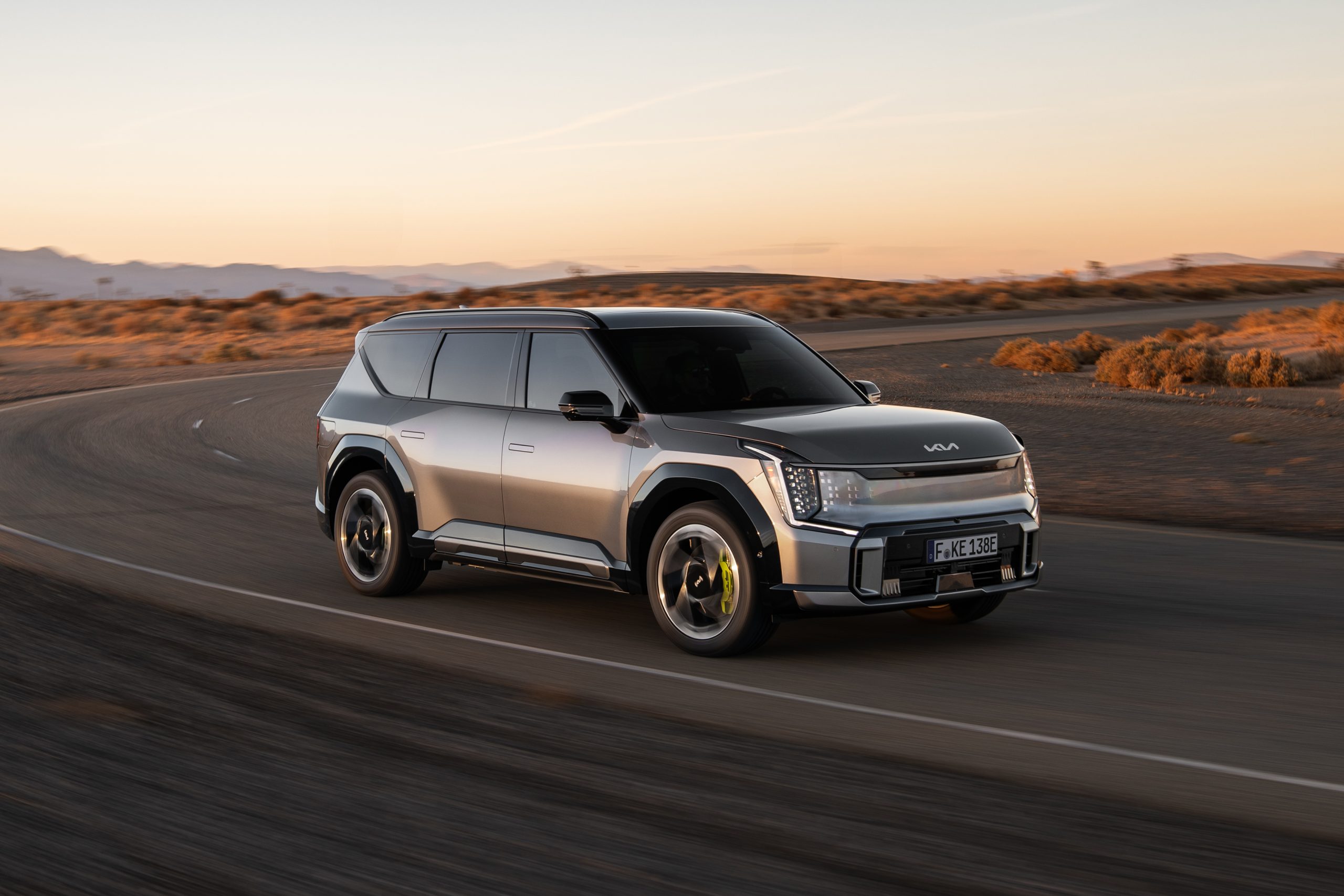
More and more brands are offering models that can carry up to seven occupants, and here we suggest the ones we consider the best in 2026
7-seater cars with the longest range continue to gain ground among families who travel long distances without wanting to depend on frequent charging stops. In 2025 the family vehicle market showed a clear preference for models with more space and electric performance: according to ANFAC, SUVs and MPVs accounted for a significant share of new registrations, and demand for variants with a third row and good range rose compared with previous years. Buyers are looking for a balance between seating capacity for seven occupants, acceptable boot volume with seven seats in use, and WLTP range sufficient for legs of 300–600 km in real-world conditions.
These vehicles are typically positioned between large SUVs and long MPVs. Average prices in Spain in 2025 sat above the market average, with fully electric versions priced between €50,000 and more than €120,000 depending on equipment and battery. The clearest trend is electrification: the 7-seaters with the greatest range in Europe are mostly battery electric vehicles with large-capacity packs, although plug-in hybrid alternatives also exist for those who value limited electric range combined with combustion flexibility. These cars combine space and comfort on long journeys, but seat count, weight and cost per kilometre also shape the choice.
If your priority is minimising stops on a trip, the best options are large electric SUVs with batteries of 90–100 kWh or more; if you value total cost, plug-in hybrids can make sense for mixed routes. Below we explain what to look for and propose five representative models with technical data and starting price in Spain.
What a car needs for this purpose
A car designed to offer the greatest range with seven seats must combine three factors: a large-capacity battery, aerodynamic efficiency and an optimised drivetrain. For long journeys, a high usable battery capacity (above 80 kWh net in electric vehicles) is important, as is a setup that prioritises range over outright performance, and an architecture that does not overly penalise consumption with seven occupants and luggage. It is also worth checking DC charging speed (fast-charging points) and the charging infrastructure on your usual routes.
In terms of powertrains, the offer for this profile is mainly electric, although PHEVs and hybrids exist that suit mixed use. The expected environmental label will be ZERO for electric cars and ECO for plug-in hybrids. On price, budget for a high initial outlay, but the advantage is lower cost per kilometre and comfort on long journeys.
Model selection
Kia EV9
The Kia EV9 is one of the most complete proposals if you are looking for an electric 7-seater with good range and interior space. With a large-capacity battery in its long-range versions, it offers a usable third row for adults on short trips and a competitive boot with five seats in use. Its robust design and efficiency-oriented electrical system make the EV9 a balanced option for families who cover many kilometres.
Why it’s a good choice
• Large-capacity battery and long-range versions.
• Real space for seven passengers.
• Balance between consumption and performance.
Ideal if you are looking for
Large families making intercity trips who value range and space.
| Data | Value |
|---|---|
| Powertrain | Electric |
| Environmental label | ZERO |
| Power | 384 CV |
| Range | Up to 505 km WLTP |
| Consumption | 27.9 kWh/100 km (WLTP estimate) |
| Starting price | €60,920 |
Tesla Model X
The Tesla Model X remains a reference for range in the 7-seater segment thanks to its optimised battery and its motorway efficiency. The Model X combines real capacity for seven occupants with a high WLTP range in its long-range versions, plus a powerful charging network. It is an option for those who prioritise long intercity journeys with the fewest recharging stops.
Why it’s a good choice
• Range among the highest in the segment.
• Charging network and motorway efficiency.
• Versatility and interior space.
Ideal if you are looking for
Long-distance travellers who prioritise range and fast charging on the road.
| Data | Value |
|---|---|
| Powertrain | Electric |
| Environmental label | ZERO |
| Power | 670 CV |
| Range | Up to 649 km WLTP |
| Consumption | 18.3 kWh/100 km (WLTP estimate) |
| Starting price | €115,000 |
Mercedes‑EQS SUV
The Mercedes‑EQS SUV offers a premium alternative with an optional third row in certain versions, standing out for its ride comfort and a range that competes with the segment’s large electric cars. Its focus is on driving comfort and load capacity, maintaining high range figures on mixed routes.
Why it’s a good choice
• Superior ride comfort and quality.
• Competitive range in its segment.
• Advanced equipment and driver-assistance systems.
Ideal if you are looking for
Families who prioritise comfort on long journeys and a luxurious interior with occasional 7 seats.
| Data | Value |
|---|---|
| Powertrain | Electric |
| Environmental label | ZERO |
| Power | 360 CV |
| Range | Up to 654 km WLTP |
| Consumption | 20.7 kWh/100 km (WLTP estimate) |
| Starting price | €139,895 |
Volkswagen ID. Buzz
The Volkswagen ID. Buzz revives the formula of electric MPVs with a configuration of up to 7 seats in some versions. Its orientation is practical: interior space, modularity and sufficient range for family trips. It does not offer the extreme figures of large SUVs, but it compensates with functionality and a more versatile approach for families who combine city driving with weekend getaways.
Why it’s a good choice
• Interior space and modularity.
• Good ergonomics for families.
• Modest price compared with premium SUVs.
Ideal if you are looking for
Families who value versatility and space above outright performance.
| Data | Value |
|---|---|
| Powertrain | Electric |
| Environmental label | ZERO |
| Power | 286 CV |
| Range | Up to 455 km WLTP |
| Consumption | 19.4 kWh/100 km (WLTP estimate) |
| Starting price | €52,770 |
Peugeot e‑Traveller / Opel Zafira‑e Life
The zero-emission variants of commercial MPVs, such as the Peugeot e‑Traveller or its twin Opel Zafira‑e Life, offer configurations for up to eight seats and versions with ranges geared to family and professional transport. They do not aim to compete on performance, but their practical approach and useful body size make them alternatives for those who need many seats and moderate range without giving up zero emissions.
Why it’s a good choice
• Real capacity for 7–8 seats.
• Versatile interior configuration.
• Relatively modest cost compared with premium SUVs.
Ideal if you are looking for
Carrying seven or eight occupants efficiently on regular journeys without high cruising speeds.
| Data | Value |
|---|---|
| Powertrain | Electric |
| Environmental label | ZERO |
| Power | 136 CV |
| Range | Up to 343 km WLTP |
| Consumption | 24.3 kWh/100 km (WLTP estimate) |
| Starting price | €39,120 |
Which car to choose for your case
If you do a lot of city driving
Choose models with good manoeuvrability and efficient consumption in urban cycles: electric MPVs such as the Volkswagen ID. Buzz or the Peugeot e‑Traveller are practical thanks to their visibility, space and running costs. Prioritise size and ease of parking.
If you cover many kilometres
Prioritise range and charging speed: large SUV options such as the Kia EV9, Mercedes‑EQS SUV or the Tesla Model X offer the highest WLTP ranges and the best performance on long routes.
If you want to save money
If your goal is to reduce cost per kilometre, consider versions with a balance between battery and efficiency, or models with a favourable electricity tariff. Electric MPVs and some plug-in hybrids can offer a lower initial outlay than premium SUVs.
If you want technology
Opt for premium models with advanced assistance systems: the Mercedes‑EQS SUV and the Tesla Model X stand out for their infotainment and driver-assistance systems that make long journeys easier.
Interesting alternatives within the same budget
Models such as the Hyundai Ioniq 7 (when available), the BMW iX with the optional seven-seat package (check availability), or the Ford E‑Transit Custom EV in passenger configurations, offer alternatives depending on priority between range, space and cost. For tighter budgets, the Volkswagen ID. Buzz and the Peugeot e‑Traveller are options worth considering.
FAQ – FREQUENTLY ASKED QUESTIONS
What WLTP range do I need to travel comfortably with seven occupants?
For long intercity journeys without frequent stops, look for cars with at least 400 km WLTP; for maximum confidence on the motorway, aim for 500+ km WLTP.
Is a large electric car or a PHEV better for large families?
It depends on use: if you regularly make long journeys, an electric car with a large battery reduces stops; if you alternate city driving with trips where reliable infrastructure is lacking, a PHEV offers flexibility thanks to its combined range.
Do WLTP figures match real-world range when travelling with seven people?
Not exactly: carrying seven occupants and luggage increases consumption. Allow for a realistic reduction of 10–20% from the WLTP figure on motorway journeys.
What DGT label will these cars have?
Electric cars receive ZERO. Plug-in hybrids usually receive ECO or, in some specific cases, ZERO if their electric range exceeds certain thresholds; modern combustion cars receive C.
What should I check before buying a 7-seater electric car?
Check the WLTP range, DC charging capacity, the real space in the third row, boot volume with seven seats in use, and the availability of charging points on your usual routes.
Expert opinion
Beyond the official figures, choosing the best 7-seater car with the longest range in 2026 depends on real-world use more than on the raw WLTP number. If your daily routine includes long family trips on the motorway, the priority should be a large battery and an efficient drivetrain: in that case, electric SUVs such as the Kia EV9, the Mercedes‑EQS SUV or the Tesla Model X offer the best balance between real range, comfort and charging speed. For families who combine city life with weekend getaways, MPVs such as the Volkswagen ID. Buzz or the Peugeot e‑Traveller offer greater versatility and more accessible entry prices.
If the budget is limited, prioritise efficiency and cost per kilometre rather than maximum power; a more modest but consistent range and good charging infrastructure in your area can be more practical than a very high WLTP figure that then drops with seven passengers and luggage. For those who value technology and driver assistance, premium models make up for it with comfort and systems that make long journeys less tiring, although at a considerable extra cost.
In short: to cover many kilometres without worrying about recharging, opt for large-battery electric SUVs; to maintain versatility and cost, well-equipped electric MPVs or PHEVs are sensible choices. Always assess the real space in the third row and the charging speed on the road before deciding.


 Peugeot E-208 GTi: a battery-powered toy that revives the spirit of the 1980s sports cars
 New Lexus ES: luxury grows and goes electric
 First contact with the Dacia Sandero Hybrid 155: power and efficiency from €19,890
Deja un comentario