Which SUV should you buy in 2026 in Spain based on your budget and family needs?
 Dani Montesinos
7 May 2026
8 min.
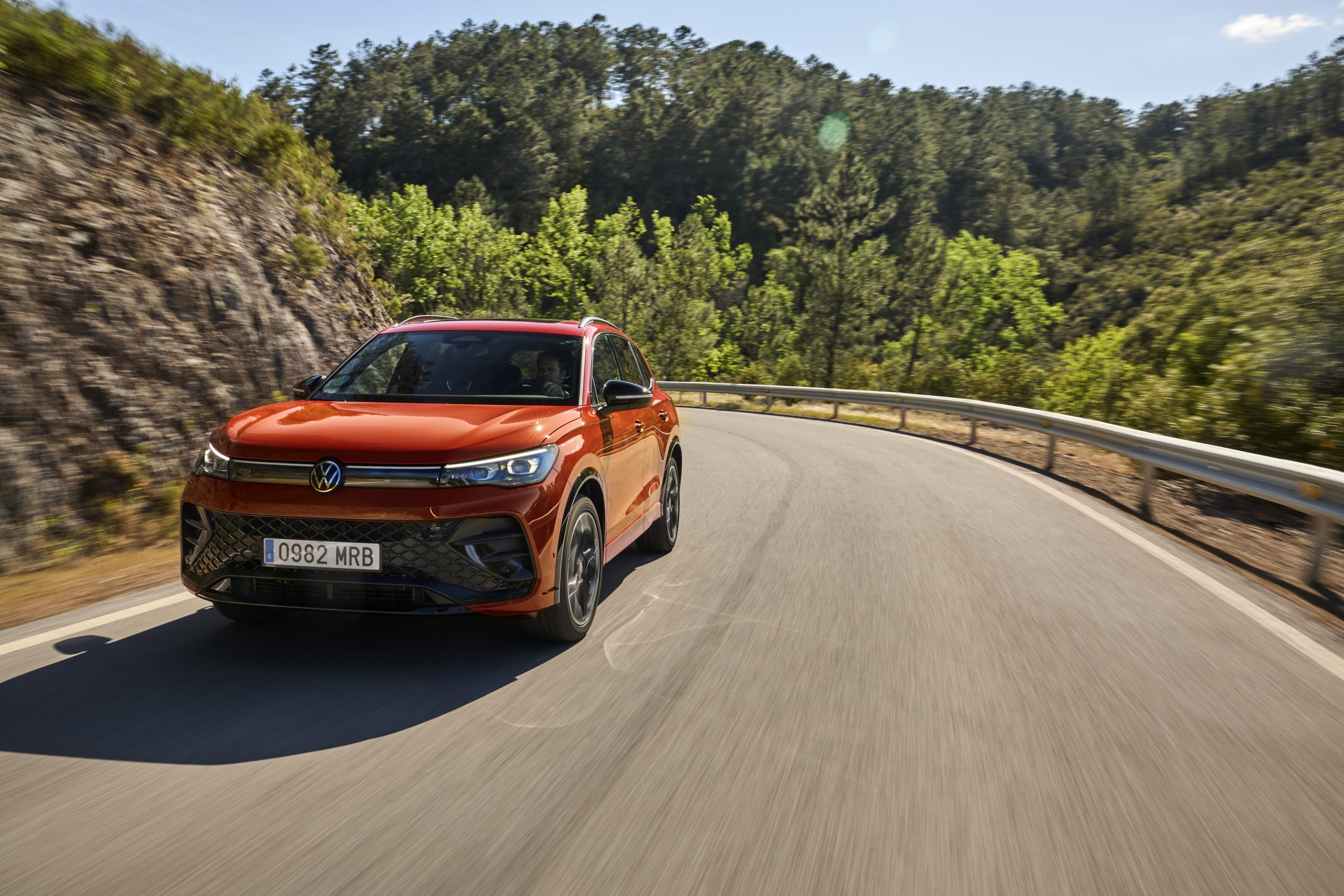
If you are looking for a family SUV, we offer a selection that varies depending on each customer’s needs and, of course, their price.
Which SUV to buy in 2026 is a common question among families looking for a balance between space, cost and versatility. Mid-size SUVs are today the preferred choice for those who need room for children and luggage without giving up moderate consumption and comfort on the road. In Spain the SUV segment remains dominant: according to ANFAC, in 2025 SUVs accounted for more than 55% of registrations, with particularly high demand for hybrid and PHEV versions. The family buyer usually seeks five genuine seats, a large boot, driving aids and reasonable running costs, all without climbing to premium price levels. The average price of a compact SUV on the Spanish market in 2025 was around €33,000 new, although plug-in hybrid versions raise that figure by several thousand euros.
Beyond the official figures, not all of them offer the same balance. A good space-to-price ratio and cost per kilometre are key variables. Models such as the ToyotaRAV4 Hybrid or the KiaSportage PHEV show that different technologies can meet the same need: lower daily consumption or useful electric range for urban journeys. Real consumption depends on use and the type of powertrain chosen.
If you are looking for a family SUV capable of long trips and economy, prioritise hybrids and PHEVs for their balance between consumption and electric range on daily routes. If you cover many kilometres, non-plug-in hybrid or diesel variants (less common) remain efficient. For those who want a CERO label and more electric range, there are PHEV options with more than 50 km WLTP, or electric cars if the budget allows.
What to consider when deciding which SUV to buy in 2026
Before choosing, it helps to understand what your family needs: genuine seats (not just homologated ones), boot volume, easy access for child seats, and total cost (consumption, maintenance and insurance). The powertrain directly influences the DGT label: modern petrol and diesel usually carry label C, hybrids carry label ECO, PHEVs can be ECO or CERO depending on their electric range, and electric cars obtain CERO. Expect prices from €33,000 for compacts up to €48,000 or more for PHEVs with high-end equipment. Technology helps too: parking assistance, traffic-jam assist and EV charging on PHEVs that reduce cost per kilometre.
Model selection
ToyotaRAV4 Hybrid
The ToyotaRAV4 Hybrid is a solid option for families seeking reliability, moderate consumption and habitability. Its self-charging hybrid setup removes the need for external charging, which makes it convenient for users who do not want to depend on charging infrastructure. Label: ECO. Powertrain: hybrid.
Why it is a good choice
- Moderate real-world consumption in mixed use.
- Proven hybrid system and recognised reliability.
- Comfortable interior space for five occupants.
Ideal if you are looking for
A practical option for families who drive in town and on long journeys without charging complications.
| Data | Value |
|---|---|
| Powertrain | Hybrid |
| Environmental label | ECO |
| Power | 183 CV |
| Consumption | 4.9 l/100 km |
| Starting price | €43,500 |
VolkswagenTiguan eHybrid
The VolkswagenTiguan eHybrid combines a combustion engine with plug-in electric propulsion, allowing daily driving in electric mode and long journeys with complete normality. Label: ECO. Powertrain: PHEV.
Why it is a good choice
- Comfort and steering feel in town and on the road.
- Sufficient electric range for daily journeys.
- Good service network and recognised habitability.
Ideal if you are looking for
Lower consumption in daily use while keeping versatility for family trips.
| Data | Value |
|---|---|
| Powertrain | PHEV |
| Environmental label | ECO |
| Power | 150 CV |
| Range | 50 km WLTP |
| Consumption | 1.6 l/100 km |
| Starting price | €47,550 |
KiaSportage PHEV
The KiaSportage PHEV offers a balance between performance and real electric economy, with boot and rear-seat space suited to active families. Label: CERO. Powertrain: PHEV.
Why it is a good choice
- Electric range for most urban journeys.
- Competitive equipment for its price.
- Good dynamic behaviour for its segment.
Ideal if you are looking for
Lower emissions in town and comfort on the road without giving up space.
| Data | Value |
|---|---|
| Powertrain | PHEV |
| Environmental label | CERO |
| Power | 245 CV |
| Range | 70 km WLTP |
| Consumption | 1.6 l/100 km |
| Starting price | €43,020 |
HyundaiTucson Hybrid
The HyundaiTucson Hybrid is a mature alternative for families seeking a balance between price, technology and consumption. Its plug-in hybrid variant is also available, but the HEV version offers a solution with no need for charging. Label: ECO. Powertrain: hybrid.
Why it is a good choice
- Competitive consumption in mixed use.
- Spacious interior and good ergonomics for long journeys.
- Attractive equipment-to-price ratio.
Ideal if you are looking for
A family SUV with moderate running costs that does not depend on charging stations.
| Data | Value |
|---|---|
| Powertrain | Hybrid |
| Environmental label | ECO |
| Power | 239 CV |
| Consumption | 5.6 l/100 km |
| Starting price | €32,975 |
Peugeot3008 Hybrid4
The Peugeot3008 Hybrid4 offers a PHEV solution focused on comfort, dynamics and onboard technology. It is an alternative for those who value refined driving and sufficient electric range for urban journeys. Label: CERO. Powertrain: PHEV.
Why it is a good choice
- A combination of power and efficiency for family trips.
- Well-finished interior and up-to-date infotainment systems.
- Ability to drive in 100% electric mode every day.
Ideal if you are looking for
An SUV with good dynamics, technology and electric range for the city.
| Data | Value |
|---|---|
| Powertrain | PHEV |
| Environmental label | CERO |
| Power | 225 CV |
| Range | 59 km WLTP |
| Consumption | 1.4 l/100 km |
| Starting price | €37,630 |
Which car to choose for your case
If you do a lot of city driving
Prioritise PHEVs with real electric range (more than 40–50 km WLTP) or electric cars if you can charge at home. PHEVs such as the KiaSportage PHEV or the Peugeot3008 Hybrid4 allow daily driving in electric mode and reduce cost per kilometre.
If you cover many kilometres
A self-charging hybrid such as the ToyotaRAV4 Hybrid or an efficient hybrid such as the HyundaiTucson Hybrid is recommended for its balance between consumption and range on the road. Not all offer the same balance: weigh real consumption and comfort on long trips.
If you want to save
Look at combined consumption and total cost. A PHEV used mostly in electric mode reduces spending but requires an upfront investment and charging. Hybrids offer savings without the need for charging points.
If you want technology
Look for driver assistance systems, a platform with OTA updates and good connectivity. Models such as the VolkswagenTiguan eHybrid or the Peugeot3008 Hybrid4 stand out for their advanced equipment.
Interesting alternatives within the same budget
If you want alternatives, consider the HyundaiKona Electric if you want a pure electric car, the TeslaModel Y if you want greater electric range, the KiaEV3 as a compact electric option, and the SkodaKodiaq if you need more seats and boot space. The OpelGrandland or the RenaultAustral may also fit depending on equipment and current offers.
FAQ – FREQUENTLY ASKED QUESTIONS
Which powertrain is best for a family that drives 50% in town and 50% on the road?
A hybrid (HEV) or a PHEV with moderate electric range usually offers the best compromise: the hybrid avoids dependence on charging, and PHEVs reduce urban consumption if you can charge at home.
How does the DGT label affect the choice of SUV?
The label determines access to low-emission zones and parking advantages in some cities. Hybrids usually carry ECO, while PHEVs and electric cars can achieve CERO depending on range.
Which SUV offers the best space-to-price ratio?
General-purpose models such as the HyundaiTucson Hybrid and the ToyotaRAV4 Hybrid stand out for their balance of space, equipment and cost.
Is a PHEV worth it over a hybrid if I can’t charge outside the home?
If you can charge at home, yes; if not, much of the PHEV’s benefit is lost and a hybrid can be more practical and economical in the long run.
Which SUV has the best electric range for urban use?
Among those mentioned, the KiaSportage PHEV and the Peugeot3008 Hybrid4 offer electric ranges above 50 km WLTP, enough for most daily urban journeys.
Expert opinion
Beyond the official figures, the choice depends on real use and available budget. For families that prioritise simplicity and low running costs without depending on charging, the ToyotaRAV4 Hybrid is a sensible choice: it combines reliability, moderate consumption and habitability. If you have a charging point at home and make many urban trips, a PHEV such as the KiaSportage PHEV or the Peugeot3008 Hybrid4 gives you the advantage of driving in electric mode daily and reducing fuel spending.
If your driving is mostly on motorways and you want comfort at a moderate cost, hybrid models such as the HyundaiTucson Hybrid are more balanced. For those who value technology and versatility, the VolkswagenTiguan eHybrid offers a sober and practical package. Depending on budget, choose the powertrain that maximises your real use: PHEV for frequent urban trips with charging, hybrid for mixed routes without complications. The final advice: test-drive the model with a full load and boot, measure real consumption on your usual routes and compare total costs; that will clarify which SUV is most suitable for your family.


 Peugeot E-208 GTi: a battery-powered toy that revives the spirit of the 1980s sports cars
 New Lexus ES: luxury grows and goes electric
 First contact with the Dacia Sandero Hybrid 155: power and efficiency from €19,890
Deja un comentario