The best compact hybrid SUVs for city driving without giving up space
 Dani Montesinos
18 May 2026
6 min.
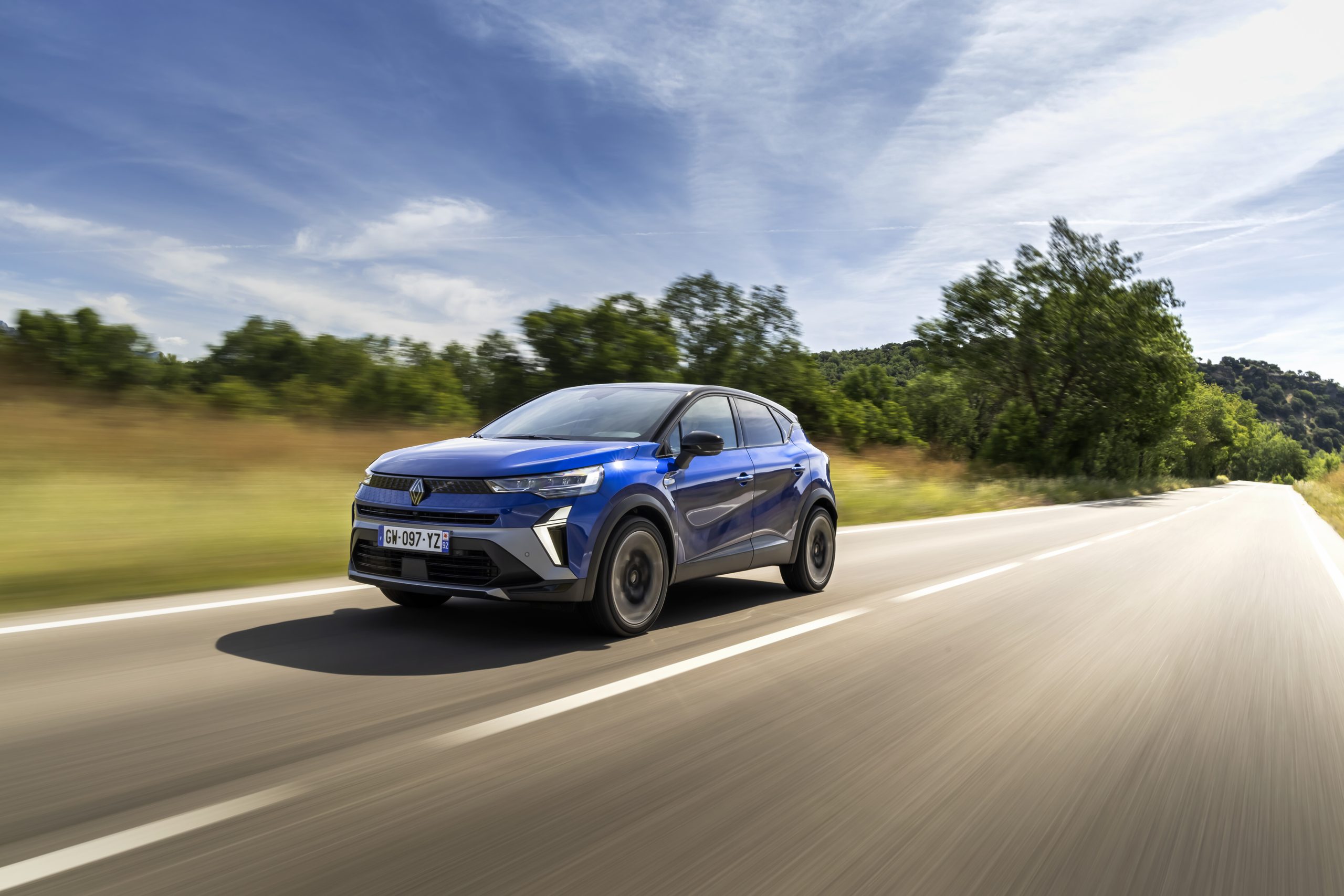
Premium guide to the best compact hybrid SUVs for the city: WLTP consumption, boot capacity and real prices in Spain to help you make the right purchase.
The compact hybrid SUV has become the rational car of choice for the urban driver in Spain. ECO label, low consumption in traffic jams, a height that makes getting in and out of narrow parking spaces easier, and a length that rarely exceeds 4.40 metres: the formula suits the city and, at the same time, does not force you to give up the family boot for weekends. The question is no longer whether it makes sense to electrify, but which best compact hybrid SUVs for the city offer today the best balance between size, consumption and liveability.
Below is a reasoned selection of the models actually available at Spanish dealerships, with technical data sheets, objective criteria and a final comparison table with scores to help you decide.
Why a compact hybrid SUV makes sense in the city
The city penalises the combustion engine: cold starts, traffic lights, kilometre after kilometre at 30 km/h. A compact urban hybrid SUV reverses that logic thanks to the electric motor, which handles pulling away from a standstill, recovers energy on every braking and reduces real consumption to figures a diesel would never reach in this setting. The DGT ECO label adds the regulatory component: access to ZBEs (low-emission zones), cheaper regulated parking in many cities and a stronger resale value.
What we mean by “compact”: dimensions and boot
We work within a very specific range: lengths between 4.20 and 4.40 metres, widths below 1.85 m so that they don’t struggle in older garages, and boots starting at 400 litres. It is the balance between manoeuvrability and real-life use with a family or luggage.
Toyota C-HR 140H — from €31,050
The most distinctive in the segment. The second generation of the C-HR keeps its radical aesthetic bet but gains refinement, soundproofing and a 1.8-litre full hybrid system that delivers genuinely record-breaking urban consumption. At 4.36 m long and with a 364-litre boot (somewhat tight due to the sloping roofline), it is the king of compact hybrid SUV consumption in urban use: getting below 4.5 l/100 km in the city is within effortless reach.
| Power kW | Power CV | Top speed | Range | WLTP consumption | Label | Fuel |
|---|---|---|---|---|---|---|
| 103 kW | 140 CV | 175 km/h | ≈950 km | 4.7 l/100 km | ECO | Hybrid |
Hyundai Kona Hybrid — from €27,540
The second-generation Kona grows to 4.35 m and prioritises interior space over the playful design of its predecessor. A 466-litre boot (the segment benchmark), dual 12.3″ screens and a 141 CV hybrid system that behaves smoothly in the city. It is probably the most balanced spacious hybrid SUV for the city for small families.
| Power kW | Power CV | Top speed | Range | WLTP consumption | Label | Fuel |
|---|---|---|---|---|---|---|
| 101 kW | 138 CV | 165 km/h | ≈900 km | 4.6 l/100 km | ECO | Hybrid |
Renault Captur E-Tech full hybrid — from €27,075
The Captur is the French classic of the B-SUV segment, and its 145 CV E-Tech version combines two electric motors and a 1.6 combustion engine in a layout that excels in urban use: up to 80% of city driving can be done in electric mode. At 4.24 m long, it is one of the easiest to park on the list, and it keeps a 326–422-litre boot thanks to the sliding rear bench.
| Power kW | Power CV | Top speed | Range | WLTP consumption | Label | Fuel |
|---|---|---|---|---|---|---|
| 117 kW | 160 CV | 180 km/h | ≈850 km | 4.3 l/100 km | ECO | Hybrid |
Honda HR-V e:HEV — from €31,460
Honda opts for a series-parallel hybrid with two electric motors, where the petrol engine acts as a generator most of the time. The result: a permanently electric feel in the city and a refinement rare at this price. 4.34 m, a 319-litre boot (reduced by the battery under the rear Magic Seats) and a notably good dynamic balance.
| Power kW | Power CV | Top speed | Range | WLTP consumption | Label | Fuel |
|---|---|---|---|---|---|---|
| 96 kW | 131 CV | 170 km/h | ≈900 km | 5.4 l/100 km | ECO | Hybrid |
Nissan Juke Hybrid — from €25,050
The hybrid Juke uses the technology of the Renault group adapted to its more youthful character. At 4.21 m long it is the most urban in the comparison, with a 354-litre boot and a clutchless multimode gearbox that feels strange at first but proves effective in dense traffic.
| Power kW | Power CV | Top speed | Range | WLTP consumption | Label | Fuel |
|---|---|---|---|---|---|---|
| 106 kW | 145 CV | 166 km/h | ≈850 km | 4.7 l/100 km | ECO | Hybrid |
Kia Niro Hybrid — from €22,940
At 4.42 m it brushes the upper limit of the segment, but its design optimises interior space like few others: a 451-litre boot and rear legroom worthy of a C-SUV. A proven 141 CV powertrain shared with the Kona and seven years of warranty as a structural selling point.
| Power kW | Power CV | Top speed | Range | WLTP consumption | Label | Fuel |
|---|---|---|---|---|---|---|
| 101 kW | 138 CV | 165 km/h | ≈900 km | 4.5 l/100 km | ECO | Hybrid |
Compact hybrid SUV comparison: summary table with scores
Score out of 10, weighing urban consumption, space, equipment, price and refinement.
| Model | Length | Boot | CV | WLTP consumption | From | Score |
|---|---|---|---|---|---|---|
| Toyota C-HR 140H | 4.36 m | 364 l | 140 | 4.7 l | €31,050 | 9.0 |
| Hyundai Kona Hybrid | 4.35 m | 466 l | 138 | 4.6 l | €27,540 | 8.8 |
| Renault Captur E-Tech | 4.24 m | 422 l | 160 | 4.3 l | €27,075 | 8.5 |
| Honda HR-V e:HEV | 4.34 m | 319 l | 131 | 5.4 l | €31,460 | 8.2 |
| Nissan Juke Hybrid | 4.21 m | 354 l | 145 | 4.7 l | €25,050 | 8.0 |
| Kia Niro Hybrid | 4.42 m | 451 l | 138 | 4.5 l | €22,940 | 8.7 |
Recommendations by buyer profile
For those who use the car mostly in the city and prioritise consumption, the Toyota C-HR remains the gold standard among self-charging hybrid SUVs for the city. If what matters is space and boot capacity, the Kona and the Niro play in another league. For tight budgets without giving up technology, the Captur E-Tech is the most sensible option. And if you’re looking for pure manoeuvrability in historic town centres, the Juke for its dimensions and the HR-V for its refinement share the podium.
Frequently asked questions
Which compact hybrid SUV consumes the least in the city?
The Toyota C-HR 140H is the benchmark: in real urban use it is common to see figures of 4.2–4.7 l/100 km thanks to the fourth generation of the Toyota hybrid system.
Do they all have the DGT ECO label?
Yes. All the self-charging hybrid (HEV) models mentioned qualify for the ECO label, which allows unrestricted access to the ZBEs in Madrid, Barcelona and other Spanish cities.
Is a compact hybrid worth it compared with a pure petrol car?
In the city, yes. The purchase premium (between €2,000 and €3,500 over an equivalent petrol car) is recovered in 4–6 years with mostly urban use, not counting the higher residual value and the advantages of the ECO label.
Which offers the most boot space without exceeding 4.40 m?
The Hyundai Kona Hybrid with 466 litres is the most capable within the strict compact range, followed by the Kia Niro with 451 litres (though the latter is already at the 4.42 m limit).


 Peugeot E-208 GTi: a battery-powered toy that revives the spirit of the 1980s sports cars
 New Lexus ES: luxury grows and goes electric
 First contact with the Dacia Sandero Hybrid 155: power and efficiency from €19,890
Deja un comentario