The best electric SUVs for city and road
 Carlos Romero
9 March 2026
8 min.
The 2026 electric SUV market offers a consolidated range that has matured in terms of range, running costs and versatility. Living with both urban and long-distance models means comparing more than choosing by brand: there are solutions designed for the city with fast charging and higher-battery versions for road trips. Here you will find a selection of electric SUVs suited to both uses, with starting price data, real advantages and technical limitations that define their practical value in the European context of 2026.
Who is this ranking for?
This ranking is based on market data, official specifications and published road tests. It offers objective guidance for buyers looking for an electric SUV that balances urban use and road journeys in 2026.
If you drive many kilometres every day and need reliable range, if you alternate city trips with motorway getaways, or if you value running costs over power, this list helps you identify which model best fits your routine and budget.
What details have we analysed?
We have considered market positioning and entry price, official technical data such as WLTP range and power, homologated consumption, size and real-world use by type of driver, and the relationship between price and equipment to assess the total cost of ownership.
Ranking of the best electric SUVs for city and road
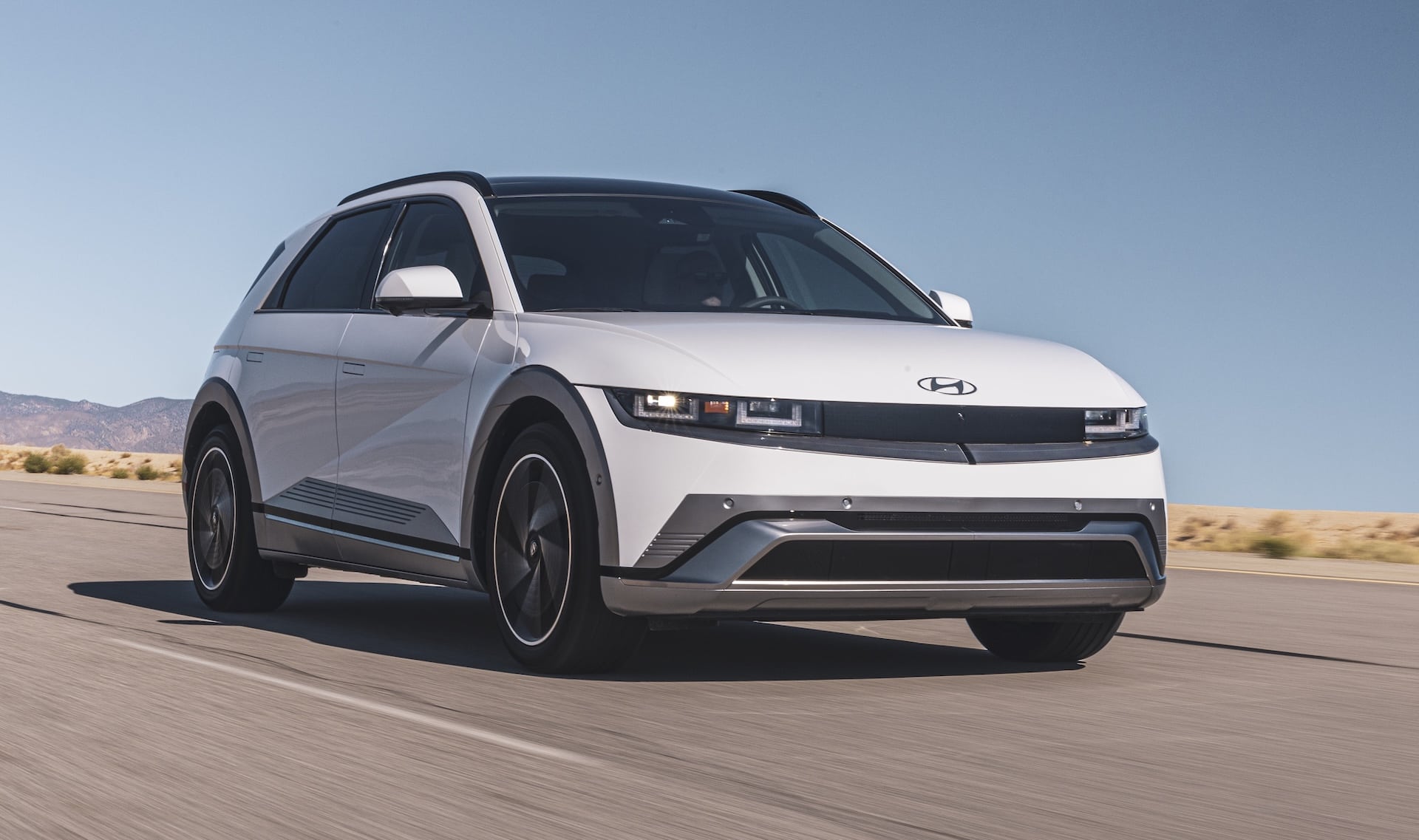
Hyundai Ioniq 5 (from €47,000*)
Indicative price without applying public grants or the brand’s commercial discounts.
Why it’s here: The Ioniq 5 combines a modern electric architecture with battery options offering competitive ranges and fast charging. Its roominess and flat-floor design make it versatile in the city and stable on the road, balancing performance and efficiency.
Ideal for: Users seeking family versatility and fast charging on long journeys without giving up urban ergonomics.
Pros:
- Battery options with good WLTP ranges.
- High-power DC fast charging.
- Generous interior and boot space for its class.
Cons:
- Relatively high weight, which affects consumption in dynamic driving.
- Entry price higher than compact rivals in the segment.
Kia EV6 (from €44,500*)
Indicative price without applying public grants or the brand’s commercial discounts.
Why it’s here: The EV6 offers a shared platform with dynamic performance and good range in higher-battery versions. Its setup and efficiency make it solid on the motorway and agile in the city, with a competitive price-to-equipment ratio.
Ideal for: Drivers seeking a balance between moderately sporty driving and efficiency on mixed routes.
Pros:
- Good WLTP range in large-battery versions.
- Practical interior design and updated driver-assistance technologies.
- High-power DC charging.
Cons:
- Entry cost in better-equipped versions.
- Cabin somewhat more oriented to the driving experience than to maximising space.
Tesla Model Y (from €57,990*)
Indicative price without applying public grants or the brand’s commercial discounts.
Why it’s here: A reference model for efficiency and charging network, with versions offering long ranges and good energy economy in mixed driving. Its software optimises consumption, and the charging experience is an asset on long journeys.
Ideal for: Those who prioritise range and easy charging on frequent road routes.
Pros:
- High range in Long Range versions.
- Access to the supercharger network with availability on main routes.
- OTA updates that improve performance and efficiency.
Cons:
- Entry price higher than other compacts in the segment.
- Perceived finish quality varies between versions.
Volkswagen ID.4 (from €41,100*)
Indicative price without applying public grants or the brand’s commercial discounts.
Why it’s here: The ID.4 is an electric SUV geared towards practicality, with battery options that balance range and price. Its focus on comfort and space makes it comfortable for families and long trips, with contained consumption in mixed driving.
Ideal for: Families seeking a practical SUV with a good balance between cost and range.
Pros:
- Good roominess and a respectable boot.
- Balanced consumption in real-world driving.
- Battery options adapted to different budgets.
Cons:
- Maximum charging rate lower than some rivals more focused on charging speed.
- Less sporty dynamics in demanding driving.
Peugeot e-2008 (from €36,700*)
Indicative price without applying public grants or the brand’s commercial discounts.
Why it’s here: The e-2008 is an urban SUV with sufficient performance for short motorway trips and good manoeuvrability in the city. Its size and efficiency make it an economical option for those prioritising cost and urban practicality.
Ideal for: Urban drivers who occasionally make road trips and seek low running costs.
Pros:
- Compact size and efficiency in urban environments.
- Contained entry price in the electric segment.
- Safety equipment in line with the B-SUV segment.
Cons:
- Limited range compared with higher-battery SUVs on long journeys.
- Smaller boot capacity for families who travel frequently.
The prices shown in this ranking are indicative, without applying public grants or the brand’s commercial discounts.
Technical comparison
| Model | Range | Power | Consumption | Top speed | Price (€*) |
|---|---|---|---|---|---|
| Hyundai Ioniq 5 | Up to 570 km WLTP | 170–225 kW | 16–19 kWh/100 km | 185–200 km/h | €47,000* |
| Kia EV6 | Up to 510 km WLTP | 125–239 kW | 15–19 kWh/100 km | 185–260 km/h | €44,500* |
| Tesla Model Y | Up to 622 km WLTP | 150–377 kW | 14–17 kWh/100 km | 190–250 km/h | €57,990* |
| Volkswagen ID.4 | Up to 520 km WLTP | 110–150 kW | 15–18 kWh/100 km | 160–180 km/h | €41,100* |
| Peugeot e-2008 | Up to 320 km WLTP | 100 kW | 15–17 kWh/100 km | 150–170 km/h | €36,700* |
These data are official and taken from the brands’ official websites.
Purchase grants in 2026: Plan Auto+ and tax benefits
The 2026 Plan Auto+ replaces the previous MOVES programmes and establishes a new system of direct grants for buying electrified vehicles in Spain.
Main amounts of the 2026 Plan Auto+
– Direct grants of up to €4,500 for electric passenger cars.
– Up to €5,000 for light vans in category N1.
– Retroactive effect from 1 January 2026.
– Approximate budget allocation of €400 million.
Who can benefit and priority criteria
Beneficiaries: private individuals, self-employed workers and companies. The EEE criterion (Electric, Economic and European) applies, giving greater incentive to pure electric vehicles over plug-in hybrids. Vehicles priced below €35,000 receive a larger grant; between €35,000 and €45,000 access to a reduced grant. Additional incentive if final assembly or batteries come from the EU.
Additional requirements and tax advantages
A mandatory minimum discount of €1,000 from the dealer. A 15% deduction on personal income tax (IRPF) up to a maximum of €3,000. Tax validity until 31 December 2026.
Management and possible regional grants
Management is coordinated by the Ministry of Industry together with the Autonomous Communities. Additional regional programmes may exist. Example: the Plan Cambia 360 in the Community of Madrid. At the time of writing it is not officially confirmed whether these regional grants are compatible with the 2026 Plan Auto+.
FAQ · The 5 questions everyone asks
What range do I need to alternate city and road driving?
For regular mixed use, a realistic WLTP range of 350–450 km is usually sufficient: it allows road journeys without frequent charging and leaves a margin for daily urban use. If you make long journeys regularly, prioritise higher-battery versions.
How does fast charging affect road use?
DC charging capacity reduces times on long journeys; models with higher charging power recover range more quickly. The availability of charging points along the route is also key to planning efficient stops.
Are electric SUVs expensive to maintain compared with petrol and diesel cars?
Maintenance costs are usually lower due to fewer moving parts and fewer consumable servicing items. The energy cost depends on the charging tariff; for intensive use, efficiency and the price per kWh determine the actual spend.
Which model is best if I want the lowest initial outlay?
Electric B-segment or compact models offer the lowest initial outlay and reduced running costs, but with limited range. If your priority is lowering the entry price, look for smaller-battery versions and compare standard equipment.
How does demand affect the purchase decision?
Demand usually correlates with ease of resale and service availability; a popular model is usually easier to sell and maintain, but also weigh running costs and how well it suits your routine.
Expert conclusion
This ranking shows that in 2026 the electric SUV segment offers clear alternatives depending on priorities: from efficient compact SUVs for the city to models with batteries that allow long journeys. What this ranking means for the buyer is that the choice should be based on real use, charging capacity and the balance between range and purchase cost.
If you want to get the most for your money, first look at the real entry price and what comes as standard. If a model is in high demand, it is normally also easier to sell later on. And if you cover many kilometres, energy cost and efficiency matter more than the power figure. If you won’t charge often, don’t buy from the brochure: buy for your routine.

 Peugeot E-208 GTi: a battery-powered toy that revives the spirit of the 1980s sports cars
 New Lexus ES: luxury grows and goes electric
 First contact with the Dacia Sandero Hybrid 155: power and efficiency from €19,890
Deja un comentario