Hyundai Inster: Range and urban performance for your daily commutes
 Carlos Romero
9 March 2026
8 min.
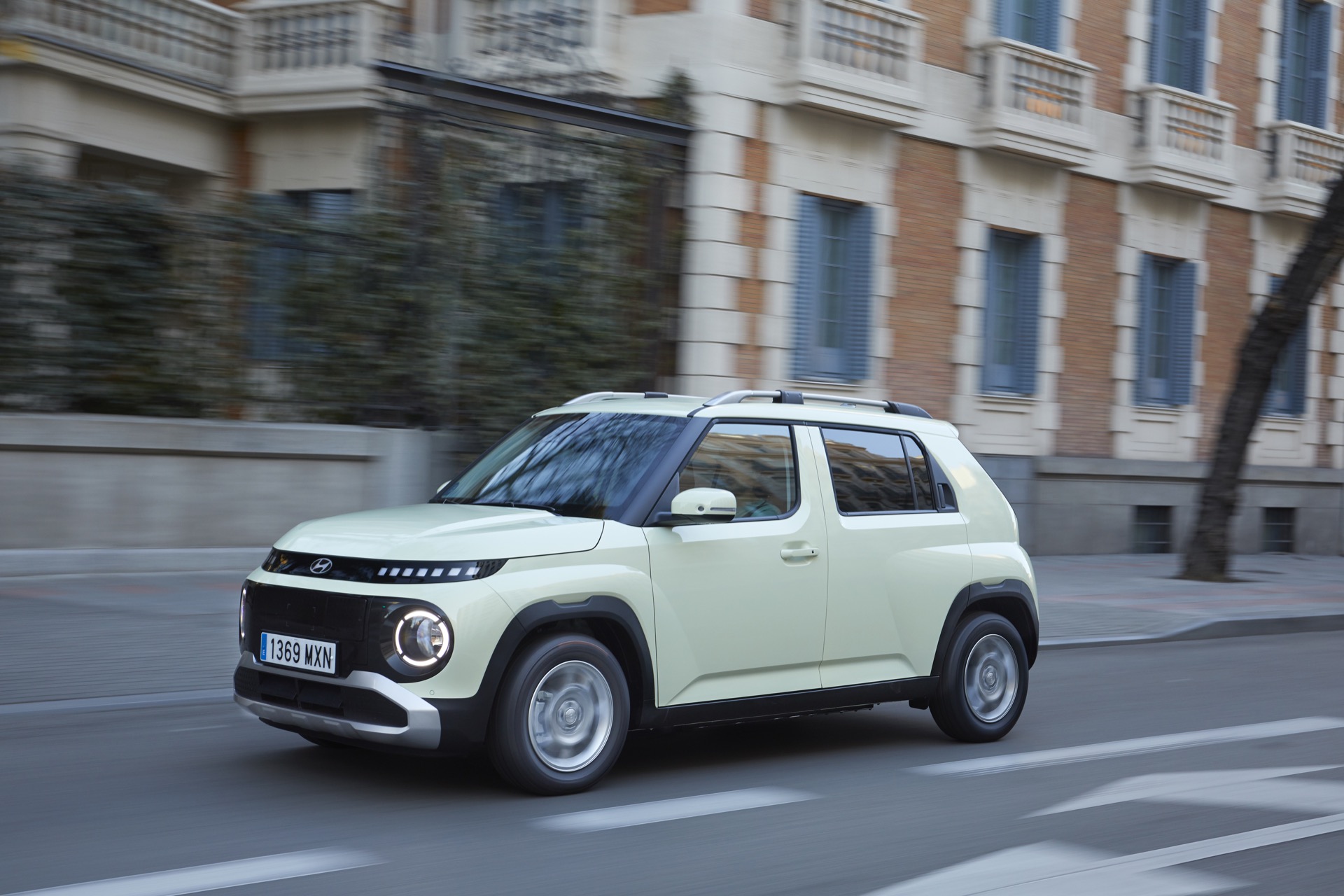
From the perspective of the urban user, the Hyundai Inster offers a coherent proposition: a competitive entry price, a practical electric setup and a range that is adequate for most daily journeys
With a proposition geared toward urban mobility and a clear focus on efficiency, the Hyundai Inster arrives as an alternative for those who prioritise simple daily journeys and low running costs. It offers a 100% electric configuration with a 42-49 kWh battery, a combined output of 71.1 kW (97 CV) in the base version and 84.5 kW (115 CV) in the Long-Range, and an announced WLTP range of 320 km. These figures raise real questions about its daily performance: does it maintain its range in dense traffic and in short trips interspersed with stops? How do temperature and the use of air conditioning affect real-world range in the city? Is its cost per kilometre competitive against comparable combustion and electric alternatives? The entry price also shapes the purchase decision —from 24,990 euros (before aid and discounts)— and is decisive when assessing its fit in private and professional fleets. Below, real-world range figures, urban behaviour and operating costs are analysed to judge whether the Inster meets everyday mobility needs.
The essentials of the Hyundai Inster
The Hyundai Inster is an electric city car designed for everyday routes: manoeuvrable, with modest consumption and enough range for most metropolitan days. Given its size and technical focus, it is worth considering if most of the use is urban or peri-urban and home or frequent public charging is available. It is not the most suitable choice for long motorway journeys or for those who need a lot of interior load capacity, but it is well suited to those seeking low cost per kilometre and ease of use in confined environments.
Technical specifications and main features
| Engine | Single-motor electric, front-wheel drive |
| Power | 71.1 kW (97 CV) in the base version and 84.5 kW (115 CV) in the Long-Range |
| WLTP range | 320 km |
| Battery / Capacity | Lithium-ion 42-49 kWh |
| Homologated consumption | 13.5 kWh/100 km (combined WLTP) |
| 0-100 km/h acceleration | 10.6 s |
| Length | 3.85 m |
| Boot | 280 – 350 L |
| Price from | from 24,990 euros (before aid and discounts) |
Hyundai Inster sales 2025
In 2025 the urban electric market in Spain consolidated compact models that fit mid-range budgets. According to ANFAC data and market estimates, the Inster managed to enter the urban electric segment with moderate figures, competing with models of similar positioning.
| Model | Sales 2025 (Spain) |
| Hyundai Inster | 4,200 |
| Fiat 500e | 5,000 |
| Renault Mégane E‑Tech | 7,500 |
| Opel Corsa‑e | 3,800 |
Design and market positioning
The Inster opts for a compact and functional look: smooth lines, restrained overhangs and an image that seeks a balance between urban tradition and modern features. It is positioned as a practical alternative within the entry and mid-range electric city car niche, aimed at users who value manoeuvrability, running costs and connectivity solutions without the need for large rear seats or exceptional boot space.
Interior, space and technology
The cabin prioritises ergonomics and use of space: comfortable seats, a good driving position and materials that are well finished for the segment. The central screen offers basic connectivity with navigation and climate control management; interior space is sufficient for four passengers, and the 350-litre boot accommodates shopping and weekend luggage. The overall impression is of a comfortable city car, with no pretensions to luxury but with practical technological features for everyday use.
Engine, real-world range and behaviour
In an urban setting the Inster shows efficiency thanks to its electric architecture and braking energy regeneration, with real consumption that typically falls between 12 and 15 kWh/100 km on mixed metropolitan routes. This translates into a very favourable 300–350 km of range in city use and around 250–280 km in peri-urban traffic with mild temperatures. On the motorway at sustained speeds, range drops noticeably: at 120 km/h it can fall to 160–200 km. Its dynamic behaviour is predictable and comfortable; the engine response is adequate for urban overtaking and merging, with a mass distribution designed for stability in the city.
Charging, efficiency and running costs
The Inster supports AC charging at 7.4 kW and DC fast charging up to 75 kW, allowing it to recover from 10 to 80% in roughly 35 minutes at compatible stations. Running costs depend on electricity prices, but with an average domestic tariff (0.18 €/kWh) the cost per 100 km can be around 2.4 €; at public charging points the cost per 100 km is usually higher. Maintenance is low compared with combustion models, with fewer moving parts and lower periodic servicing costs.
Price, versions and equipment
The Inster is offered in several versions, ranging from an entry finish aimed at private buyers to levels with greater technological equipment and driver assistance. Equipment includes adaptive cruise control on higher versions, active safety assistants, a touchscreen with smartphone integration and fast-charging options. The starting price, from 24,990 euros (before aid and discounts), places the Inster in the entry bracket among electric options designed for urban use.
Purchase aid
- Direct aid: discount applied at the dealership.
- Amount: up to 4,500 € for electric / 3,375 € for PHEV.
- Retroactivity: from 1 January 2026.
- Price limits: normally up to 45,000 €.
- Beneficiaries: private individuals, self-employed workers and companies.
Who this car is for
The Inster is recommended for urban drivers and light commercial users who make short or medium-distance daily journeys and value low running costs and easy parking. It is also a valid choice for small families who combine urban use with the occasional getaway, provided that charging needs or frequent motorway use are not a priority.
The best and the improvable
The best
Efficiency in urban settings, moderate running costs, manoeuvrability and easy home charging. A good balance between city range and entry price.
The improvable
Limited range on fast roads, moderate maximum charging power compared with pricier rivals, and cargo space that is somewhat tight for demanding family use.
Alternatives on the market
Fiat 500e (from 22,990 €)
The 500e is a more urban and smaller alternative, with a lifestyle focus and modest consumption; it offers a very manageable experience in the city, though with less rear space.
Renault Mégane E‑Tech (from 32,990 €)
The Mégane E‑Tech sits a step above in space and battery, with greater range for mixed journeys and a more settled presentation for versatile use.
Opel Corsa‑e (from 24,500 €)
The Corsa‑e strikes a balance between price, urban performance and light dynamism; it is a consistent option for those seeking a compact electric car with solid brand backing.
Frequently asked questions about the Hyundai Inster
Is the Hyundai Inster worth it compared with an equivalent diesel?
It depends on use. In urban traffic and with home charging or frequent access to a public point, the Inster reduces running costs and local emissions compared with a diesel. For mainly interurban routes and frequent long journeys, a diesel may offer greater range and faster refuelling, so the choice should be based on your actual usage pattern.
What real-world range does the Hyundai Inster offer on the motorway?
On the motorway at steady speeds of 110–120 km/h, range can be between 160 and 200 km, depending on load, temperature and driving style. It is advisable to plan charging stops on long trips or to opt for versions with larger batteries among alternative models.
What happens if the battery is not charged?
If the battery runs completely flat, the vehicle is immobilised until it is charged. Before reaching that point, the car warns with low range levels and reduces performance to prioritise the remaining energy; therefore, preventive charge management is key to avoiding setbacks.
Is it a good option as the only family car?
It can be for families with mostly urban use and reliable access to charging at home or at work. For families who frequently need long journeys or high load capacity, a model with greater range or a second diesel/hybrid vehicle is more practical.
How much does it cost to charge at home?
With an average domestic tariff of 0.18 €/kWh, charging the full 45 kWh battery would cost around 8–9 €, which translates to roughly 2–3 € per 100 km in efficient urban conditions.
Expert opinion
From the perspective of the urban user, the Hyundai Inster offers a coherent proposition: a competitive entry price, a practical electric setup and a range that is adequate for most daily journeys. Its strength lies in real efficiency in the city and low running costs, which makes it attractive for private buyers and urban fleets. However, its design limits its versatility on interurban routes and for users with high charging needs. In terms of positioning, the Inster fits as a functional solution for 2026: cost-effective for those who prioritise efficient and accessible daily mobility, and less advisable for profiles that demand flexibility for long trips without stopping to recharge.

 Peugeot E-208 GTi: a battery-powered toy that revives the spirit of the 1980s sports cars
 New Lexus ES: luxury grows and goes electric
 First contact with the Dacia Sandero Hybrid 155: power and efficiency from €19,890
Deja un comentario