508 Peugeot Sedans Hybrid Cars Family
The Peugeot 508 gets a facelift and updated technology
 David Lopez @espacionblanco
27 February 2023
5 min.
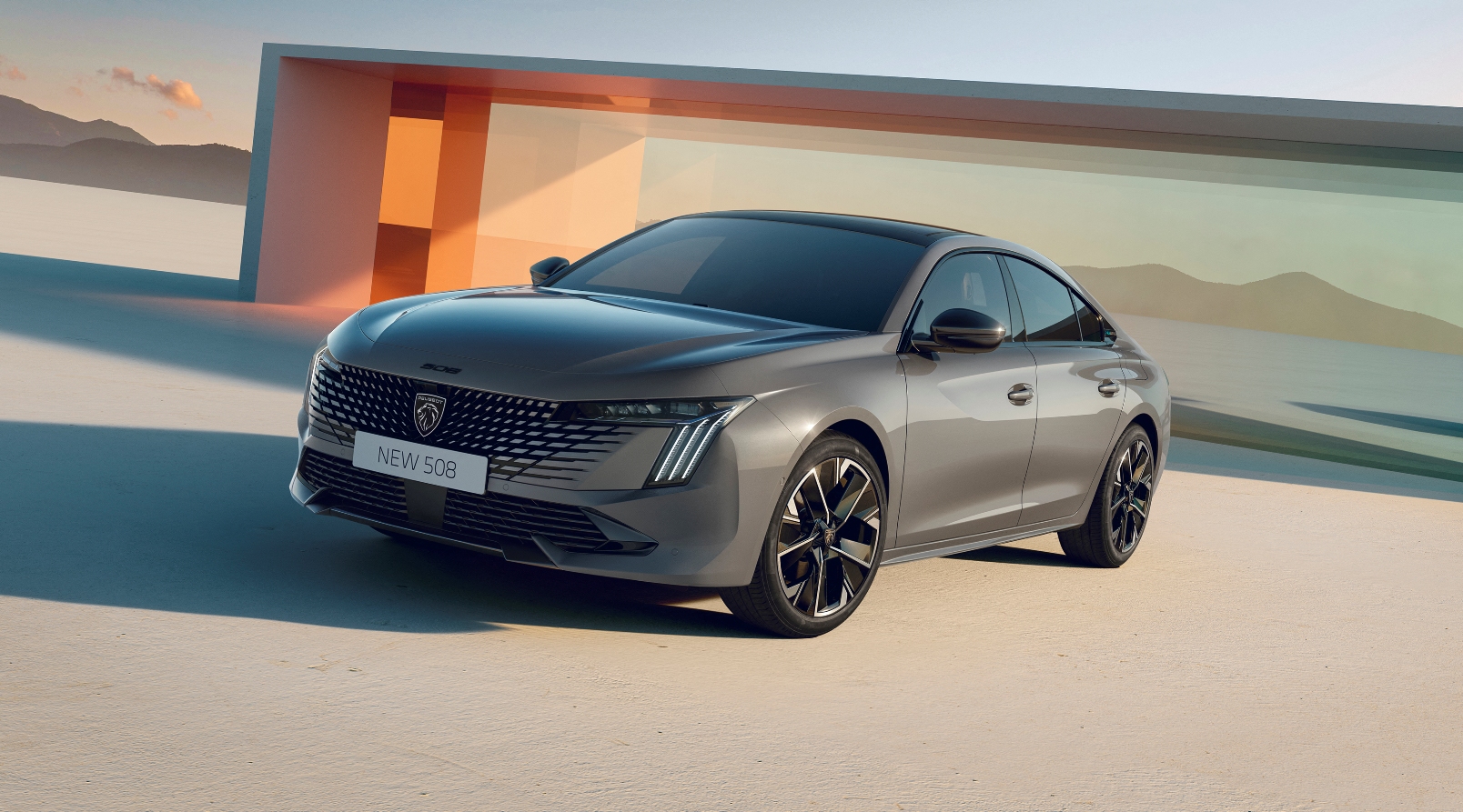
Peugeot unveils the new 508 with a redesigned look, especially at the front, along with new technologies and PHEV engines taking centre stage
Peugeot announced it just a few days ago and has kept its word: the Peugeot 508 has finally been unveiled and comes with a renewed image. It is not a radical overhaul, but it is refined enough to give it a new character, all accompanied by new technology for its occupants to enjoy and engines that place greater emphasis on electrification.
Whether we opt for the saloon or the “SW” estate body, the Peugeot 508 gets the same aesthetic updates on the outside, with the front receiving almost all of them. It now features a new grille design that grows in size and blends into the bumper design and incorporates the brand’s new logo as its main element, while on either side stand out the new Matrix LED headlights, fitted as standard with a more streamlined design.
Looking at the side profile, the main novelty lies in the new wheel designs, available in 18-inch size, although there are also 17- and 20-inch options, the latter reserved for the PSE sports version. At the rear, the main change is the LED rear lights, which incorporate a new light signature with the three claws in a more horizontal position. Finally, overall, the new Peugeot 508 can be chosen in seven body colours and three trim levels: Allure, GT and PSE.
Moving inside the new Peugeot 508, we continue to find the comfortable front seats with AGR certification, which can be equipped with electronic functions and now feature two new upholstery options: TEP/Textile for the Allure and GT trims, and TEP/Alcantara for the PSE trim. Optionally, there are two Nappa leather upholstery options in Mistral and Red finishes, which incorporate the lion logo embossed on the front headrests, while for the PSE trim a specific upholstery is fitted with contrast stitching.
On the technology front, the new Peugeot 508 continues to incorporate the French brand’s i-Cockpit solution, consisting of a customisable digital display for the 12-inch instrument cluster, together with the compact steering wheel. It also features the 10-inch touchscreen of the new i-Connect Advanced infotainment system, from which most functions can be carried out through a renewed and improved interface. Continuing in the centre area, the transmission tunnel now takes the spotlight, bringing together the regenerative braking buttons (PHEV versions), the driving modes, the adaptive suspension and the automatic gearbox selector, which is now a button.
As the launch date approaches we will learn exactly which standard equipment is available for each trim, along with its price, but Peugeot has already anticipated that numerous driver assistance systems will be available, such as the following:
- Adaptive cruise control with Stop and Go function
- Automatic emergency braking
- Active lane departure warning with lane exit correction
- Driver attention alert
- Extended traffic sign recognition and display
- Night vision system
- Blind spot monitoring
- HD parking assistance cameras
- Reverse gear mirror tilt
- Matrix LED headlights
- High beam sensor
- Adaptive suspension
- Hands-free access
- Hands-free tailgate access
- Heated and defrosting windscreen
- Alarm
- Electric parking brake
- Sunroof
The mechanical range of the Peugeot 508 with combustion engines is limited to the three-cylinder 130 CV PureTech petrol unit combined with the eight-speed EAT8 automatic transmission, while the diesel option is powered by the four-cylinder 130 CV BlueHDi unit with the same automatic gearbox.
If we want more power, or to be greener, we will have to opt for the plug-in hybrid (PHEV) versions. The most modest version features a 150 CV PureTech petrol engine and an 81 kW electric motor, resulting in a combined output of 180 CV; while at a higher level we have a 180 CV PureTech together with the same electric motor, resulting in a combined output of 225 CV. The sporty 508 PSE features a 200 CV PureTech engine working alongside the 81 kW electric motor located in the automatic gearbox and another 83 kW unit on the rear axle, resulting in a combined output of 360 CV sent to all four wheels.
Regardless of the PHEV version chosen, all will be equipped with a 12.4 kWh battery, which can be charged through the 3.7 kW single-phase charger supplied as standard or the optional 7.4 kW single-phase charger, which comes as standard on the 508 PSE. Charging can take just over 7 hours with the 3.7 kW charger from a standard socket, dropping to one hour and forty minutes when using a 7.4 kW socket together with the 7.4 kW on-board single-phase charger.
Peugeot has confirmed that the new 508 will go on sale from next June, so we will not have to wait long to learn more specific details for Spain.


 Peugeot E-208 GTi: a battery-powered toy that revives the spirit of the 1980s sports cars
 New Lexus ES: luxury grows and goes electric
 First contact with the Dacia Sandero Hybrid 155: power and efficiency from €19,890
Comentarios cerrados