The world's largest Supercharger station will be located in Florida
 Javier Cantagalli
9 April 2024
2 min.
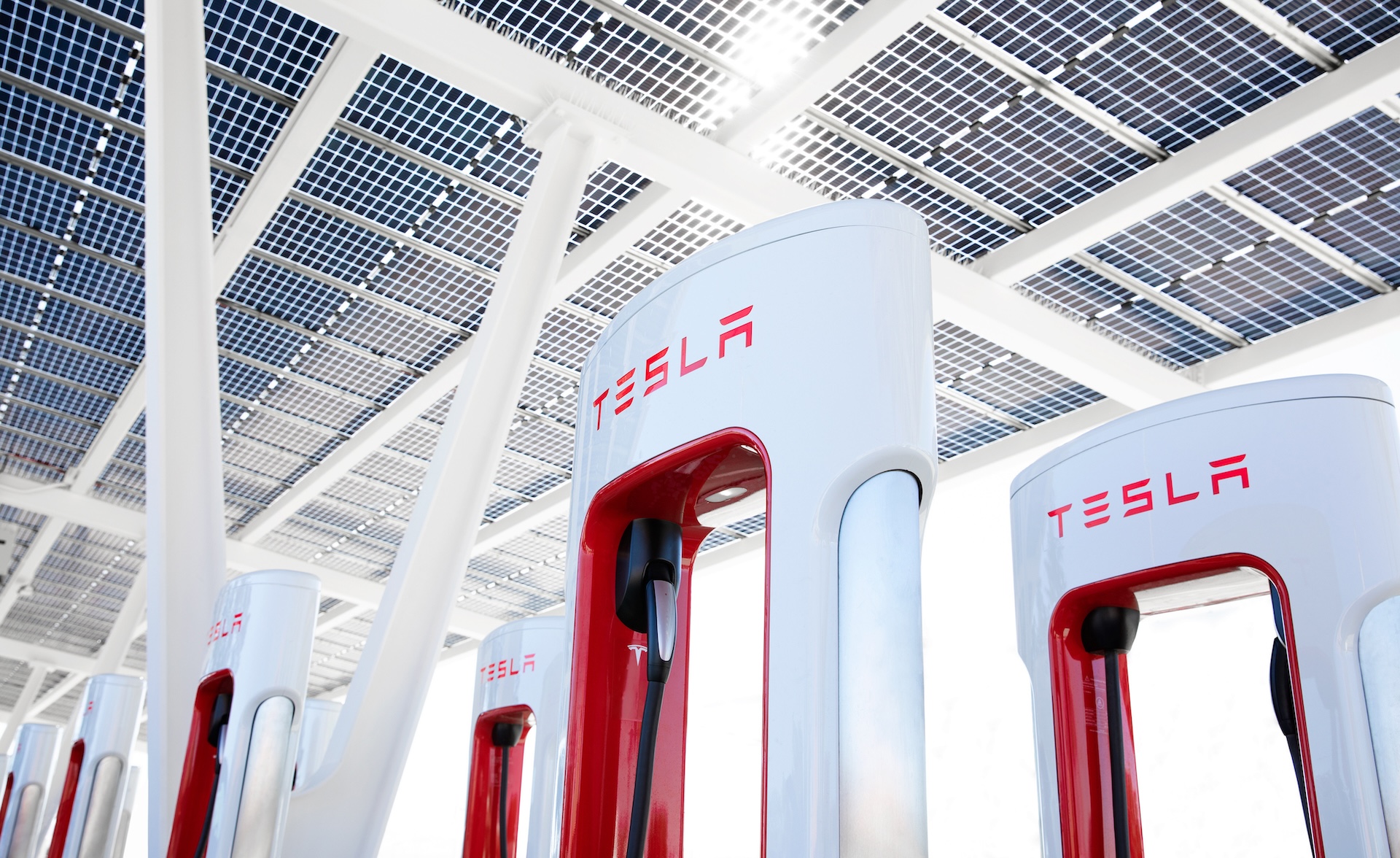
With this station, Tesla aims to offer a direct response to customers in that area who sometimes have to endure long waits to complete a charge
Unless you’ve been living under a rock, you’ve almost certainly heard some comment about the incident that took place just over a week ago at a Supercharger station in the province of Cuenca, as a consequence of the return traffic after the Easter holidays. Dozens of electric vehicle owners, most of them Tesla, were forced to queue for more than an hour to charge their batteries and continue the journey home.
As expected, that incident was seized upon by opponents of the transition to electric mobility, arguing that the electric vehicle is not suitable for long-distance travel. That is absolutely false, provided the right charging infrastructure is in place. Proof of this is the plan Tesla has just unveiled for building what will be the world’s largest Supercharger station, designed to withstand congestion.
According to the American company, this new Supercharger station will be located in Yeehaw Junction, in the state of Florida. All electric vehicle drivers who visit it after its future opening will have at their disposal no less than 200 charging points. An improvement to Tesla’s charging infrastructure in the southeastern United States that will undoubtedly help drastically reduce waiting times for local drivers when recharging.
It will open sooner than you think
The report published by Tesla further reveals that, to speed up the station’s construction, 160 of those 200 charging points will be prefabricated units that come already assembled from the factory. In this way, the station should be operational much sooner, since practically all that needs to be done is connect them to the grid and that’s it.
With these 200 charging points, the future Yeehaw Junction Supercharger station in Florida will surpass in capacity the station previously considered the world’s largest Supercharger station, with 164 charging points, located in Kern County (California), which we already discussed at the time in another post.
News like this should serve to make clear that solutions exist to avoid congestion problems like the one we mentioned at the beginning of this post. It simply requires making the right investment, not only by increasing the number of charging points, but also the power supported.


 Peugeot E-208 GTi: a battery-powered toy that revives the spirit of the 1980s sports cars
 New Lexus ES: luxury grows and goes electric
 First contact with the Dacia Sandero Hybrid 155: power and efficiency from €19,890
Deja un comentario