Golf Volkswagen Compact Historia
This is how Volkswagen, little by little, built one of the most sought-after models on the market, the Golf
 Óscar Sanz
11 April 2024
3 min.
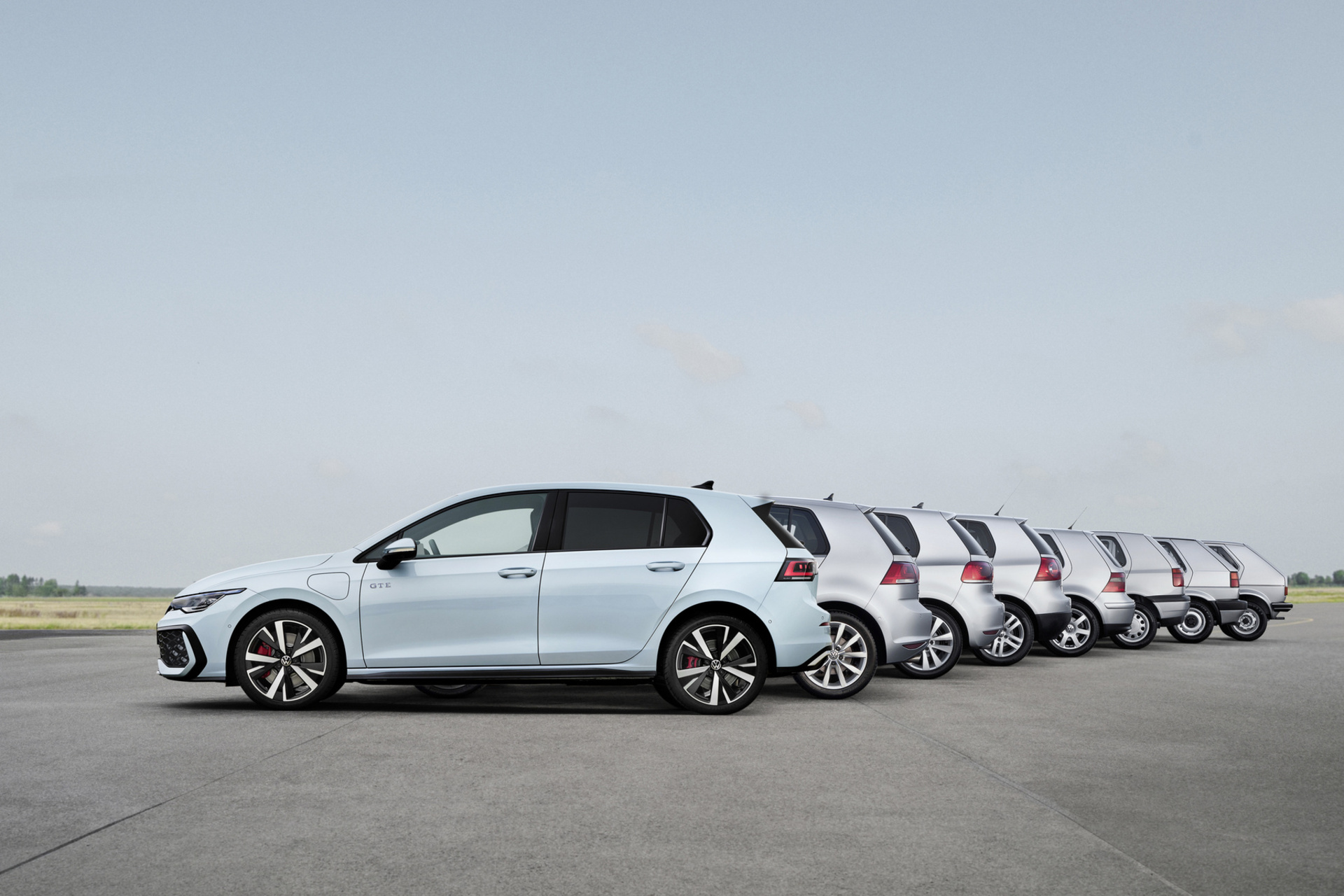
A compact icon like the Volkswagen Golf was conceived to become one of the all-time bestsellers thanks to the continuous improvements it has undergone over 50 years of history
Since its debut in 1974, the Volkswagen Golf has been one of the favourite compact cars on the market, setting trends over the years. The engineers of the German brand have been committed to offering a model capable of taking innovation to new heights, both technologically and functionally. Since its launch, they have managed to sell more than 37 million units of this iconic compact and earned a well-deserved place in the ranking of Europe’s best-selling cars.
50 years ago, on 29 March, the Golf began its journey at the Wolfsburg plant with an average of more than 2,000 units sold daily over the last 50 years. Its design is credited to Giorgio Giugiaro and the Volkswagen Design team, where the famous Golf moved away from the rounded shape of the Beetle in favour of sharper, more modern lines.
The transition from the rear-mounted engine to the front transverse engine marked the beginning of a new era for Volkswagen. The engines were four-cylinder inline, water-cooled configurations equipped with a carburettor fuel system. The first engine has a capacity of 1.1 litres and a power output of 50 CV (equivalent to 37 kilowatts), while the second, with a displacement of 1.5 litres, produces 70 CV (51 kilowatts).
Step-by-step evolution
-
- Golf I (1974-1983): Known as the successor to the Beetle, the Golf I set a new standard in practicality and performance. It introduced the legendary GTI and the Golf Cabriolet.
- Golf II (1983-1991): Marked the introduction of technologies such as the catalytic converter, ABS and all-wheel drive, cementing its status as a milestone in Golf history.
- Golf III (1991-1997): Prioritised safety with the inclusion of front and side airbags, as well as the debut of the six-cylinder engine and the estate version.
- Golf IV (1997-2003): Recognised as a style icon, it introduced advanced features such as ESP and the dual-clutch gearbox (DSG).
-
- Golf V (2003-2008): Innovated with exceptional comfort and superior build quality, along with technologies such as the four-link rear suspension and the 7-speed DSG gearbox.
- Golf VI (2008-2012): Stood out for its high technology and safety, with systems such as Light Assist and Park Assist.
- Golf VII (2012-2019): Reduced weight and consumption, introducing safety advances such as Automatic Post-Collision Braking System and electric mobility with the e-Golf.
- Golf VIII (2019-present): Electrifies the compact class with mild-hybrid and plug-in hybrid powertrains, offering assisted driving and a sharper, more modern design.
Cutting-edge technology
-
- The eighth generation of the Golf marks a new evolutionary stage with a state-of-the-art infotainment system and an aerodynamic design.
- Introduces plug-in hybrid powertrains with an electric range of more than 100 kilometres, paving the way towards sustainable mobility.
- The inclusion of voice control with AI-based ChatGPT provides an advanced and connected driving experience.
Over five decades, the Volkswagen Golf has proven to be much more than a car. It is an icon of German engineering, a symbol of constant innovation and an undisputed leader in the European market. With its eighth generation and new technologies, the Golf is ready to shape one of the most competitive markets in the compact segment.
Volkswagen Golf image gallery
Technical specifications of this car


 Peugeot E-208 GTi: a battery-powered toy that revives the spirit of the 1980s sports cars
 New Lexus ES: luxury grows and goes electric
 First contact with the Dacia Sandero Hybrid 155: power and efficiency from €19,890
Deja un comentario