This is the world's first 'art car' painted by robots
 Mónica Redondo @MonicaRedondoD
12 May 2022
3 min.
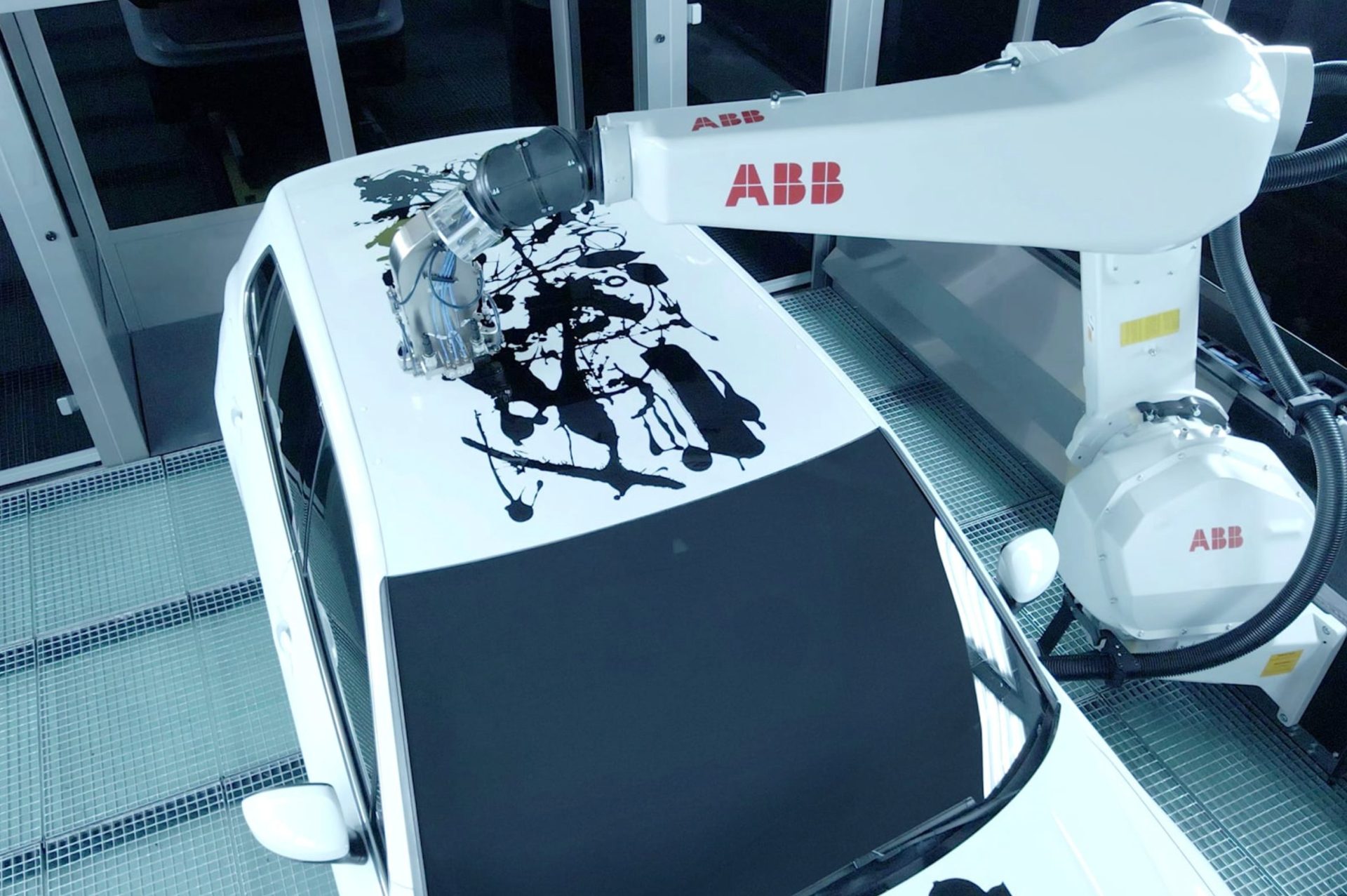
Regular robots are programmed to produce a finish; this robot, on the other hand, has been able to evaluate a work of art and recreate it.
The world’s first ‘art car’ painted by robots represents a major step forward for the future of personalisation in the automotive sector. ABB Electronics has just unveiled the world’s first art car painted by a robot, and it looks truly impressive. The electronics and robotics company has partnered with eight-year-old Indian modern artist Advait Kolarkar and the Dubai-based digital design collective Illusorr to transform a humble Volkswagen Tiguan into the world’s first robotically painted art car.
How is this different from a conventional paint robot? Regular robots are programmed to produce a finish; this robot, on the other hand, has been able to evaluate a work of art and recreate it. ABB’s award-winning PixelPaint technology has combined Advait’s monochrome design and Illusorr’s three-colour geometric patterns into a highly complex work of art that captures the imagination like few other art cars we have seen.
Automotive paint technology is constantly improving, but this new approach could change the game for good. The ABB IRB 5500 paint robots completed the intricate artwork in under 30 minutes thanks to the 1,000 paint nozzles in the printer head. This new technology is pioneering in the field of car personalisation in the aftermarket and opens the door for artists who wish to enter the customisation industry.
How the vehicle-customising robot works
Ian Callum, head of design for the Aston Martin Vanquish, has said that “people become emotionally attached to them, and the importance of personalisation is growing ever stronger. In fact, I am working with clients who really want the entire car to be designed to measure. So this paint offering, with all kinds of new levels of individual design for a car, is incredible”.
ABB has also stated that this process is far more environmentally friendly than traditional painting methods, as it eliminates the need for masking materials and additional ventilation, and also saves water and electricity. Thanks to millimetre-level precision, 100% of the paint is used with little or no waste. According to ABB, this technique will halve production time and reduce costs by more than half.
Sami Atiya, President of ABB’s Robotics & Discrete Automation, has noted that “ABB’s PixelPaint technology is more than an evolution: it is a revolution. It is a brilliant example of how robotic automation and our RobotStudio software can not only pave the way for more sustainable manufacturing, but also can flawlessly replicate delicate works of art that celebrate originality and the beauty of the human spirit”.


 Peugeot E-208 GTi: a battery-powered toy that revives the spirit of the 1980s sports cars
 New Lexus ES: luxury grows and goes electric
 First contact with the Dacia Sandero Hybrid 155: power and efficiency from €19,890
Deja un comentario