Top 5 affordable compact cars for 2026: which one should you choose?
 Dani Montesinos
16 March 2026
9 min.
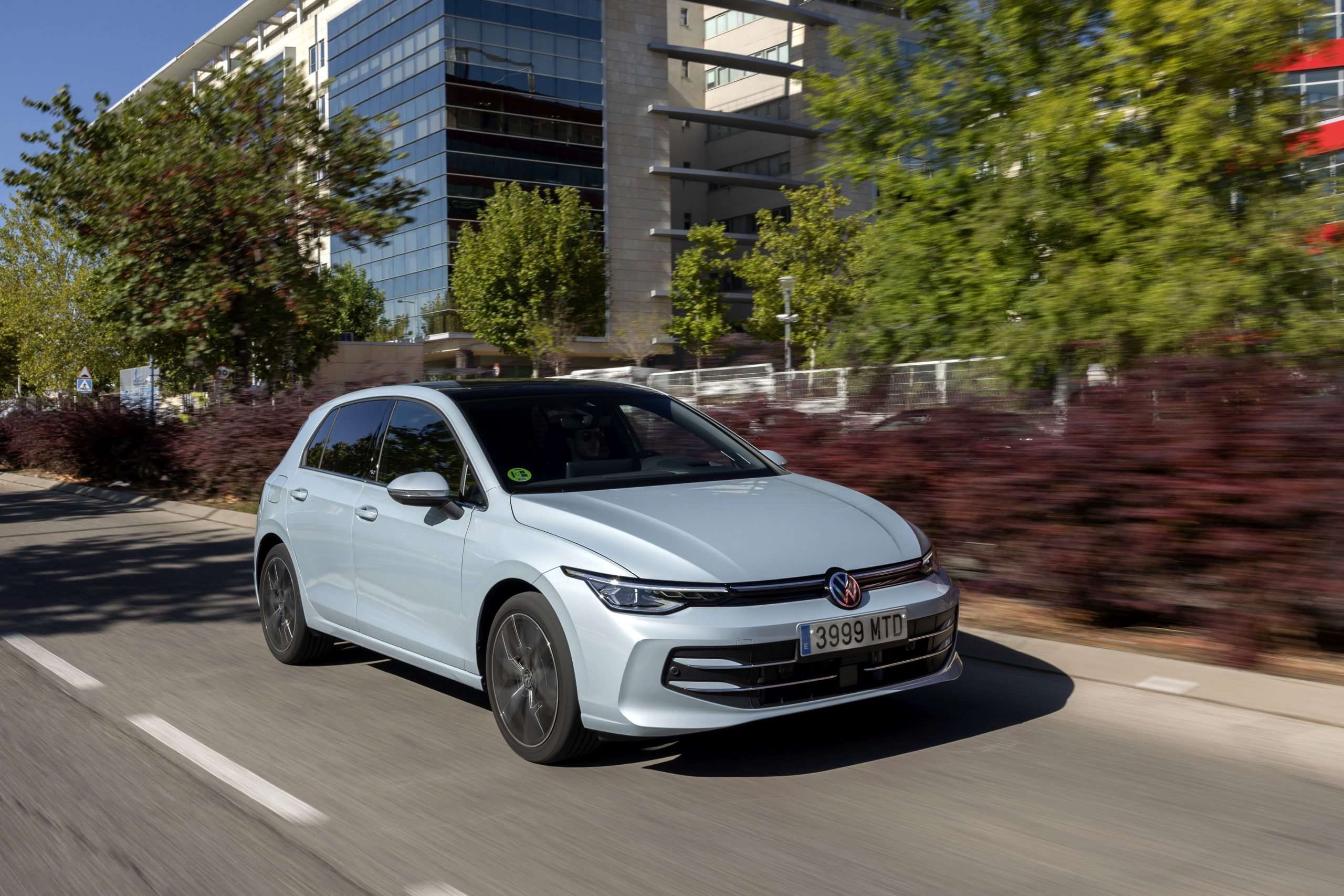
We propose five compact cars that, in addition to being a safe bet in terms of quality, also offer a competitive price.
The affordable compact car market in Spain in 2026 reflects a shift in which efficiency and running costs weigh as much as interior space. The offer combines optimised combustion engines, efficient hybrids and variants with better connectivity features; for this reason, the decision comes down to prioritising real-world use over laboratory figures. The main question for many buyers is the difference between homologated consumption and real consumption in mixed driving. Another criterion often considered is the total cost of ownership: fuel consumption, maintenance and depreciation are decisive. Choosing well means putting range, cost per kilometre and useful space for everyday life into perspective.
This buying guide is for…
This guide is aimed at drivers looking for a compact car with contained running costs: people who make urban and peri-urban journeys, small families who need a reasonable boot, and professionals who prioritise economical use. It is not the ideal option for those who need a large towing capacity, frequently carry five adults with extreme volumetric loads, or want sporty performance. In Spain it is especially useful for those who combine daily commutes with weekend trips out of the city; it offers a balance between moderate consumption, ease of parking and moderate purchase costs.
Common options within the segment
Within the affordable compact segment there are several approaches: basic models with a small-displacement combustion engine and low purchase cost; hybrid versions that reduce consumption in urban use; and variants with better technological equipment that raise the price but make everyday driving easier. Common trade-offs include: less dynamism in exchange for lower consumption, boots that prioritise practical volumes over regular shapes, and a jump in price when opting for trims with driver-assistance systems. Charging and servicing planning also tends to differ depending on the engine chosen.
Key criteria for choosing well
Realistic versus homologated range: the WLTP figure serves as a reference, but in urban environments or with intensive air conditioning, real consumption can rise noticeably. It is advisable to assess average consumption in independent tests and to calculate the cost per kilometre in typical situations.
Power and charging speed: for combustion or hybrid compacts, moderate power is usually sufficient; if frequent fast stretches are expected, a version with better response is a sensible choice. For compact electric cars, charging speed and the available infrastructure determine usability.
Stability and comfort on the road: a balanced chassis and a well-calibrated suspension offer safety on motorways without penalising urban comfort. Behaviour under load (occupants and luggage) should be checked in technical sheets and real-world tests.
Genuinely useful technology: minimal connectivity, OTA updates and safety assistants that improve daily driving have more practical impact than purely cosmetic equipment levels.
Total purchase and running cost: beyond the purchase price, considering consumption, servicing, insurance and possible loss of value over 3–5 years allows options to be compared objectively.
It depends on how you drive
If you mainly drive in the city and make few long trips, a compact with good urban-cycle behaviour or a light hybrid version may be more efficient than a larger-displacement engine. Driving habits — frequent acceleration, heavy loads or motorway journeys — influence real consumption and the choice of engine.
Climate in Spain also matters: in cold areas or those with hot summers, intensive use of air conditioning increases consumption; buyers in those regions should prioritise efficient thermal systems or hybrids with battery thermal management in electric cars.
For those who combine city driving and long trips, boot capacity and ergonomics on long journeys become more important; by contrast, users who only seek urban mobility will value smaller external dimensions and low maintenance costs.
Real price: what you should know
The difference between financed and cash price can be significant: financing offers usually include interest and clauses that raise the final cost. The “from” price indicates the most basic version and does not include options or common equipment that can increase the bill.
Equipment has a direct impact: safety packs, paint or alloy wheels raise the price and, in some cases, improve resale value; however, adding extras without assessing their real usefulness unnecessarily increases the cost of the purchase. The final price may vary due to taxes, administrative fees and commercial discounts that change depending on the dealership and timing.
Reference models on the market
Hyundai Kona (from €24,990*)
A versatile approach offering efficiency-oriented engine options and a compact format with good use of interior space. It suits drivers looking for a balance between moderate consumption and up-to-date technological equipment.
The best
Good balance between equipment and price in mid-range versions, with practical solutions for daily use and comfort on long journeys.
The less good
Boot capacity in some variants is average for the segment; in higher-equipment configurations the price rises above more spartan alternatives.
Dacia Sandero (from €11,490*)
A maximum-value-for-money approach: mechanical simplicity and very contained purchase and running costs. It is suitable for tight budgets and for those who prioritise economy over technological sophistication.
The best
Very low purchase price and reduced maintenance costs, which improves total cost of ownership for users with basic needs.
The less good
Trim and refinement below more expensive alternatives; safety and comfort equipment limited in entry-level versions.
Toyota Corolla (from €25,990*)
An efficient hybrid approach aimed at reducing consumption in urban and mixed driving. It suits drivers who value low real-world consumption and powertrain reliability.
The best
Reduced urban consumption thanks to the hybrid strategy, and a well-established service network and reliability in Spain.
The less good
Dynamism can be restrained compared with alternatives oriented to performance; the boot in some trims is competitive but not exceptional.
Renault Clio (from €18,200*)
A balanced offer with efficient engines and a well-finished interior for the segment. It works well for drivers seeking agile handling and moderate consumption in mixed driving.
The best
A compromise between a contained exterior size and usable interior space, with engines that favour moderate consumption.
The less good
When moving up a trim level the price can rise quickly; some equipment options are recommended but increase the final cost.
Volkswagen Golf (from €29,900*)
A more premium approach within the compact segment: it offers greater comfort, ride quality and technology in exchange for a higher starting price. It suits drivers who value dynamism and finish.
The best
Build quality and a refined driving experience, with competitive driver-assistance systems and connectivity.
The less good
Entry price above the segment average and slightly higher maintenance costs compared with lower-priced models.
Purchase aid
The Plan Auto+ 2026 replaces the previous MOVES programmes and establishes a new system of direct aid for buying electrified vehicles in Spain. These aids seek to encourage fleet renewal and prioritise vehicles with lower environmental impact. Coordination between administrations and the priority criteria affect the intensity of the incentive depending on the vehicle.
Main amounts of the Plan Auto+ 2026
- Direct aid of up to €4,500 for electric passenger cars.
- Up to €5,000 for light vans in category N1.
- Retroactive effect from 1 January 2026.
- Approximate budget allocation of €400 million.
Who can benefit and priority criteria
Beneficiaries: private individuals, self-employed workers and companies. The EEE criterion (Electric, Economic and European) is applied to prioritise pure battery electric vehicles (BEV) over plug-in hybrids (PHEV). Vehicles priced below €35,000 receive higher aid; those between €35,000 and €45,000 access reduced aid. A maximum incentive is granted if the final assembly or the batteries are of European Union origin.
Additional requirements and tax advantages
The Plan requires a mandatory minimum discount of €1,000 from the dealership. In addition, a 15% deduction on personal income tax (IRPF) up to a maximum of €3,000 is contemplated, and the tax validity of these advantages is set until 31 December 2026.
Management and possible regional aid
Management is coordinated by the Ministry of Industry together with the Autonomous Communities. Additional regional programmes may exist that complement state aid; as an example, the Plan Cambia 360 in the Community of Madrid is cited. At the time of writing it is not officially confirmed whether all regional aids are compatible with the Plan Auto+ 2026.
Common buying mistakes
Relying only on the “from” price without assessing necessary equipment: many buyers are surprised by the final price when adding basic options that improve safety or comfort.
Underestimating real running costs: calculating with WLTP figures without adjusting for driving style, topography or climate can lead to wrong expectations about consumption and range.
Ignoring the service network and parts availability: a cheap model can turn out expensive if repairs or maintenance are costly or slow.
Choosing an engine out of trend rather than need: opting for the most powerful or most expensive version without justifying actual use increases the total cost without proportional benefit.
With the information available, it is already possible to set priorities in context: running economy, practical space and total cost over the medium term. The logical next step is to compare these criteria with up-to-date analyses and technical sheets to decide which model best fits the user’s real needs.


 Peugeot E-208 GTi: a battery-powered toy that revives the spirit of the 1980s sports cars
 New Lexus ES: luxury grows and goes electric
 First contact with the Dacia Sandero Hybrid 155: power and efficiency from €19,890
Deja un comentario