Which urban SUV should I buy in 2026 if I want petrol and an ECO label?
 Dani Montesinos
16 March 2026
7 min.
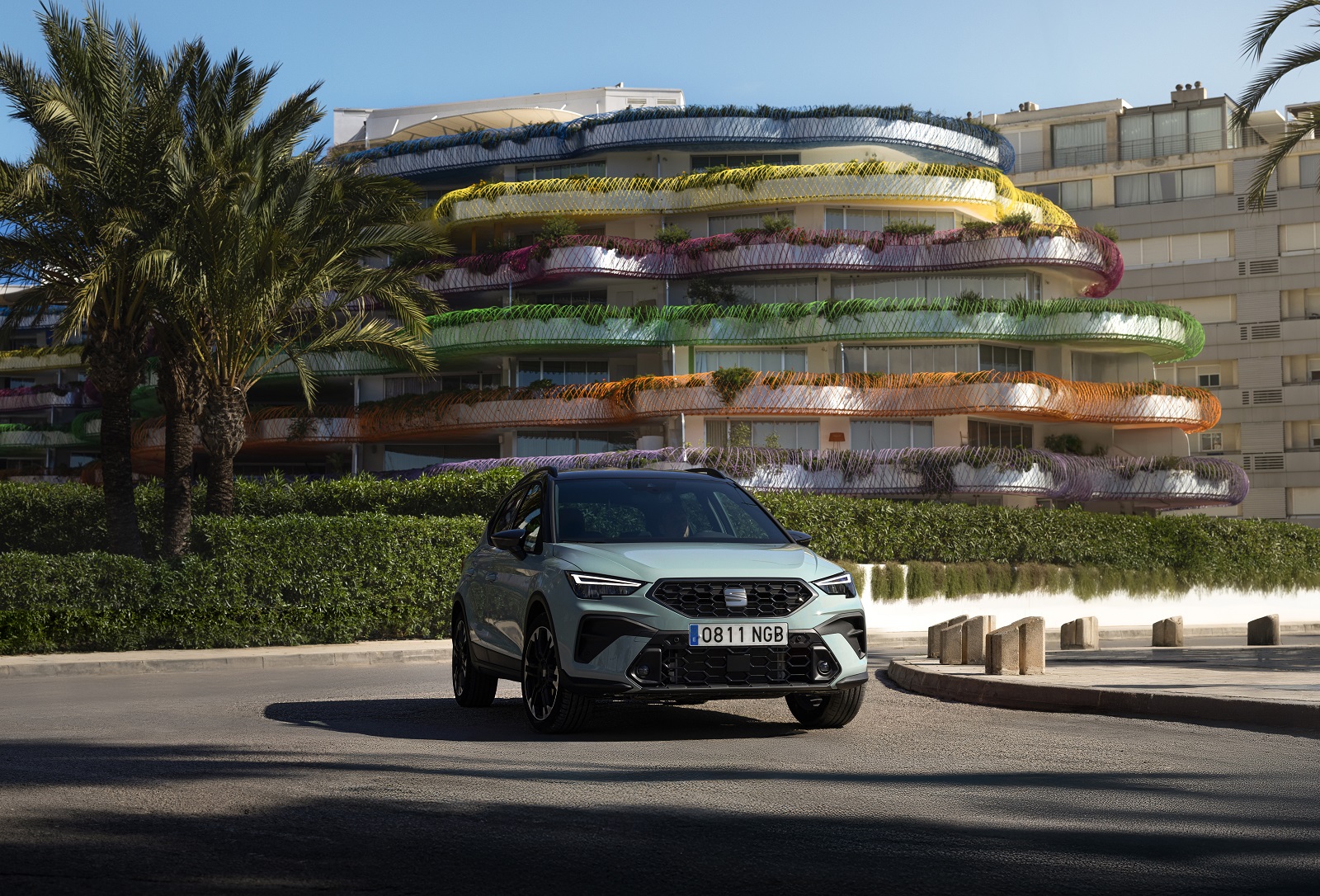
Getting around a big city today often requires an ECO label, and here are five SUVs that have one and are perfect for urban use.
The 2026 market shows a landscape in which urban SUVs with petrol engines and some light degree of electrification are a practical option for those seeking mobility in the city without giving up the flexibility of a combustion engine. The ECO label makes access to low-emission zones easier and reduces restrictions on high-pollution days, but it raises questions about real-world consumption, total cost and the usefulness of the light hybrid system. Two points to keep in mind: mild-hybrids offer advantages in urban traffic, and the ECO label does not guarantee identical performance or savings across all models. Choosing well requires understanding range, regenerative recharging and WLTP homologation versus everyday use.
This buying guide is for…
This guide is aimed at urban and peri-urban drivers who prioritise access to ZBE (low-emission zones) and value operating economy over extreme performance. It makes sense for those who make mostly short daily journeys, occasionally travel by road, and want to avoid access restrictions and fines. It is not the ideal choice for users who regularly cover long daily distances at high speed or who need intense traction on difficult terrain; for those profiles a plug-in hybrid or a larger-displacement petrol-only car may be more suitable.
Common options within the segment
Within the urban segment there are solutions focused on fuel savings through 48 V micro-hybridisation, full hybrids with a minimal battery, and T-GDi systems with optimised stop-start. The most frequent trade-offs are added weight from light electrification, a moderate improvement in urban consumption, the need for planning to avoid equipment that increases weight, and price variations depending on the level of electrification. Manufacturers also offer versions with less equipment to keep the entry price competitive.
Key criteria for choosing well
Realistic range versus homologated range: the ECO label is based on technologies that reduce city consumption; even so, cross-check WLTP data with real-use tests, especially with air conditioning and load. Power and charging speed: in mild-hybrids there is no external charging, so assess the recovery capacity and the engine’s response when overtaking. Stability and comfort on the road: many urban cars sacrifice insulation to save weight; test them on the motorway at sustained speed. Genuinely useful technology: intuitive screens, traffic assistants and regenerative braking systems that really improve consumption. Total cost of purchase and use: factor in financing, maintenance and real consumption plus depreciation; compact SUVs tend to hold their value better on the Spanish market.
It depends on how you drive
If you often make short, frequent journeys, micro-hybridisation offers tangible advantages in consumption and smoothness of use. For drivers who make mixed routes with predominantly interurban journeys, a larger-displacement engine or a full hybrid is preferable. Climate also matters: in cold areas real efficiency drops and the battery provides less assistance. In the city versus long trips, comfort, habitability and boot space may tip the balance more than the ECO label alone.
Real price: what you should know
The “from” price is the manufacturer’s contractual reference without optional equipment or discounts. The difference between the financed and the cash price can be significant due to interest and linked aid; compare the APR and conditions. Equipment greatly alters the final cost: safety packs, upholstery and alloy wheels quickly push up the RRP. Interpret the “from” price as a starting point subject to variations from taxes, registration and accessories. In practice, budgeting an additional 8–12% on top of the “from” price helps avoid surprises.
Reference models on the market
SEAT Arona (from €20,350*)
A practical compact urban SUV approach with a 1.0 TSI micro-hybrid engine; aimed at users who prioritise interior space and low running costs in the city, with an ECO label that facilitates access to ZBE.
Best points
A balance between urban size and interior space, with low real consumption in city traffic thanks to the mild-hybrid system.
Areas for improvement
Engine response under hard acceleration and insulation could be better on trips at sustained speed.
Renault Captur (from €22,450*)
Designed as a versatile urban SUV with light and full hybrid options; it suits drivers who alternate city driving with weekend getaways and want comfort on board.
Best points
Comfort and ergonomics, together with a range of electrified engines that keep the ECO label on specific variants.
Areas for improvement
The cost of some well-equipped versions rises quickly compared with the entry price.
Toyota Yaris Cross (from €23,150*)
A conventional hybrid approach with good urban efficiency; recommended for those who prioritise low consumption and reliability in urban environments with environmental restrictions.
Best points
Real-world efficiency in the city and well-integrated battery management that favours the ECO label.
Areas for improvement
Rear seats are somewhat tight, and the initial cost is higher than some micro-hybrid rivals.
Kia Stonic (from €18,900*)
The most affordable option in the group, with a petrol engine and light electric assistance; aimed at limited budgets that need an ECO label without major compromises.
Best points
A competitive entry price and a basic safety package suitable for urban use.
Areas for improvement
Interior materials and insulation could be better compared with more expensive rivals.
Volkswagen T-Cross (from €21,200*)
A sober, efficient approach with a TSI engine and mild-hybrid variants; designed for users who value perceived quality and stable behaviour on the road.
Best points
Dynamic behaviour and chassis tuning that provide confidence on fast roads.
Areas for improvement
Equipment options that raise the final price and reduce the competitiveness of the “from” price.
Purchase grants
Purchase grants in 2026: Plan Auto+ and tax benefits. The 2026 Plan Auto+ replaces previous programmes and establishes a scheme of direct aid for electrified vehicles in Spain, with an emphasis on BEVs and on products assembled in Europe.
Main amounts under the 2026 Plan Auto+
– Direct aid of up to €4,500 for electric passenger cars.
– Up to €5,000 for light vans in category N1.
– Retroactive effect from 1 January 2026.
– Approximate budget allocation of €400 million.
Who can benefit and priority criteria
Beneficiaries: private individuals, self-employed workers and companies. The EEE criterion (Electric, Economic and European) applies, favouring pure electric vehicles (BEVs) over plug-in hybrids (PHEVs). Vehicles priced below €35,000 receive greater aid; those between €35,000 and €45,000 qualify for reduced amounts. There is an additional incentive when final assembly or the batteries come from the European Union.
Additional requirements and tax advantages
A mandatory minimum discount of €1,000 from the dealership is required. In addition, a 15% deduction in income tax (IRPF) is available, up to a maximum of €3,000. These tax measures are in force until 31 December 2026.
Management and possible regional aid
Management is coordinated by the Ministry of Industry together with the Autonomous Communities; some regions maintain complementary programmes. For example, the Cambia 360 Plan in the Community of Madrid may offer additional support, although at the time of writing it is not confirmed whether it is fully compatible with the 2026 Plan Auto+.
Common buying mistakes
Buying based solely on the “from” price without budgeting for additional equipment is common. Another frequent mistake is relying on WLTP figures without checking real consumption on usual routes. Not assessing the dealership’s ability to apply the mandatory minimum discount, and being unaware of compatibility between state and regional aid, are errors that make the purchase more expensive. Finally, choosing a model for its looks without testing it under real conditions of use can lead to disappointment in ergonomics and comfort.
Having considered the 2026 regulatory context and the technical criteria, the logical next step for anyone who already understands the variables is to check up-to-date prices and test the models in real conditions. Comparing technical data sheets, running costs and concrete dealership offers will allow you to make an informed decision based on your intended real-world use.


 Kia offers an electric range of 10 models, 50 versions and 400 possible combinations
 The seven finalists for the 2027 European Car of the Year (COTY) are exclusively electric
 Peugeot E-208 GTi: a battery-powered toy that revives the spirit of the 1980s sports cars
Deja un comentario