Top 5 mid-size SUVs with ECO label for 2026
 Dani Montesinos
26 February 2026
9 min.
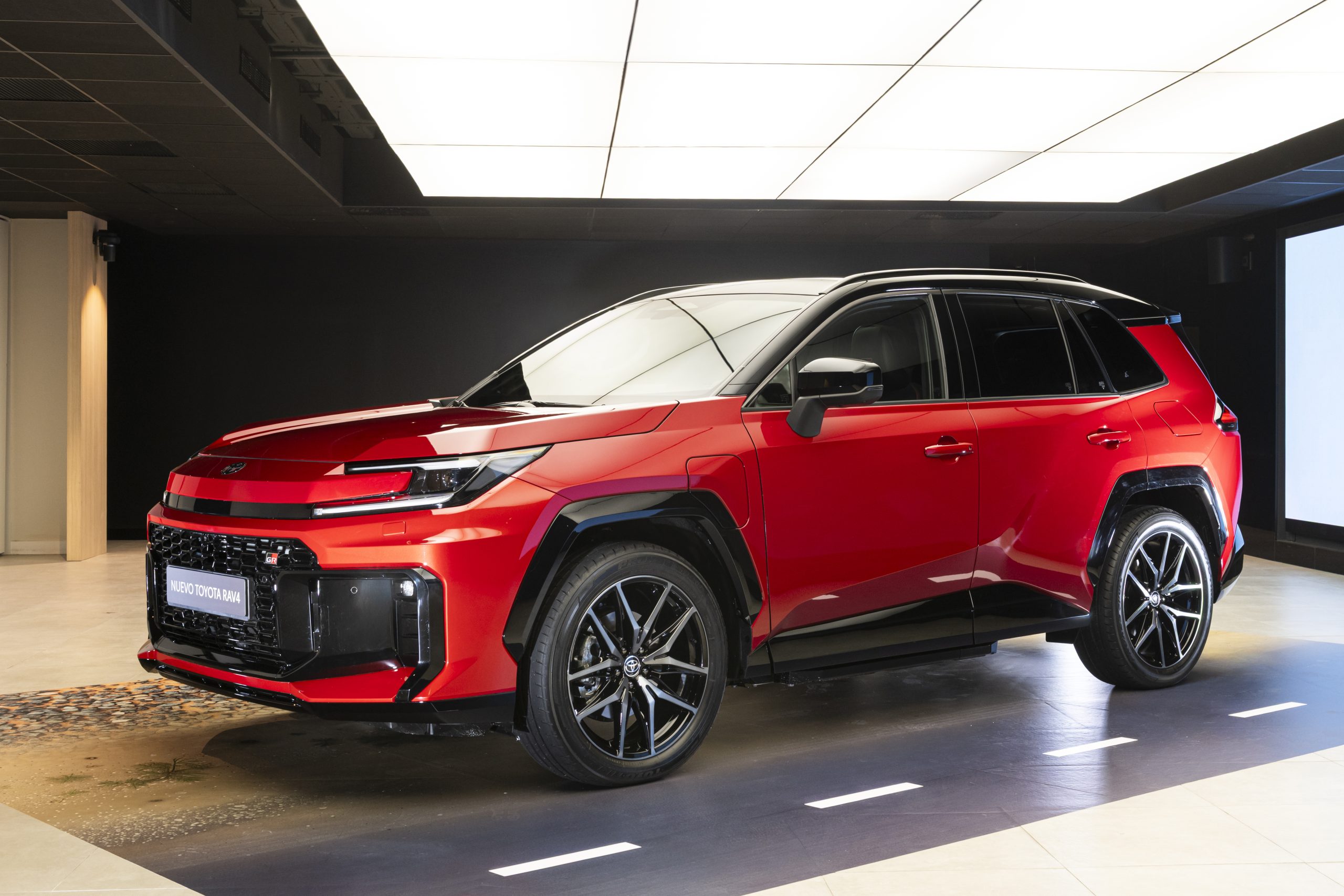
SUVs are all the rage, and if you’re thinking about buying one, here’s a list of five interesting models with an ECO label.
The market for mid-size SUVs with an ECO label in 2026 reflects a broad and diversified offer: from full hybrids to lightweight variants with low-emission systems. In an environment where emissions regulations and taxation shape purchasing decisions, these models aim to combine efficiency, space and contained running costs. Here we bring together five mid-size SUVs that stand out for their technical approach, efficiency and market positioning, highlighting differences in use and focus—city, long journeys or mixed use—so the reader can understand the alternatives without losing sight of equipment and operating economy.
Who is this ranking for?
This ranking is based on market data, official specifications and published road tests. It is aimed at drivers who value reducing local emissions and daily spending without giving up the space and versatility of a mid-size SUV.
If you drive a lot and are looking for efficiency, if you prioritise spending less every day without moving up in size, or if you want an SUV with an ECO label to make parking and urban access easier, this list helps you compare different approaches: full hybrid, mild hybrid and lightweight plug-in options.
What details have we analysed?
We have considered market positioning, official technical specifications (combined power and propulsion architecture), consumption and homologated range where applicable, dimensions and the real-world usefulness expected for family or work, and price-to-technical-approach ratio to understand what each model offers the average user.
Ranking of mid-size SUVs with an ECO label for 2026
Hyundai Tucson Hybrid (from €33,490*)
Indicative price without applying public aid or the brand’s commercial discounts.
Why it’s here: The Tucson Hybrid combines an HEV system with a focus on efficiency and comfort, offering roomy interior space and advanced driver-assistance technology. Its approach is aimed at reducing consumption in urban and mixed use, with a powertrain that prioritises energy recovery.
Ideal for: Drivers who alternate between city and motorway and seek a balance between consumption and family space.
Pros:
- Full hybrid system that reduces consumption in urban cycle.
- Generous interior space and a clear focus on comfort.
- Up-to-date safety equipment and driving aids.
Cons:
- Its efficiency depends on urban driving; on the motorway the advantage shrinks.
- Higher upfront cost than mild-hybrid alternatives.
Kia Sportage Hybrid (from €31,900*)
Indicative price without applying public aid or the brand’s commercial discounts.
Why it’s here: The Sportage Hybrid offers an alternative with a weight distribution and suspension tuned for dynamic engagement, while keeping consumption low in daily use. Its technical approach is close to the Tucson’s thanks to a shared platform, with a focus on comfort and running costs.
Ideal for: Users looking for a balanced SUV, with low consumption and regular family use.
Pros:
- Low consumption in mixed cycle thanks to the HEV system.
- Good balance between space and entry price.
- Competitive connectivity and equipment in its segment.
Cons:
- Limited engine options for those seeking high performance.
- Base price can climb with equipment.
Toyota RAV4 Hybrid (from €36,200*)
Indicative price without applying public aid or the brand’s commercial discounts.
Why it’s here: The RAV4 Hybrid is one of the segment’s historical benchmarks thanks to its full hybrid approach and proven durability. It maintains efficient consumption in urban settings and on long journeys, and its technical offer rests on a long experience in Toyota hybridisation.
Ideal for: Buyers who prioritise reliability and proven efficiency in mixed and family use.
Pros:
- Platform and hybrid system with a consolidated track record.
- Good efficiency in urban traffic and on the motorway.
- Wide catalogue of safety assistants.
Cons:
- Design and equipment that can feel conservative compared with more recent rivals.
- Weight slightly penalises agility on twisty roads.
Ford Kuga PHEV (from €35,500*)
Indicative price without applying public aid or the brand’s commercial discounts.
Why it’s here: The plug-in version of the Kuga offers an ECO label with the ability to run in electric mode for short trips and reduce consumption on mixed routes. It is a middle ground between a full hybrid and a pure electric car, giving the user flexibility.
Ideal for: Drivers who combine daily electric commutes with occasional long trips without depending exclusively on charging.
Pros:
- Electric mode for urban trips and lower cumulative consumption.
- Comfort-oriented dynamic behaviour.
- Full connectivity options and safety aids.
Cons:
- Extra weight from the batteries can affect consumption outside electric mode.
- Higher starting price than equivalent HEV versions.
Peugeot 3008 Hybrid (from €34,900*)
Indicative price without applying public aid or the brand’s commercial discounts.
Why it’s here: The hybrid 3008 brings a design approach and interior quality together with electric performance on short trips; its technical offer includes full-hybrid and plug-in variants, with attention to comfort and urban efficiency.
Ideal for: Users who want a well-finished interior and the occasional option of driving electric.
Pros:
- Perceived cabin quality and ergonomics.
- Hybrid options for different usage profiles.
- Good safety equipment provision.
Cons:
- Plug-in versions raise the entry price.
- Boot space varies depending on the battery variant.
The prices shown in this ranking are indicative and do not apply public aid or the brand’s commercial discounts.
Technical comparison
| Model | Range | Power | Consumption | Top speed | Price (€*) |
|---|---|---|---|---|---|
| Hyundai Tucson Hybrid | ND | ~230 CV | ND | ND | 33,490 |
| Kia Sportage Hybrid | ND | ~230 CV | ND | ND | 31,900 |
| Toyota RAV4 Hybrid | ND | ~218 CV | ND | ND | 36,200 |
| Ford Kuga PHEV | ND | ~225 CV | ND | ND | 35,500 |
| Peugeot 3008 Hybrid | ND | ~225 CV | ND | ND | 34,900 |
These figures are official and taken from the brands’ official websites.
Purchase aid in 2026: Plan Auto+ and tax benefits
The Plan Auto+ 2026 replaces previous programmes and establishes a new system of direct aid for buying electrified vehicles in Spain. It seeks to encourage fleet renewal and prioritises models with a higher electric component or European assembly.
Main amounts of Plan Auto+ 2026
– Direct aid of up to €4,500 for electric passenger cars.
– Up to €5,000 for light vans in category N1.
– Retroactive effect from 1 January 2026.
– Approximate budget allocation of €400 million.
Who can benefit and priority criteria
Beneficiaries: private individuals, self-employed workers and companies. The EEE criterion (Electric, Economical and European) applies, with greater incentives for pure electric vehicles compared with plug-in hybrids. Vehicles priced below €35,000 receive higher aid; those priced between €35,000 and €45,000 qualify for reduced aid. Final assembly or batteries of European Union origin are prioritised.
Additional requirements and tax advantages
The Plan requires a mandatory minimum discount of €1,000 from the dealer. A 15% deduction on personal income tax (IRPF) is established, up to a maximum of €3,000. These tax benefits remain valid until 31 December 2026.
Management and possible regional aid
Management is coordinated by the Ministry of Industry together with the Autonomous Communities, which may have complementary programmes. For example, the Plan Cambia 360 in the Community of Madrid is a leading regional scheme. At the time of writing it is not confirmed whether all regional aid is compatible with Plan Auto+ 2026.
FAQ · The 5 questions everyone asks
What exactly does the ECO label mean?
The ECO label identifies vehicles with low-emission technologies, such as full hybrids, plug-in hybrids with a certain electric range and mild-hybrid models. It grants access to urban zones with restrictions and can reduce local taxes.
Is an HEV better than a PHEV for mostly urban use?
If you don’t have a regular charging routine, an HEV is usually more practical because it recovers energy without plugging in. A PHEV offers advantages if you can charge frequently and make use of its electric range on your daily trips.
How does the ECO label affect maintenance?
Hybrids generally have maintenance similar to conventional cars, with occasional changes for batteries and electrical systems; in many cases brake wear is lower thanks to regenerative braking, but servicing the hybrid system requires certified workshops.
What should I look at besides the ECO label when choosing an SUV?
Check the real range on your routes, safety equipment, usable boot space and total cost of use (fuel, servicing and insurance). The label helps, but profitability depends on your actual usage pattern.
Do Plan Auto+ aid apply to all models with an ECO label?
The Plan prioritises pure electric vehicles and sets tiers according to price and technology; some full hybrids receive reduced aid or specific conditions, depending on their classification and final price.
Expert’s conclusion
This ranking shows that in 2026 the ECO label is no longer exclusive to a single technology: full hybrids, plug-in hybrids and mild hybrids coexist. For the buyer, this means more options to adjust spending and emissions to their routine. Practical comparison is key: some models aim to maximise urban efficiency, others offer occasional electric flexibility without changing the driving experience.
If you want to make your money go further, look first at the real entry price and what comes as standard; if you prefer to play it safe, consider models with a strong sales record and solid after-sales service; and if your use is mainly urban, prioritise real electric capability or efficiency in the urban cycle. If a model is in high demand, it is usually also easier to sell later. And if you cover many kilometres, energy cost and efficiency matter more than the power figure. If you won’t charge often, don’t buy from the brochure: buy for your routine.


 Peugeot E-208 GTi: a battery-powered toy that revives the spirit of the 1980s sports cars
 New Lexus ES: luxury grows and goes electric
 First contact with the Dacia Sandero Hybrid 155: power and efficiency from €19,890
Deja un comentario