Top 6 compact cars for families on a tight budget in 2026
 Dani Montesinos
13 March 2026
8 min.
If your family has grown or is about to, and compacts are your thing, we propose six models to consider without your wallet suffering too much
The compact family car market in 2026 remains a sensible option for those seeking a balance between space, efficiency and total cost of ownership. In a context of rising prices and greater attention to energy efficiency, choosing a compact requires assessing real-world urban range, boot volume and homologated consumption versus practicality. Two or three simple criteria help you set priorities: space for child seats and luggage, estimated running costs and ease of maintenance. These references offer a clear map for comparing proposals from different manufacturers without losing sight of the family budget.
This buying guide is for…
This guide is aimed at small families or couples with two children who need a compact car: rear seats suitable for ISOFIX child seats, a boot capable of taking the pushchair, and occasional motorway trips. It also suits drivers who prioritise contained running costs and moderate depreciation.
It is not the best choice for those seeking maximum interior space like an MPV or a large SUV, nor for users who regularly need all-wheel drive or significant towing capacity. In Spain, mixed city/motorway use and urban garaging steer the choice towards compact cars with good visibility and low consumption.
Common options within the segment
In 2026 the compact segment includes proposals with efficient combustion engines, light hybrid options and conventional hybrid models; full electrification is still a minority in affordable compacts. Common approaches combine weight savings and reduced friction to improve consumption, or rely on hybridisation to lower emissions in urban driving.
The recurring trade-offs are: sacrificing some sound insulation to reduce weight, accepting a less voluminous body to improve aerodynamics, or setting the lowest base price at the cost of optional safety equipment. Planning for spare parts and real consumption is key to avoid surprises in total cost.
Key criteria for choosing well
Real versus homologated range: the WLTP reference is useful, but it is worth estimating city consumption with air conditioning and real loads. In town, consumption can be 15–30% higher than homologated values depending on use.
Power and charging speed: in conventional compacts the priority is low-rev torque and responsiveness when overtaking. If you opt for electrified versions, the ability to recover energy under braking and the charger power determine comfort on intercity journeys.
Stability and comfort on the road: a compact designed for families must remain comfortable on medium-length trips, with suspension that softens potholes without compromising cornering control. Steering and weight distribution influence active safety.
Truly useful technology: compatibility with mobile platforms, driver assistance systems and passive safety features should be considered according to real use, not for their marketing appeal.
Total cost of purchase and use: include maintenance, insurance, consumption and loss of value. A low initial price can translate into higher annual costs if consumption or reliability are worse.
It depends on how you are
Metropolitan drivers will value urban consumption and small external dimensions for parking; those who cover many kilometres on the motorway will prioritise stability and performance at sustained speeds. Climate matters: in cold areas, batteries and electrical systems lose efficiency, while in hot climates air conditioning raises real consumption.
If you often carry bulky loads or sports equipment, boot volume and modularity are decisive; if your use is mainly school runs and urban driving, rear access ease and ISOFIX anchorages matter more.
Real price: what you should know
The “from” price indicates the base version without optional equipment or incentives; in family compacts, the safety equipment considered essential usually adds several thousand euros to the price. The financed price includes interest and may come with tax advantages, but the final cost is usually higher than cash purchase.
Equipment affects the value of the car more than advertising subtitles: alloy wheels, safety packs and multimedia systems increase the price and, in some cases, consumption. When interpreting a “from” price, check exactly what is included and estimate the price with the minimum level acceptable for the family.
Reference models on the market
Hyundai Kona (from €24,490*)
Compact crossover proposal with a practical approach: it combines consumption-saving solutions with an interior designed for family use. According to manufacturer data, WLTP combined consumption is around 6.0 l/100 km with efficient petrol engines; approximate length 4,165 mm and usable boot capacity close to 374 litres, enough for a pushchair and shopping bags.
The best
A balance between manageable external dimensions and real boot space, with contained consumption in mixed use.
The less good
Rear seat space is adequate but does not stand out against compact saloons; acoustic insulation could be better in basic versions.
SEAT León (from €22,990*)
Classic C-segment compact aimed at families seeking habitability and moderate costs; mild-hybrid versions reduce urban consumption and keep the entry price competitive.
The best
Good value for equipment and wide availability of workshops and spare parts in Spain.
The less good
Some basic engines offer less ride comfort in exchange for savings, which can be a drawback on long journeys.
Renault Mégane (from €23,900*)
Comfortable approach with a good boot and ergonomics designed for family use; mild hybrid options reduce emissions in urban settings without major changes to daily operation.
The best
Habitability and a boot adapted to family needs, plus comfortable driving on the road.
The less good
Advanced technology equipment is usually optional and raises the final price quickly.
Volkswagen Golf (from €26,450*)
A benchmark for dynamic balance and build quality; it offers understated finishes and a balanced driving experience for families who prioritise comfort and safety.
The best
Ride quality and stable behaviour at sustained speeds.
The less good
Entry price and equipment options may place it above the tightest budget.
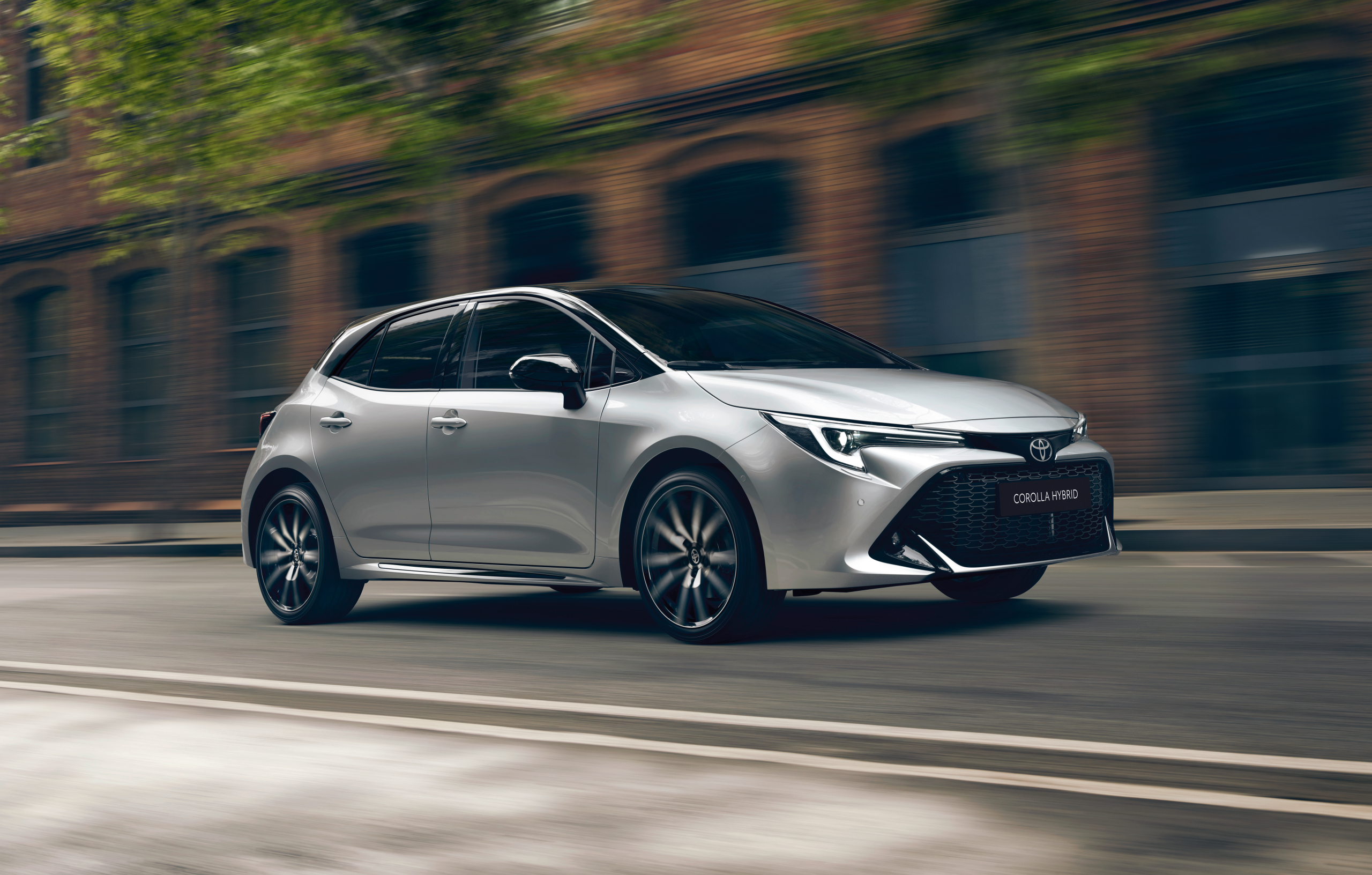
Toyota Corolla (from €23,800*)
An option oriented towards efficiency and reliability: hybrid engines offer very competitive real-world consumption in town and low maintenance, which appeals to families with short daily journeys.
The best
Low urban consumption and proven long-term reliability.
The less good
Dynamic behaviour is less inspired than some European rivals; boot slightly smaller in hybrid versions due to the placement of components.
Peugeot 308 (from €24,100*)
A compact focused on comfort and carefully designed interior; it combines a versatile boot with practical solutions aimed at young families.
The best
Well-resolved interior and comfortable driving sensations in daily use.
The less good
The entry-level engine range may require giving up some safety assistants unless you move up to higher trim levels.
Purchase incentives
Purchase incentives in 2026: Plan Auto+ and tax benefits
Main amounts of the Plan Auto+ 2026
– Direct aid of up to €4,500 for electric passenger cars.
– Up to €5,000 for light vans in category N1.
– Retroactive effect from 1 January 2026.
– Approximate budget allocation of 400 million euros.
Who can benefit and priority criteria
Beneficiaries: private individuals, self-employed workers and companies. The Plan Auto+ applies an EEE criterion (Electric, Economic and European) that prioritises pure battery electric vehicles (BEV) over plug-in hybrids (PHEV). Vehicles priced below €35,000 receive higher aid, while those between €35,000 and €45,000 qualify for reduced amounts. In addition, there is an extra incentive if the final assembly or the batteries are of European Union origin.
Additional requirements and tax advantages
A mandatory minimum discount of €1,000 from the dealer is required. There is a 15% deduction on personal income tax (IRPF) up to a maximum of €3,000. The tax validity of these measures is planned until 31 December 2026.
Management and possible regional aid
Management is coordinated between the Ministry of Industry and the Autonomous Communities. Additional regional programmes may coexist; for example, the Plan Cambia 360 in the Community of Madrid. At the time of writing, it is not officially confirmed whether all regional aid is compatible with the Plan Auto+ 2026.
Common buying mistakes
Buying based solely on the efficiency label without considering real use: urban consumption can differ greatly from WLTP values.
Underestimating the impact of equipment: opting for the base version may save money at purchase but later force you to invest in safety or comfort.
Not checking maintenance costs and spare parts availability in your area of residence, which matters for families who depend on the car every day.
Choosing by looks or a single piece of technology without assessing rear seat ergonomics and boot space for family use.
With this roadmap the reader has the keys to understanding the segment and the factors that make a practical difference. The logical next step is to compare specific versions and verify up-to-date equipment and prices at the dealership or in specialist reviews before making the final decision.


 Peugeot E-208 GTi: a battery-powered toy that revives the spirit of the 1980s sports cars
 New Lexus ES: luxury grows and goes electric
 First contact with the Dacia Sandero Hybrid 155: power and efficiency from €19,890
Deja un comentario