Urban electric SUV: which one offers the best range and charging?
 Iván Navarro
29 April 2026
10 min.
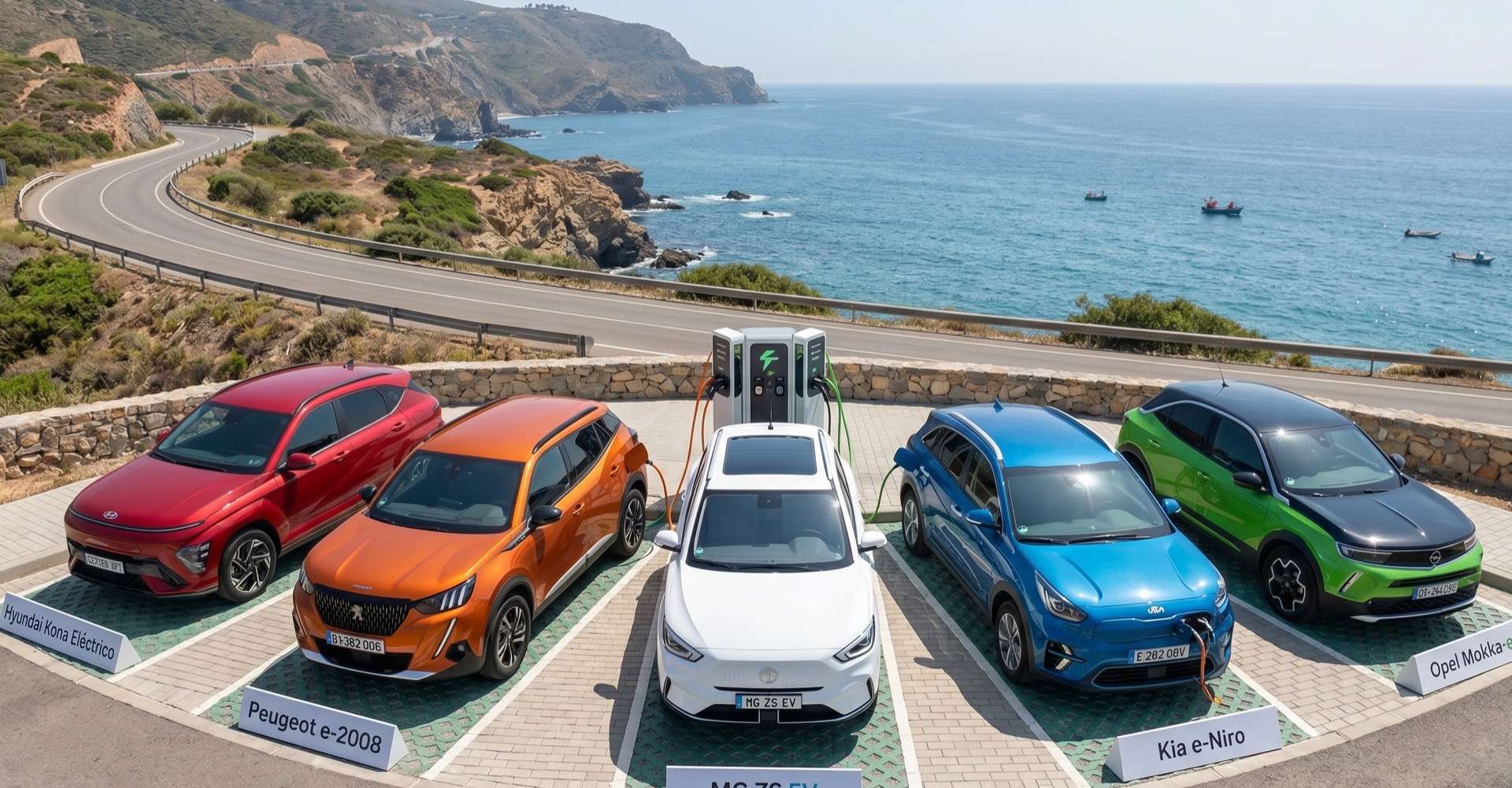
Urban electric SUVs have gained ground in daily commuting thanks to their combination of interior space and efficiency in metropolitan environments. In 2025-2026 this sub-segment continues to grow: according to ANFAC data, battery electric vehicle registrations in urban areas show an increase in annual share compared with saloons and city cars, driven by a more varied offer and better charging options. The average buyer looks for enough range for boot space and daily journeys, reduced charging times and contained running costs; the average entry price in Spain is around €30,000–38,000 for entry versions of this type of model.
In this comparison we focus on battery, real-world range and charging times: decisive factors for those who use the car mainly in the city but need capacity for occasional longer trips. Not all models offer the same balance between battery capacity and real-world efficiency; below we analyse five options that stand out for their urban fit and charging options.
The most balanced models in the segment in 2026
The selection is based on balance criteria: real-world efficiency, starting price, performance and everyday usability. Useful range in urban and motorway driving, and charging speed at public points, are assessed.
Hyundai Kona Electric
The Hyundai Kona Electric stands out for its balance between range and versatility. The version with a 64 kWh battery offers a high WLTP range for its size, and a 204 hp motor that, although not the most powerful in the group, ensures agile response in town and safe overtaking on the open road. In urban use efficiency tends to be better than the WLTP figure thanks to low-speed driving and energy recovery in stop-start traffic. DC fast charging allows a good part of the battery to be recovered in competitive times, which makes it practical for occasional long journeys.
Pros
• Good real-world range in mixed driving.
• Agile behaviour in town.
• Compatible with fast-charging networks.
Cons
• Price somewhat high compared with more affordable rivals.
• Rear seats tight for tall passengers.
The choice that leads the Hyundai Kona Electric
The Hyundai Kona Electric positions itself as a solid option thanks to its WLTP range and a good balance between battery capacity and urban behaviour.
| Feature | Figure | Score |
|---|---|---|
| Power | 204 hp | 9.0 |
| Range | ~480 km WLTP (64 kWh) | 9.4 |
| Top speed | 167 km/h | 8.0 |
| Boot | 374 litres | 7.8 |
| Starting price | ~€38,000 | 8.6 |
score out of 10 based on the criteria analysed in this article
Kia e-Niro
The Kia e-Niro shares its platform and many technical solutions with battery options similar to those of the Kona, with an emphasis on practicality. Its power/efficiency configuration makes it a very rational alternative: good battery capacity, stable behaviour and a spacious boot that scores points for an urban buyer who does not want to give up weekend getaways. Charging speed is comparable to the Kona at fast points, and real-world efficiency places it among the best in cost per kilometre.
Pros
• Balance between range and interior space.
• Low consumption in daily use.
• Good warranty and running costs.
Cons
• Less eye-catching design than rivals.
• Price in long-range versions with large batteries.
The choice that leads the Kia e-Niro
The Kia e-Niro is one of the most balanced options for those who prioritise WLTP range and functionality in urban environments.
| Feature | Figure | Score |
|---|---|---|
| Power | 204 hp | 8.8 |
| Range | ~455 km WLTP (64 kWh) | 9.2 |
| Top speed | 167 km/h | 7.8 |
| Boot | 451 litres | 8.4 |
| Starting price | ~€39,000 | 8.2 |
score out of 10 based on the criteria analysed in this article
Peugeot e-2008
The Peugeot e-2008 focuses on ergonomics and urban design: the version with a ~50 kWh battery offers a WLTP range sufficient for most urban users and charging times compatible with the public network. Its strength lies in the balance between weight, aerodynamics and energy management electronics that optimises consumption in town; where it falls short is in maximum range compared with rivals with larger batteries, but its driving feel and interior finish make it very attractive for those who prioritise comfort and style.
Pros
• Good behaviour in town and interior comfort.
• Efficient energy management.
• Competitive finish and ergonomics.
Cons
• Limited range compared with 64 kWh options.
• Price of well-equipped versions.
The choice that leads the Peugeot e-2008
The Peugeot e-2008 stands out for its efficiency in urban use and is a balanced option if ergonomics and comfort are the priority.
| Feature | Figure | Score |
|---|---|---|
| Power | 136 hp | 8.0 |
| Range | ~320 km WLTP (50 kWh) | 7.6 |
| Top speed | 150 km/h | 7.2 |
| Boot | ~405 litres | 8.0 |
| Starting price | ~€32,000 | 8.0 |
score out of 10 based on the criteria analysed in this article
Opel Mokka-e
The Opel Mokka-e offers an urban package focused on compactness and responsiveness in town. With a battery close to 50 kWh it provides a useful WLTP range for daily use, and its DC charging capacity is sufficient to recover range during short stops. It is a good choice if manoeuvrability in dense environments and agile handling are the priority, without giving up modern equipment.
Pros
• Size and manoeuvrability designed for the city.
• Interior with accessible technology.
Cons
• Range lower than models with larger batteries.
• Boot somewhat tight.
The choice that leads the Opel Mokka-e
The Opel Mokka-e is recommended for those seeking an agile and easy-to-park urban electric SUV, with charging times suitable for everyday use.
| Feature | Figure | Score |
|---|---|---|
| Power | 136 hp | 7.8 |
| Range | ~322 km WLTP (50 kWh) | 7.6 |
| Top speed | 150 km/h | 7.0 |
| Boot | ~350 litres | 7.4 |
| Starting price | ~€34,000 | 7.8 |
score out of 10 based on the criteria analysed in this article
MG ZS EV
The MG ZS EV offers an attractive proposition on price and space. In its largest-battery version it has a WLTP range that competes with the most efficient models, and its boot and interior space make it especially practical for urban families who do not want to give up driving range. Fast charging is effective, although the user experience at public networks can vary; its main asset is the price/space ratio.
Pros
• Very solid price/space ratio.
• Good range in large-battery versions.
Cons
• Perceived interior quality below the leaders.
• Charging performance varies by point.
The choice that leads the MG ZS EV
The MG ZS EV is positioned as the best value for money option for those seeking range and space without paying the premium of established luxury brands.
| Feature | Figure | Score |
|---|---|---|
| Power | ~180 hp | 8.2 |
| Range | ~400–440 km WLTP (long version) | 8.6 |
| Top speed | ~150 km/h | 7.6 |
| Boot | ~450 litres | 8.6 |
| Starting price | ~€29,000 | 9.0 |
score out of 10 based on the criteria analysed in this article
Quick technical comparison of the Top 5
The quick comparison reveals two groups: the models with 64 kWh batteries (Kona, e-Niro), which prioritise range and occasional long trips, and the 50 kWh models (e-2008, Mokka-e), which prioritise lightness and cost. The MG ZS EV offers the best price/space ratio and competitive range in its long version. As for fast charging, the Korean models and the MG offer better recovery rates in real use, which translates into greater flexibility on medium-distance routes.
| Model | Power | Range | Price | Score |
|---|---|---|---|---|
| Hyundai Kona Electric | 204 hp | ~480 km | ~€38,000 | 9.2 |
| Kia e-Niro | 204 hp | ~455 km | ~€39,000 | 9.0 |
| MG ZS EV | ~180 hp | ~400–440 km | ~€29,000 | 8.8 |
| Peugeot e-2008 | 136 hp | ~320 km | ~€32,000 | 7.8 |
| Opel Mokka-e | 136 hp | ~322 km | ~€34,000 | 7.6 |
score out of 10 based on the criteria analysed in this article
Which car to buy according to your profile
If you do a lot of city driving
Choose models with good energy management and compact size: the Peugeot e-2008 or the Opel Mokka-e offer manoeuvrability and low consumption in heavy traffic.
If you travel frequently
Opt for a larger battery and fast charging: the Hyundai Kona Electric and the Kia e-Niro are the most suitable choices for range and charging capacity.
If you are looking for the best price
The MG ZS EV offers the best price/space ratio without giving up competitive range in its long version.
If you prioritise technology
Korean and European models with advanced equipment (connectivity and driver aids) such as the Kia e-Niro or the Hyundai Kona Electric usually come with the latest assistants and battery management.
Frequently asked questions
How much does the battery influence real-world range?
Battery capacity is decisive, but real-world range also depends on weight, aerodynamics, temperature and driving style; in town, regenerative braking improves efficiency.
Which charging times are useful for urban use?
For daily use, overnight AC charging is sufficient. DC fast charging matters for trips out of the city: recovering 20–80% in 30–45 minutes makes medium-distance mobility easier.
Is a bigger battery better than more efficiency?
It depends on use: for many frequent kilometres a large battery pays off; for mostly urban use, efficiency and weight may be more valuable.
Do urban SUVs consume more than an electric city car?
They usually consume somewhat more because of weight and aerodynamics, but the differences narrow in town thanks to low-speed driving and energy recovery.
Which model offers the best cost per km?
Models with good efficiency and warranty, such as the 64 kWh variants of the Kona or e-Niro, usually show a good cost per kilometre on mixed journeys; the MG ZS EV stands out for its lower initial cost.
Expert opinion
Beyond the official figures, choosing between these options comes down to the balance between real-world range and driving experience. For an urban user who makes short daily trips and will charge mostly at home, options such as the Peugeot e-2008 or the Opel Mokka-e are practical and economical in real use. If the main criterion is the ability to handle regular trips outside the city without constantly depending on charging points, the higher-capacity battery versions of the Hyundai Kona Electric and the Kia e-Niro make the difference thanks to their greater range and stable behaviour on the motorway.
The MG ZS EV comes into the equation as a rational alternative for tight budgets that do not want to give up space and decent range. In short, if your priority is range and charging flexibility, choose a 64 kWh version; if manoeuvrability, purchase cost and mainly urban use are the priorities, the 50 kWh variants strike a better balance. Also consider the charging infrastructure within your reach: a car with great range loses part of its advantage without accessible fast-charging points, whereas an efficient model that is easy to recharge on AC can comfortably cover the daily routine.
Models such as the Hyundai Kona, the Kia e-Niro or the Peugeot e-2008 form a representative spectrum from which to choose according to mileage, budget and charging priorities.


 Peugeot E-208 GTi: a battery-powered toy that revives the spirit of the 1980s sports cars
 New Lexus ES: luxury grows and goes electric
 First contact with the Dacia Sandero Hybrid 155: power and efficiency from €19,890
Deja un comentario