EX40 Volvo Electric Cars Hybrid Cars Comparisons Tests
Volvo EX40 vs Mercedes-Benz GLA plug-in hybrid: premium compact face-off
 Iván Navarro
28 May 2026
5 min.
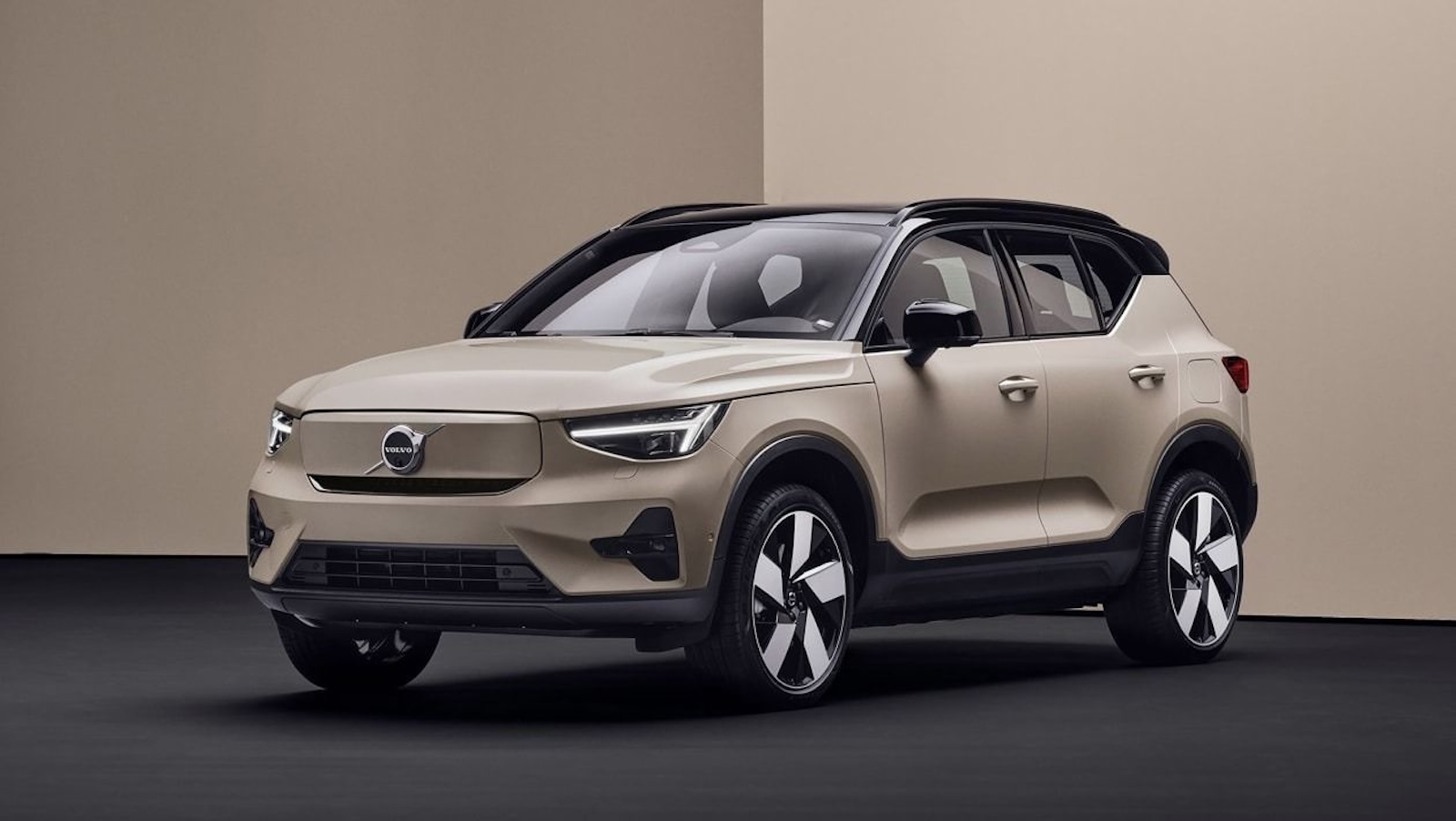
Technical comparison between the Volvo EX40 electric and the Mercedes-Benz GLA 35 AMG mild hybrid: two opposing philosophies for the compact premium SUV in Spain.
The premium compact SUV segment has become the main battlefield of European electrification. Here, with surprising ease, coexist proposals as different as a pure electric car from Swedish-Chinese origins and a German sporty compact that keeps the thermal roar as a selling point. The Volvo EX40 vs Mercedes GLA hybrid sums up that dilemma well: two ways of understanding accessible luxury, two technological roadmaps and two very different customers behind the wheel.
The premium compact SUV dilemma in 2026
The premium compact SUV buyer no longer seeks status alone. They look for consistency with their lifestyle —a home charger, long journeys, company taxation, environmental label— and that forces manufacturers to deploy two parallel strategies. On one hand, full electrification; on the other, high-performance mild hybridisation that squeezes the combustion engine to the limit. That tension currently defines the comparison between premium compact SUVs in Spain.
Two opposing philosophies: pure electric versus sporty mild hybrid
The EX40 represents the full-scale bet of Volvo —and by extension of the Geely group— on local zero emissions. The GLA 35 AMG, on the other hand, defends the idea that a premium compact SUV must above all remain a tool for spirited driving, with a turbocharged four-cylinder assisted by a small 48 V battery. They do not compete on the same terrain: they cross paths at the dealership.
Volvo EX40 from approximately 57,200 €
The Volvo EX40 electric is probably the most mature premium compact SUV in the Scandinavian range. Its CMA platform, shared within the Geely universe, allows it to offer a generously sized battery without sacrificing interior space. With about 250 CV in its single-motor version and instant torque close to 420 Nm, the performance is forceful without falling into gratuitous aggression, faithful to its Swedish DNA.
The homologated range is around 590 kilometres WLTP, a figure that places the EX40 among the segment’s references, and its average consumption sits around 18.5 kWh/100 km. The battery of approximately 82 kWh accepts DC fast charging, which reduces stops on long trips to a little over half an hour to recover most of its capacity.
| Power kW | Power CV | Top speed | Range | Consumption | Label | Fuel |
|---|---|---|---|---|---|---|
| ≈190 kW | ≈250 CV | ≈180 km/h | ≈590 km | ≈18.5 kWh/100 km | ZERO | Electric |
The price of the Volvo EX40 starts at approximately 57,200 € as the manufacturer’s recommended retail price, without taking into account dealer discounts, one-off campaigns or aid from the current MOVES plan.
Mercedes-Benz GLA 35 AMG from approximately 71,800 €
The Mercedes GLA 35 AMG plays in a different conceptual league. It is a compact SUV with a sporty vocation, with AMG’s two-litre turbo delivering around 310 CV, 4Matic all-wheel drive and the 8G-DCT dual-clutch transmission. The 48 V mild hybridisation smooths starts and provides a small assist during acceleration, but the heart remains purely thermal.
The figures confirm it: a top speed close to 250 km/h, average consumption in the region of 9 l/100 km and emissions around 200 g/km of CO₂. The Mercedes GLA technical sheet in this AMG variant sacrifices efficiency for dynamism, and its ECO label honestly reflects that light hybrid nature, far from the environmental credentials of a PHEV or a pure electric car.
| Power kW | Power CV | Top speed | Range | Consumption | Label | Fuel |
|---|---|---|---|---|---|---|
| ≈230 kW | ≈310 CV | ≈250 km/h | ≈600 km (tank) | ≈9 l/100 km | ECO | Petrol mild hybrid |
The recommended retail price starts at approximately 71,800 €, a figure that places the GLA 35 AMG in a range clearly above that of the Volvo.
Geely as a strategic factor behind the EX40
Here comes a variable that many customers overlook: industrial backing. Volvo is part of the Geely group, which in Europe also operates brands such as Polestar and Lynk&Co, all of them sharing platforms, software and battery chemistry. That scale explains why the EX40 can offer competitive range at a price noticeably lower than the GLA AMG. Geely’s electrification strategy is not cyclical: it is structural, and it shows in how quickly the group launches versions, updates software over the air and amortises investment in its own electric motors.
Summary table and scoring
Below is an indicative comparison of the electrified premium SUV in question, scored from 1 to 10 weighing performance, efficiency and price within the 2026 premium compact SUV segment.
| Model | Power | Range / Consumption | Label | Price from | Performance | Efficiency | Price/product ratio | Overall score |
|---|---|---|---|---|---|---|---|---|
| Volvo EX40 | ≈250 CV | ≈590 km / 18.5 kWh | ZERO | ≈57,200 € | 8 | 9 | 8.5 | 8.5 |
| Mercedes-Benz GLA 35 AMG | ≈310 CV | ≈9 l/100 km | ECO | ≈71,800 € | 9 | 5 | 6.5 | 7 |
Verdict: who is each one for?
The EX40 is the rational choice for those with home charging who value the ZERO label, silence and low running costs. The GLA 35 AMG is for the driver who still prioritises mechanical feel, sound and pure performance, accepting the tax and energy cost that comes with it. Two legitimate answers to the same question.
FAQ
Which offers better value for money between the Volvo EX40 and the Mercedes GLA 35 AMG?
The EX40, with a recommended price about 14,000 € lower, offers a ZERO label and lower running costs, while the GLA AMG only justifies its premium if sporting performance is the priority.
Does the Volvo EX40 share technology with other Geely group brands?
Yes. It shares the CMA architecture and electric components with Polestar and Lynk&Co, which allows it to offer competitive range thanks to the group’s economies of scale.
What environmental label does each model carry in Spain?
The EX40 displays the DGT ZERO label for being 100% electric, while the GLA 35 AMG carries the ECO label as a petrol mild hybrid with a 48 V system.
Which is more efficient in real-world use?
The EX40, with consumption around 18.5 kWh/100 km, is far cheaper to run than the GLA 35 AMG, which averages around 9 l/100 km of 98-octane petrol in mixed use.
Technical specifications of this car


 Peugeot E-208 GTi: a battery-powered toy that revives the spirit of the 1980s sports cars
 New Lexus ES: luxury grows and goes electric
 First contact with the Dacia Sandero Hybrid 155: power and efficiency from €19,890
Deja un comentario