Volvo introduces an OTA software update for a large number of its models
 David Lopez @espacionblanco
13 March 2026
3 min.
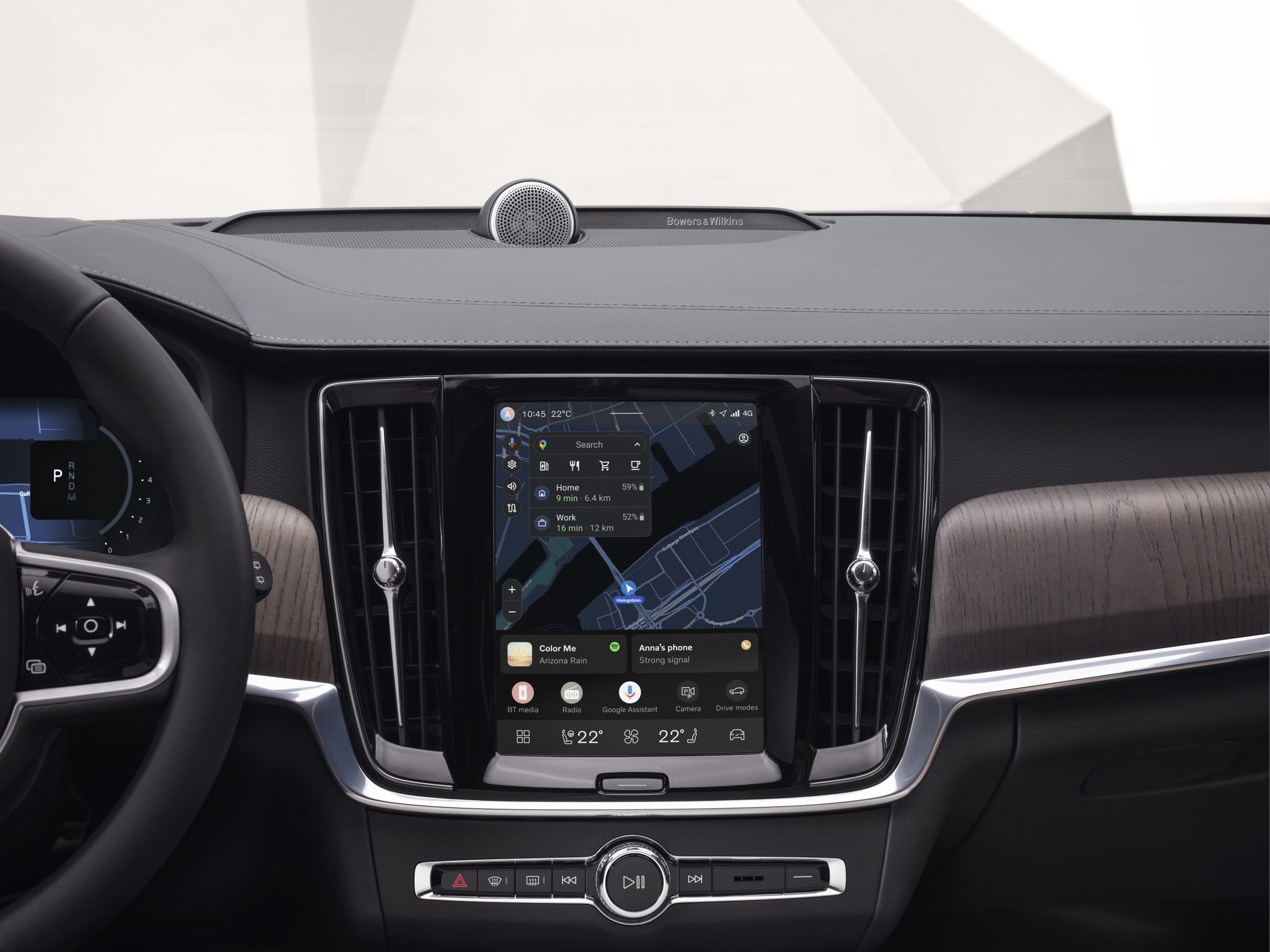
Volvo will roll out an OTA update reaching 2.5 million of its vehicles, focused on improving the look and functionality of the infotainment system
The great advantage of the infotainment systems we use today is that, thanks to the constant development carried out by manufacturers, they can be updated over time, even months or years after purchase, thus updating, improving or even adding new features as well as improving the look and display through new graphics and icons.
In this regard, Volvo is preparing to introduce a major update soon that will reach 2.5 million of its vehicles across 85 countries. Those who receive it will enjoy a new user experience called Volvo Car UX. Those who will receive this update are the Volvo models that use integrated Google (or its equivalent in countries such as China or South Korea), in other words, all Volvo C40, XC40, EX40, EC40, S60, V60, V60 Cross Country, XC60, S90, V90, V90 Cross Country and XC90 with the Android operating system that have been manufactured since 2020.
As for Volvo Car UX, it is based on the Android Automotive operating system and several Google services, with the aim of making daily life and driving easier for users. And how do they intend to achieve this? Users now need fewer taps or clicks to access the most-used functions, so the infotainment system becomes a friendlier and, above all, faster environment, something very important to avoid keeping your eyes off the road for too long.
Customers of Volvo who receive this update will find a new design featuring simpler and more visible navigation, as well as a renewed and more modern look, with several improvements based on real research and customer feedback. But where they will notice the biggest change is in the screen content, with the most common controls and apps (such as maps, media and phone) included on the home screen, so that if we are following navigation instructions, we no longer need to leave Google Maps if we want, for example, to change the music. Meanwhile, the contextual bar now changes what drivers see depending on the situation and shows the most recently used apps; that is, if we are driving at low speed, it detects that we may be maneuvering and displays the external camera icon so we can get help parking in tight spaces.
For plug-in hybrid models receiving this update, drivers will be able to make the most of the electric propulsion system more easily; for example, a single tap will now switch from hybrid mode to pure electric mode. Finally, the update also prepares the vehicles for an optimal conversational experience with the Google Gemini AI, which is expected to arrive on the same vehicles mentioned above by the end of spring.
In addition, taking advantage of the rollout of this update, Volvo will begin offering the option to purchase and download the Pilot Assist driver assistance feature in the vehicle to all customers who have integrated Google but do not yet have this function.


 Peugeot E-208 GTi: a battery-powered toy that revives the spirit of the 1980s sports cars
 New Lexus ES: luxury grows and goes electric
 First contact with the Dacia Sandero Hybrid 155: power and efficiency from €19,890
Deja un comentario