What car should I buy if I live in the city and need an urban car in 2026?
 Dani Montesinos
2 March 2026
8 min.
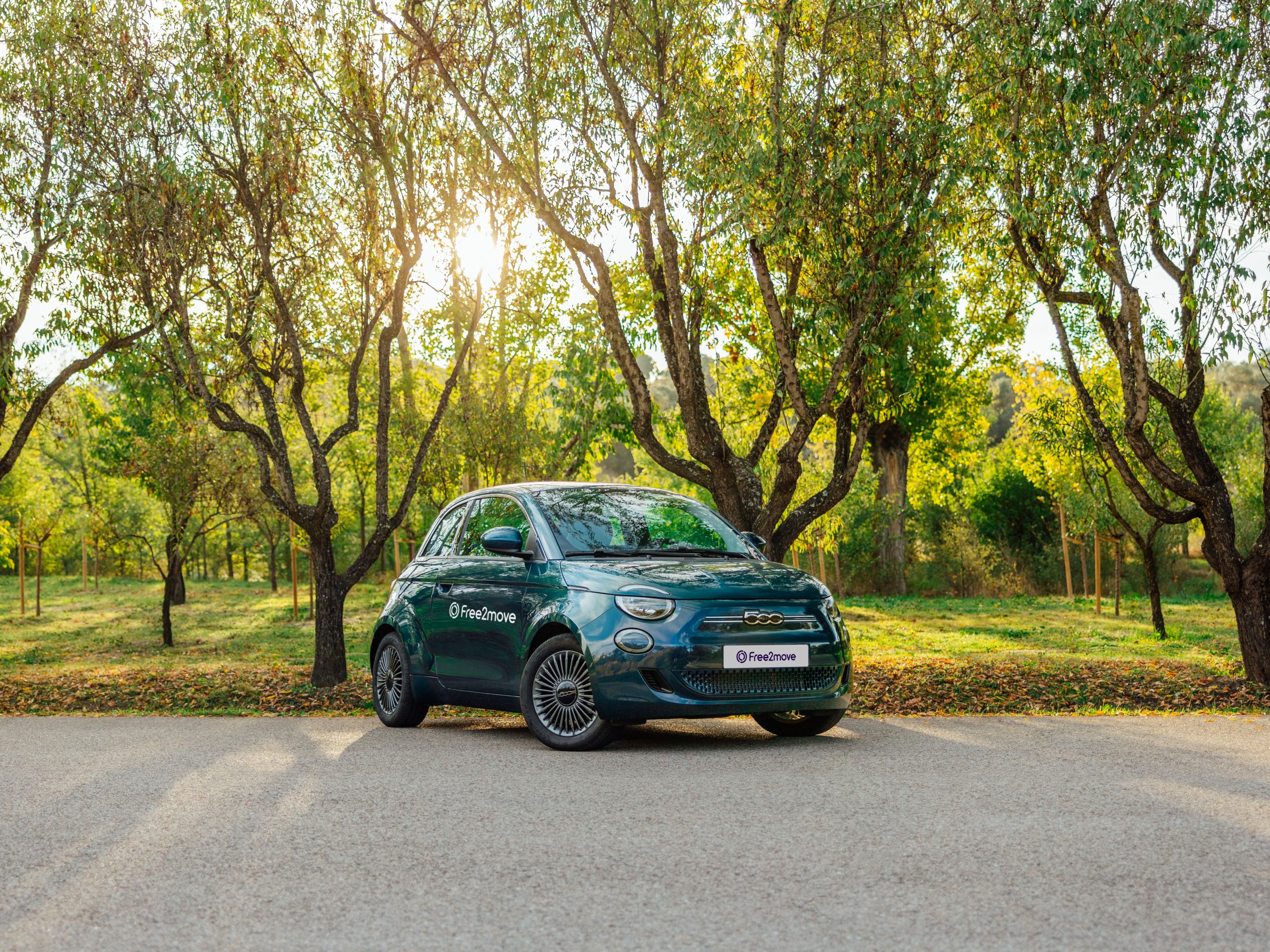
If you are looking for a car to get around almost exclusively in the city, here are five models you should consider.
Urban life in 2026 calls for compact, manoeuvrable vehicles with technology suited to dense traffic and limited parking. The debate is no longer limited to diesel versus petrol; electrification, mild hybrids and urban micro-SUVs present different trade-offs in cost, range and real-world use. Two or three criteria to consider would be: real-world range versus homologated range, and total cost of ownership beyond the purchase price. Those who live in the city look for fuel efficiency, a small turning circle, parking assistance and connectivity that is useful for short journeys. These conditions explain why choosing an urban car is not just a matter of size, but of suitability for daily local life and the 2026 regulatory framework.
This buying guide is for…
This guide is aimed at drivers who make daily urban journeys, combine car use with public transport and need a vehicle that is easy to park, has low running costs and features technology that makes mobility in the city easier to manage. It also suits those who prioritise reduced emissions on short trips and want access to low-emission zones.
It is not aimed at those who regularly cover long distances on the road, carry bulky loads or need an off-road platform. For those uses, a compact or a small SUV may be more suitable.
Common options within the segment
The urban segment offers solutions that follow three approaches: strict city cars (very compact and economical), micro-SUVs (greater height and visibility) and electrified versions of small models. Strict city cars prioritise manoeuvrability and low cost; micro-SUVs offer greater versatility and ergonomics; electric versions minimise emissions and maintenance costs, but require charging planning and may have higher starting prices.
Common trade-offs include weight and consumption (a larger battery or more powerful engine adds weight and reduces space), charging planning for electric models, and price variations depending on equipment, which affect total cost of ownership.
Key criteria for choosing wisely
Realistic range versus homologated range: in the city, efficiency may be better than on the combined cycle, but usable range depends on climate control and driving style; check WLTP figures and real-world usage data.
Power and charging speed: for an urban car, response when pulling away and compatibility with domestic AC charging matter more; fast charging is less critical if you rarely make long trips.
Stability and comfort on the road: firm suspension and good sound insulation make the difference between a car suited to the city and one that is comfortable on periurban roads.
Genuinely useful technology: parking assistance, 360º camera, connectivity with apps showing free parking spaces and intelligent climate control are more valuable than overly complex infotainment systems.
Total cost of purchase and use: calculate acquisition price, maintenance, insurance and consumption; for electric models, include the cost of installing a charging point if necessary.
It depends on how you drive
If you drive mostly short journeys and at night, a small electric city car with a small battery may be sufficient and economical. If you make occasional trips outside the city, a hybrid or an efficient petrol engine avoids dependence on charging infrastructure.
Climate matters: in cold areas electric range is reduced, so residents of extreme climates should prioritise models with good battery thermal management or consider hybrids. The buyer’s practical profile — a family with child seats versus a single person who parks in tight spaces — determines size and number of doors.
Real price: what you should know
The “from” price indicates the most basic version with no options; financed cost may include interest that raises the final amount. Equipment often increases the price more than small differences in engine choice.
Treat the “from” price as an entry point: adding safety packages or larger-capacity batteries raises the amount considerably. Commercial offers and public aid reduce the initial outlay, but the final cost may vary depending on financing, extras and vehicle delivery.
Reference models on the market
Fiat 500e (from €27,900*)
The Fiat 500e offers an electric urban approach, with small dimensions, a short turning circle and a focus on city mobility. Its design suits users who prioritise manoeuvrability and zero emissions on daily journeys.
The best
Compact design and a driving experience geared to the city; good connectivity and parking aids.
The less good
Limited battery capacity for long journeys and an entry price that can rise with equipment.
Toyota Aygo X (from €15,500*)
The Aygo X is the economical and practical proposition for those seeking an urban micro-SUV: greater height, good visibility and modest running costs, with efficient combustion or mild-hybrid engine options.
The best
Small turning circle, attractive purchase price and low consumption in the city.
The less good
Limited interior space in the rear seats and less refinement on fast roads.
Volkswagen Polo (from €20,900*)
The Polo offers a compact solution with a balanced approach between comfort and manoeuvrability; it suits those who alternate between city driving and periurban journeys.
The best
Good balance of comfort, active safety and ride quality for its size.
The less good
The cost of some trims and options can push the final price above more affordable alternatives.
Renault Clio E-Tech (from €19,900*)
The Clio E-Tech presents a hybrid alternative that reduces consumption in urban driving without depending on charging points, suitable for those seeking efficiency without compromising range.
The best
Efficiency in urban traffic and low running costs without the need for domestic charging infrastructure.
The less good
Greater mechanical complexity compared with purely combustion options, and extra weight due to hybridisation.
Honda e (from €33,900*)
The Honda e is a premium electric proposition in the urban segment, focused on technology and ergonomics for intensive city driving.
The best
Quality finish, ease of manoeuvre and systems designed for the city.
The less good
High starting price for the segment and limited range for trips outside the urban environment.
Purchase grants
Purchase grants in 2026: Plan Auto+ and tax benefits
The 2026 Plan Auto+ replaces previous programmes and establishes a mechanism of direct grants for electrified vehicles in Spain. It is designed to encourage fleet renewal based on efficiency criteria and European industrial origin.
Main amounts of the 2026 Plan Auto+
– Direct grants of up to €4,500 for electric passenger cars.
– Up to €5,000 for light vans in category N1.
– Retroactive effect from 1 January 2026.
– Approximate budget allocation of €400 million.
Who can benefit and priority criteria
Beneficiaries: private individuals, self-employed workers and companies can access the grants, with priority according to the EEE criterion (Electric, Economic and European). The programme particularly incentivises pure battery electric vehicles (BEV) over plug-in hybrids (PHEV).
Vehicles priced below €35,000 receive a larger grant; those between €35,000 and €45,000 receive a reduced grant. An additional incentive is granted if the final assembly or the batteries come from the European Union.
Additional requirements and tax advantages
A mandatory minimum discount of €1,000 from the dealer is required. There is also a 15% deduction in personal income tax (IRPF) up to a maximum of €3,000 for purchases that meet tax criteria, valid until 31 December 2026.
Management and possible regional grants
Management is coordinated by the Ministry of Industry together with the Autonomous Communities. Additional regional programmes may coexist that complement the Plan Auto+; for example, the Plan Cambia 360 in the Community of Madrid. At the time of writing, it is not confirmed whether all regional grants will be compatible with the Plan Auto+ 2026 in every case.
Common buying mistakes
Buying on catalogue price without calculating total cost of use: many buyers do not consider maintenance, insurance and real consumption.
Underestimating the need for charging planning with electric vehicles: assuming there will always be a charging point nearby can lead to unforeseen restrictions.
Choosing a car that is too large “just in case”: an oversized urban car penalises parking and consumption in the city.
Ignoring the loss of range from climate control in winter: WLTP figures do not always reflect real urban conditions with intensive heating.
With the information and criteria set out above, it is possible to prioritise what really matters for urban use: manoeuvrability, cost of use and practical technology. The logical next step is to compare these models with up-to-date analysis and real-world tests that allow you to adjust the decision to your specific budget and habits.


 Kia offers an electric range of 10 models, 50 versions and 400 possible combinations
 The seven finalists for the 2027 European Car of the Year (COTY) are exclusively electric
 Peugeot E-208 GTi: a battery-powered toy that revives the spirit of the 1980s sports cars
Deja un comentario