What car should I buy if I'm looking for a hybrid with good range in 2026?
 Dani Montesinos
11 March 2026
7 min.
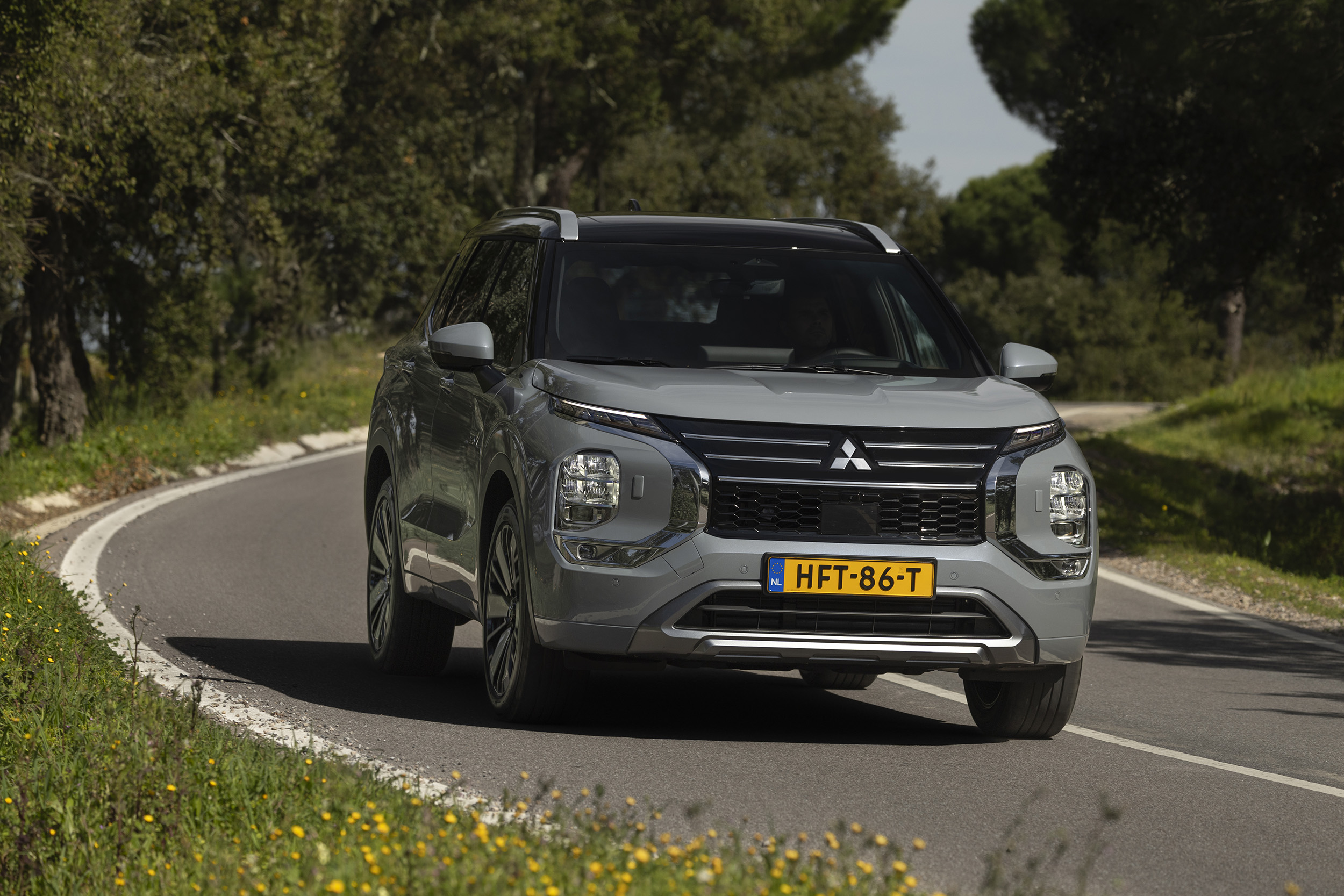
As the first quarter of 2026 draws to a close, we suggest five plug-in hybrid (PHEV) models of interest for this year
The hybrid market in 2026 offers a wide variety of solutions for those seeking efficiency without giving up real-world range in everyday driving. The usual doubts revolve around electric range in urban use, combined efficiency on mixed routes and total cost of ownership versus maintenance and depreciation. Three statements sum up the context: the homologated and real-world range usually differ significantly; the type of hybridisation (HEV, PHEV, REX) defines practical use; and the final cost depends both on equipment and on the public incentives available. This context calls for prioritising verifiable technical criteria and considering real-world use in Spain before deciding.
This buying guide is for…
This article is aimed at drivers who prioritise sustainability and want to reduce consumption and emissions without losing the functional range needed for long journeys. It makes sense if you make mixed trips (city and motorway) and want to cut fuel use without depending exclusively on public charging points. It is not the best option if you need continuous zero emissions on long journeys without planning recharges, or if your absolute priority is the lowest possible initial cost.
Common options within the segment
In 2026 three predominant approaches coexist: self-charging hybrids (HEV) and light self-recharging systems, plug-in hybrids (PHEV) with electric ranges of between 40 and 80 km WLTP, and extended-range solutions with a combustion engine as support (REX), less common in passenger cars. HEVs promise operational simplicity and good urban consumption; PHEVs allow daily journeys in electric mode and long trips with the combustion engine; REX and more complex systems provide greater electric range as a concept, at the cost of weight and price. Each approach involves trade-offs in weight, real consumption, the need to plan charging and price.
Key criteria for choosing well
Realistic versus homologated range: the WLTP figure is indicative; in winter or at high speed the electric range can drop by as much as 30–40% compared with the homologated figure. It is essential to check data under mixed conditions and user testimonies.
Charging power and speed: for PHEVs, the on-board charger’s power and compatibility with AC charging determine practical recharging times at home and at public points.
Stability and comfort on the road: the extra weight of batteries and hybrid systems affects dynamics and consumption on the motorway; checking suspension and assistance systems is key.
Genuinely useful technology: efficiency assistants, recuperation modes and battery thermal management influence practical range more than dispensable digital menus.
Total cost of purchase and use: compare the “from” price with equipment, real consumption, maintenance and estimated loss of value over 3–4 years.
It depends on how you drive
Urban drivers and those with short daily routes benefit most from PHEVs with moderate electric ranges if they charge at home every day. Those who cover many intercity kilometres will prefer efficient HEVs with less dependence on charging points. Cold weather reduces electric range and increases consumption; in Spain, areas with mild winters cushion that loss. If your profile is that of a frequent traveller, consider systems with larger-capacity batteries and fast charging times; if simplicity is the priority, a well-optimised HEV may be the most practical choice.
Real price: what you should know
The “from” price reflects the basic version without discounts or incentives and does not include equipment that affects the final cost. Financed pricing can reduce the monthly instalment but increase the total cost through interest; paying cash avoids that burden. Equipment brings significant variations: trims, battery packs or safety assistants raise the base rate. Interpret the “from” price as a starting point for comparing equivalent models with similar equipment, and always check the final price including taxes, transport and extras.
Reference models on the market
Toyota RAV4 Hybrid (from 39,990 €*)
An approach oriented towards efficiency and reliability: a self-charging hybrid with balanced behaviour in town and on the road, suitable for families seeking range without depending on plugs. Ideal for those who prioritise low combined consumption and predictable maintenance.
The best
Controlled real consumption in mixed use and a wide service network in Spain.
The room for improvement
Limited electric range in zero-emissions mode compared with a PHEV; moderate dynamic feel.
Kia Niro PHEV (from 33,490 €*)
A compact plug-in proposal with electric range sufficient for most daily urban journeys; it combines low consumption and ease of use for occasional zero-emission trips.
The best
Practical electric range for daily journeys and low operating costs.
The room for improvement
Boot capacity and extra weight compared with the HEV version.
Ford Kuga PHEV (from 37,750 €*)
Focused on balancing electric range and dynamic performance; designed for those who alternate between city driving and frequent trips and want to cover electric stretches on metropolitan journeys.
The best
Good balance between power and electric range for mixed use.
The room for improvement
Equipment pricing can raise the final cost above equivalent alternatives.
Mitsubishi Outlander PHEV (from 44,900 €*)
A model with greater capacity for travellers and light towing; a PHEV with a battery designed to offer useful electric range on daily journeys and thermal capacity for long trips.
The best
Practical versatility and roominess for families who need both load capacity and mixed-use range.
The room for improvement
Weight and consumption increase on high-speed journeys; relatively high initial cost.
Hyundai Tucson Hybrid (from 38,500 €*)
A hybrid SUV focused on comfort and assistance technology; suitable for everyday use without needing external charging and with competitive combined-cycle consumption.
The best
Ride comfort and safety equipment at high levels.
The room for improvement
No electric range in the HEV variant; motorway performance depends on thermal support.
Purchase incentives
The Plan Auto+ 2026 replaces earlier programmes and establishes a framework of direct aid for buying electrified vehicles in Spain.
Main amounts of the Plan Auto+ 2026
– Direct aid of up to €4,500 for electric passenger cars.
– Up to €5,000 for light vans in category N1.
– Retroactive effect from 1 January 2026.
– Approximate budget allocation of €400 million.
Who can benefit and priority criteria
– Beneficiaries: private individuals, self-employed workers and companies.
– Application of the EEE criterion (Electric, Economic and European).
– Greater incentive for battery electric vehicles (BEV) compared with plug-in hybrids (PHEV).
– Vehicles priced below €35,000 receive higher aid.
– Vehicles priced between €35,000 and €45,000 qualify for reduced aid.
– Maximum incentive if the final assembly or the batteries are of European Union origin.
Additional requirements and tax advantages
– Minimum mandatory discount of €1,000 from the dealership.
– 15% deduction in personal income tax (IRPF) up to a maximum of €3,000.
– Tax validity until 31 December 2026.
Management and possible regional aid
Management is coordinated by the Ministry of Industry together with the Autonomous Communities. Additional regional programmes may exist to complement the Plan Auto+; an example in force in other calls is the Plan Cambia 360 in the Community of Madrid. At the time of writing it is not officially confirmed whether these regional aids are compatible with the Plan Auto+ 2026.
Common buying mistakes
Buying based solely on WLTP range without checking real-world data under local conditions.
Choosing a PHEV without regular access to a home charging point, which reduces its practical efficiency.
Ignoring the impact of equipment and packs on the final price and on the vehicle’s weight.
Underestimating maintenance costs and the loss of value of hybrids that are in low demand on the used market.
With a clear understanding of real-world range, hybridisation types and associated costs, the next step is to compare models using standardised data and up-to-date analyses that reflect use in Spain and conditions in 2026.


 Peugeot E-208 GTi: a battery-powered toy that revives the spirit of the 1980s sports cars
 New Lexus ES: luxury grows and goes electric
 First contact with the Dacia Sandero Hybrid 155: power and efficiency from €19,890
Deja un comentario