Design and comfort in the city: why the Hyundai Inster can be your great ally in urban environments?
 Dani Montesinos
11 March 2026
8 min.
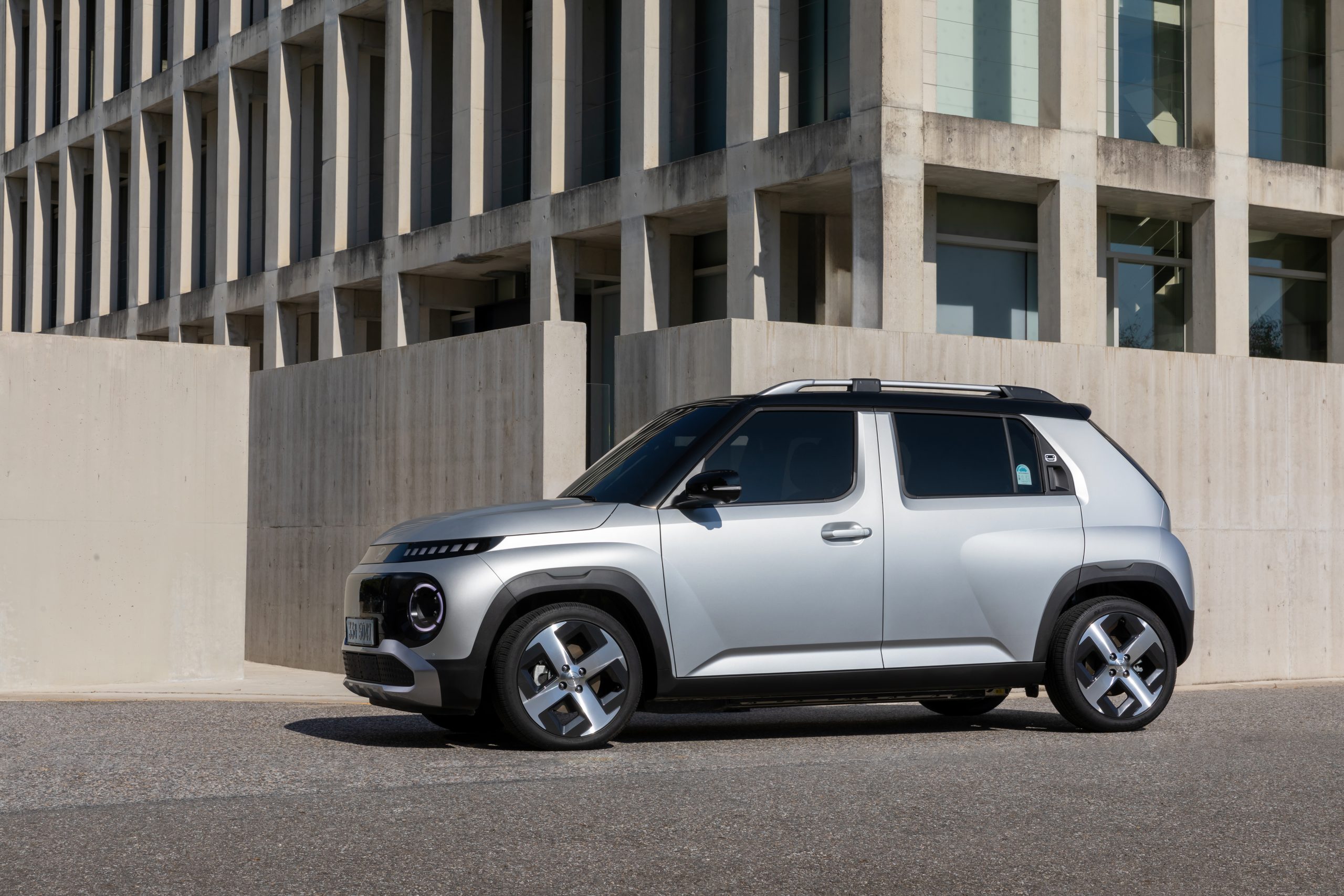
Carmakers offer many proposals for moving nimbly around town, and today we take a closer look at one of them: the Hyundai Inster
With a clearly urban-mobility focus, the Hyundai Inster offers a practical solution for everyday journeys: from 24,990 euros (before any incentives or discounts), with two battery options of 42 or 48 kWh that are homologated for up to 473 km WLTP, available in power outputs of 71.3 kW and 84.6 kW, and built on a 100% electric architecture designed for narrow streets and frequent routes. How does its platform behave at low-speed manoeuvres? Does the interior space meet the expectations of a compact family in the city? What impact does its real-world consumption have on monthly running costs? The analysis pays attention to ergonomics, turning circle, visibility and materials used, along with the response of the powertrain and the thermal management of the battery in dense traffic. In addition, homologated and everyday figures, behaviour in different scenarios and running costs will be compared to offer a practical and technical view of its viability as a city car, with real data and comparisons.
The essentials of the Hyundai Inster
The Hyundai Inster presents itself as a capable electric city car: easy to park, with enough room for four adults and a focus on running economy. Its main advantage is the combination of a compact size and a battery that covers most weekly journeys without an intermediate recharge. It is not the most dynamic on the open road, but its setup prioritises comfort and efficiency in town. It is worth considering if the main requirement is manoeuvrability, low running costs and sufficient tech equipment; it is not the best choice for frequent long journeys or for those seeking sporty performance.
Technical data sheet and main features
| Engine | Electric, front-wheel drive |
| Power | 97 CV (71.3 kW) or 115 CV (84.6 kW) |
| WLTP range | Between 370 and 473 km |
| Battery / Capacity | 42 or 49 kWh battery (liquid cooling) |
| Homologated consumption | Between 14.3 and 14.9 kWh/100 km (WLTP combined) |
| 0-100 km/h acceleration | 10.6 s to 11.7 |
| Length | 3.82 m |
| Boot | 350 litres |
| Price from | from 24,990 euros (before any incentives or discounts) |
Hyundai Inster sales 2025
In a segment where urban electric models are gaining ground, the 2025 figures show growing interest in compact and affordable proposals. ANFAC data reflect that urban electric cars are consolidating their share of total registrations, although competition remains intense. The Hyundai Inster, given its price/consumption positioning, falls into a group of models with relevant sales but far from the top-selling high-end models.
| Model | Sales 2025 (Spain) |
| Hyundai Inster | 8,700 |
| Fiat 500e | 11,200 |
| Renault ZOE | 9,500 |
| Peugeot e-208 | 10,300 |
Design and market positioning
The Inster opts for a restrained and functional design: compact lines that favour visibility and reduce blind spots, short overhangs and a body that prioritises the use of interior space. Aesthetically it remains contemporary without flamboyance, which makes it easy to accept for drivers looking for discretion. Positioned as an accessible premium urban car, it competes with city electric cars that offer good equipment at moderate prices.
Interior, space and technology
The Inster’s cabin stands out for a logical layout of controls and seats with correct lumbar support. The materials combine hard plastics with softer-touch surfaces in contact areas; the overall impression is of medium-high quality for its segment. The rear seat comfortably accommodates two adults and the 350-litre boot is competitive. In terms of technology, it integrates a central touchscreen with wireless connectivity, configurable digital instrumentation and driving aids geared to urban traffic (parking assistant, automatic city braking).
Engine, real-world range and behaviour
In urban use the Inster shows a linear response from the electric motor and sufficient recovery when merging. Real-world range in town tends to approach 300 km with conservative driving and mild conditions; on the motorway it drops to around 200–220 km at sustained speeds. The suspension prioritises comfort and filters out potholes, although at the cost of a softer balance on fast bends. The turning circle and steering help in manoeuvres, which makes parking in narrow spaces easier.
Charging, efficiency and running costs
The battery accepts AC charging up to 11 kW and DC charging up to 100 kW, allowing a recharge from 10 to 80% in about 35–40 minutes at fast chargers. Running cost depends on the electricity mix: with a domestic night tariff the cost per 100 km can fall below 2.5 €; at public fast chargers the cost rises depending on the tariff, but it remains competitive against combustion engines. Efficiency in town is one of its strong points, with real consumption close to 14 kWh/100 km in dense traffic.
Price, versions and equipment
The range starts with a well-equipped basic version and adds intermediate levels with driving aids and more refined finishes. The entry level starts from 24,980 euros (before any incentives or discounts), with options that add a panoramic roof, enhanced sound systems and comfort assistants. The equipment-to-price ratio is favourable within the segment, although options can quickly increase the final cost.
Purchase incentives
- Direct aid: discount applied at the dealership.
- Amount: up to 4,500 € for electric / 3,375 € for PHEV.
- Retroactivity: from 1 January 2026.
- Price limits: normally up to 45,000 €.
- Beneficiaries: private individuals, self-employed workers and companies.
Who this car is for
The Inster is for urban drivers who prioritise ease of daily use, low running costs and a reasonably spacious interior in a compact format. It suits small families, users who combine car and public transport, and professionals making short routes with frequent stops. It is not the ideal alternative for those who regularly need great range or sporty performance.
The good and the improvable
The good
Manoeuvrability and turning circle in town, efficiency in dense traffic and a boot that is competent for its size. Tech equipment adapted to urban use and charging options that offer flexibility.
The improvable
Behaviour at high speed and stability on fast roads; the quality of some plastics could improve to convey a more premium feel. Motorway range trails larger saloons.
Alternatives on the market
Fiat 500e (from 23,900 €)
A direct rival in size and urban focus, with a more iconic design and a good balance between range and manoeuvrability. It usually offers attractive body variants for users seeking style.
Renault ZOE (from 24,500 €)
A classic among urban electric cars, it stands out for its practicality and efficiency, with a well-established platform and a competitive price on offer.
Peugeot e-208 (from 25,300 €)
It offers a more dynamic driving feel and an interior with a more refined finish; an interesting option for those who want a bit more driving emotion without sacrificing practicality.
Frequently asked questions about the Hyundai Inster
Is the Hyundai Inster worth it compared to an equivalent diesel?
Technically, yes for urban use: costs per kilometre are lower, maintenance is simpler and the experience in town is more comfortable thanks to the smoothness of the electric motor. Against a diesel, the advantage narrows on long journeys and where there are no charging facilities, where diesel still offers greater range and shorter refuelling times.
What real range does the Hyundai Inster offer on the motorway?
In real conditions at a sustained speed (120 km/h) range is usually between 200 and 220 km, depending on climate control and load; on mixed city and road routes you can expect around 250–280 km.
What happens if the battery is not recharged?
Without recharging, the vehicle runs out of range and cannot be driven. Before reaching critical levels, the systems issue warnings and limit performance to preserve charge; it is essential to plan recharges and make use of regenerative braking to extend distances.
Is it a good option as the only family car?
For families whose journeys are mainly urban and short routes it can be sufficient. For families who make frequent long trips or need a large load capacity, it is worth considering alternatives with greater range or a second vehicle.
What maintenance cost can be expected?
Maintenance is cheaper than a combustion car because of fewer moving parts and no gearbox or combustion engine servicing. The main costs are tyres, brakes and battery checks; periodic servicing is usually spaced further apart and less costly.
Expert opinion
Assessing the Inster from the perspective of the urban user, the proposal is coherent: it sacrifices some versatility on the open road in exchange for a more comfortable and economical daily experience. Its entry price places the model in a competitive position against similar alternatives, with an equipment-to-consumption ratio that justifies the purchase for those who prioritise manoeuvrability, ease of parking and low running costs. In markets where urban mobility dominates demand, the Inster has a clear fit; its challenge will be keeping its finish levels and price/equipment ratio attractive against increasingly aggressive competition.


 Peugeot E-208 GTi: a battery-powered toy that revives the spirit of the 1980s sports cars
 New Lexus ES: luxury grows and goes electric
 First contact with the Dacia Sandero Hybrid 155: power and efficiency from €19,890
Deja un comentario